A practical accessibility framework that provides testable heuristics to help designers and developers evaluate and improve the inclusivity of data visualizations and data-driven interfaces.
A TLDR of the State CDO Archetypes report—covering how state CDO offices operate and the six archetypes that define them. Written for event attendees and government staff: governor's office, IT and budget leadership, legal and data officials, and legislators who oversee CDO funding and establishment.
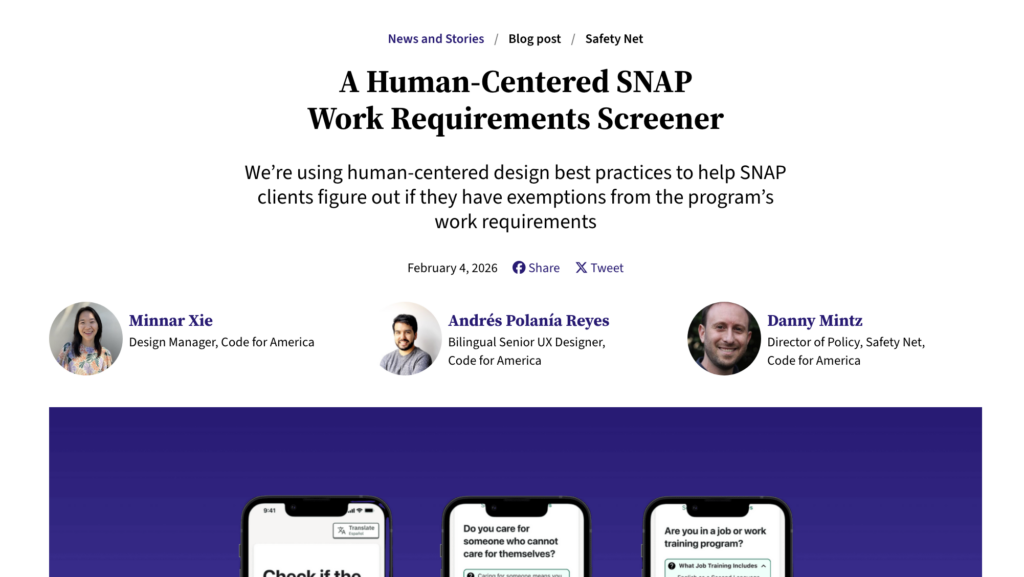
This blog post details the development of a human-centered screening tool designed to help SNAP clients identify and report exemptions from work requirements.
This paper evaluates the technical vendor landscape as states prepare to implement Medicaid work requirements mandated by the H.R. 1 reconciliation law.
This report evaluates the effectiveness and implementation of a generative AI-powered assistive chatbot designed to help caseworkers navigate complex public benefit programs like Medicaid and SNAP.
This comprehensive research report evaluates the structural progress, disparities, and operational barriers surrounding artificial intelligence adoption within the United States federal government.
A strategic "playbook" for organizing and sustaining digital service meetups, specifically focusing on fostering communities of practice within the public sector and civic tech spaces.
This blog post serves as a guide for state agencies to develop flexible and actionable metrics systems for tracking the implementation and impact of new work requirements under H.R. 1.