This blog post describes how the NYC Service Design Studio engaged residents in the development of the Community Compensation Fund, highlighting lessons on trust-building, equitable collaboration, and inclusive community decision-making.
Guidance on improving how well AI systems can understand digital content. It emphasizes using machine-readable formats and applying clear content design strategies to enhance both AI processing and human accessibility
A unified taxonomy and tooling suite that consolidates AI risks across frameworks and links them to datasets, benchmarks, and mitigation strategies to support practical AI governance.
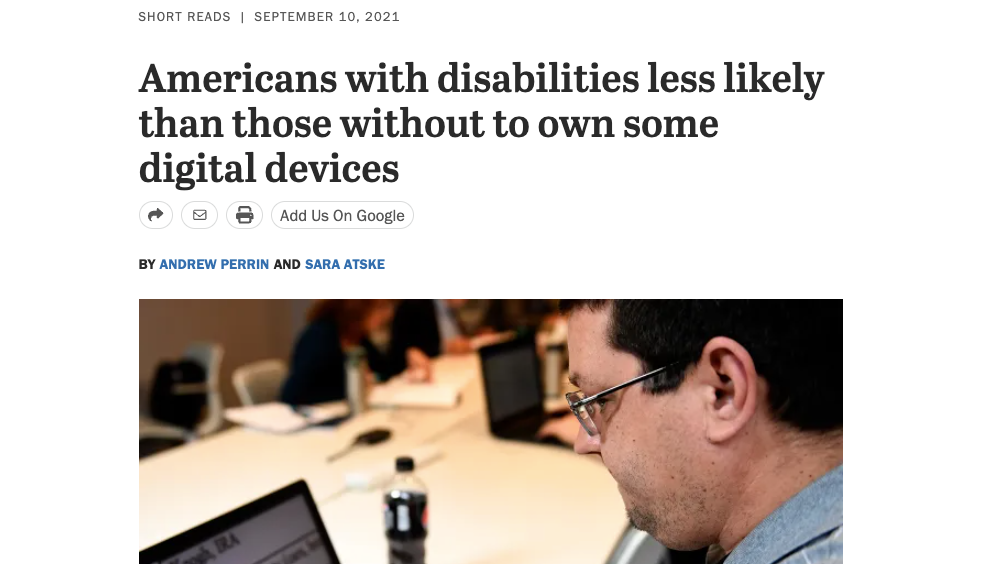
Adults in the United States who have a disability are statistically less likely than those without a disability to own certain digital devices like laptops and smartphones, and are also more likely to never go online, despite similar rates of home broadband and tablet ownership.
An academic research paper introducing SHADES, a multilingual benchmark designed to evaluate how large language models (LLMs) generate and reinforce stereotypes across different languages and cultural contexts.
Recording of GOVChats hosted by GTA's Digital Services Georgia, where speakers dive into the artificial intelligence (AI) programs and initiatives unfolding across the states of Georgia, Maryland, and Vermont.