In 2018 the Better Identity Coalition released a Policy Blueprint outlining five key initiatives that to solve the majority of America’s challenges in the digital identity space. This report from 2024 grades progress on each of the original Blueprint’s five key initiatives – as well as the 19 items that were contained in the “action plan” to support those initiatives.
New America spoke to to the people at the frontlines of the pandemic—professional caregivers, family caregivers, parents, and essential workers—to understand the policy interventions people need most. This report discusses ideas for policymakers, private sector leaders, and community innovators to use in pursuit of work-family justice and equity across race, gender, and class.
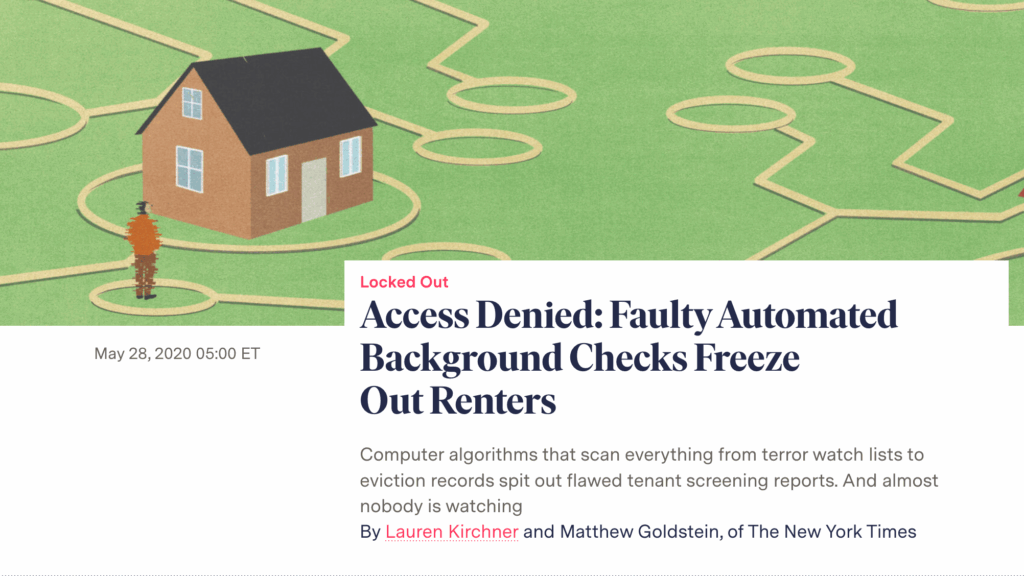
This reporting explores how algorithms used to screen prospective tenants, including those waiting for public housing, can block renters from housing based on faulty information.
This report outlines the guiding principles, policy priorities, and tools for the National Collaborative for Integration of Health and Human Services, aimed at improving health and well-being outcomes through the integration of health care and human services programs.
American Public Human Services Association (APHSA)
This guide is intended to provide a general overview of the national statutory and regulatory landscape governing the legality of sending large volumes of text messages and sharing client information.
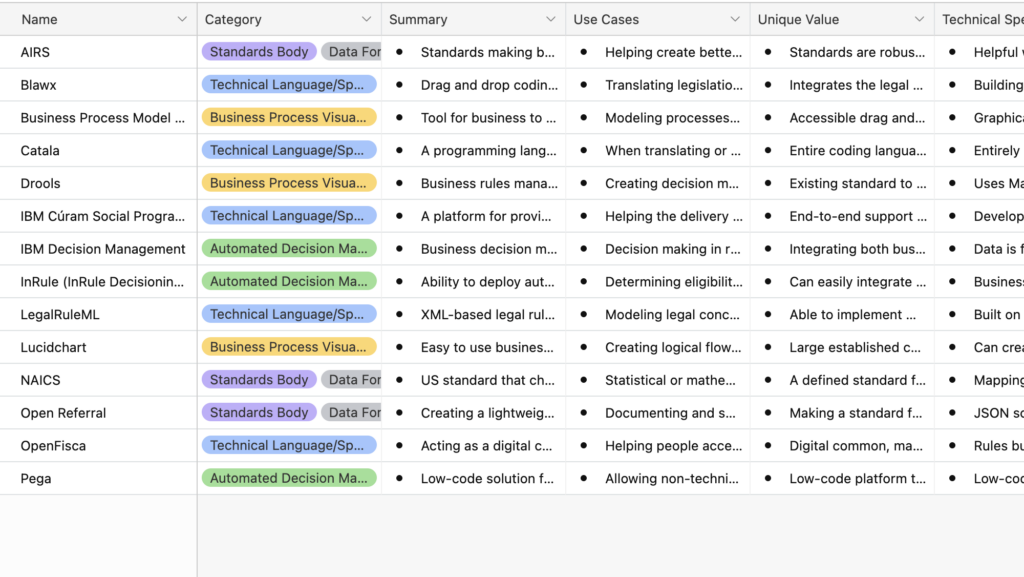
There are frameworks available that could inform the standardization of communicating rules as code for U.S. public benefits programs. The Airtable communicates the differences between the frameworks and tools. Each entry is tagged with different categories that identify the type of framework or tool it is.
This paper discusses the country’s chronic underinvestment in children and resulting outcomes, including new data on poverty rates among young children, is inextricable from the prospects of young children; and the remarkably comprehensive pandemic-era response policies, including which changes contributed most to reducing child poverty.
This study explores the causal impacts of income on a rich array of employment outcomes, leveraging an experiment in which 1,000 low-income individuals were randomized into receiving $1,000 per month unconditionally for three years, with a control group of 2,000 participants receiving $50/month.
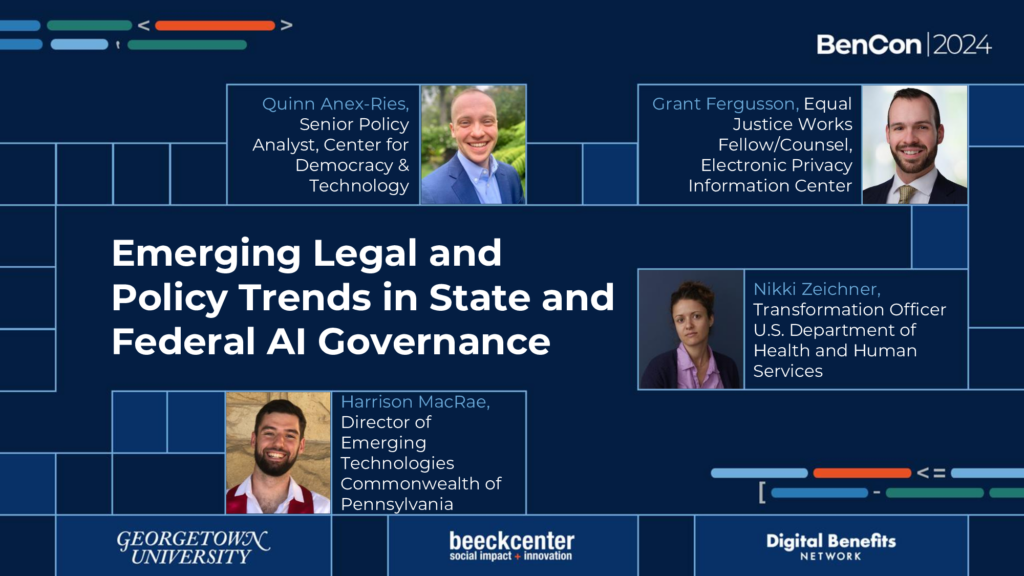
BenCon 2024 explored state and federal AI governance, highlighting the rapid increase in AI-related legislation and executive orders. Panelists emphasized the importance of experimentation, learning, and collaboration between government levels, teams, agencies, and external partners.
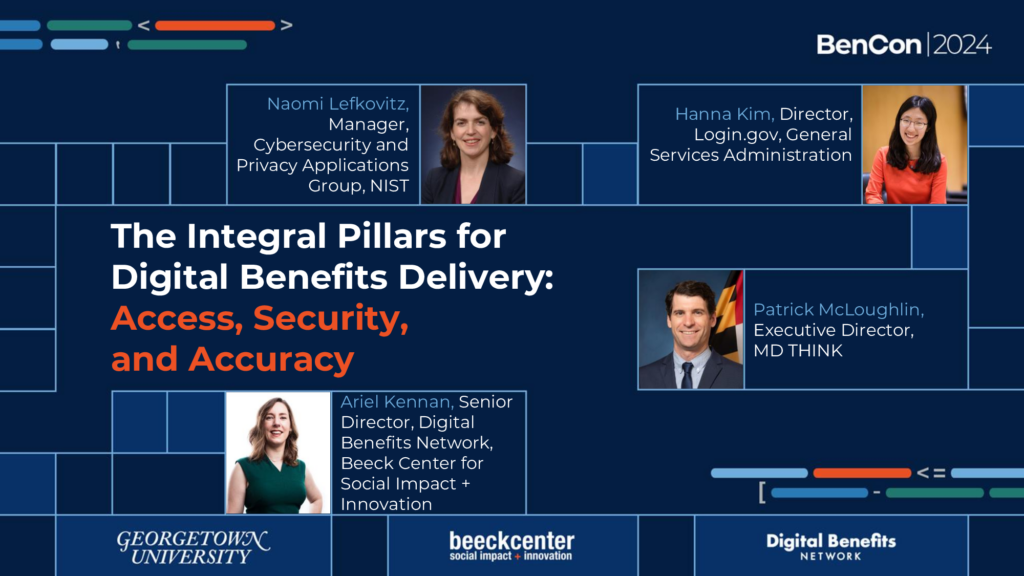
Government leaders discuss how to ensure seamless access to public benefits through breaking down silos, user-friendly digital identities, and privacy-focused security measures.
Presentation covering the findings of a research study analyzing the structural and budgetary layout of of eleven US-based Digital Service Teams (DSTs) at the municipal, county, and state levels.