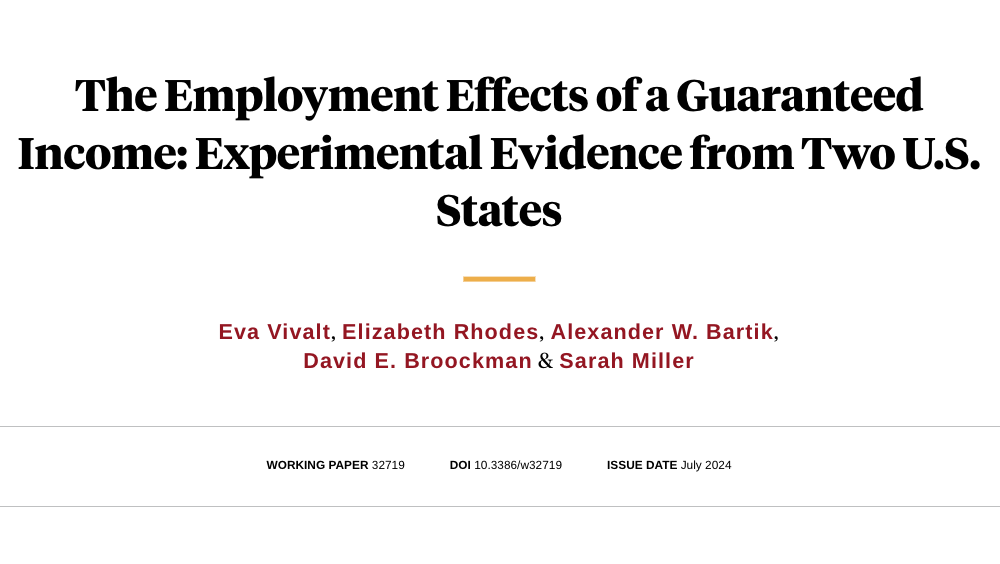
This study explores the causal impacts of income on a rich array of employment outcomes, leveraging an experiment in which 1,000 low-income individuals were randomized into receiving $1,000 per month unconditionally for three years, with a control group of 2,000 participants receiving $50/month.
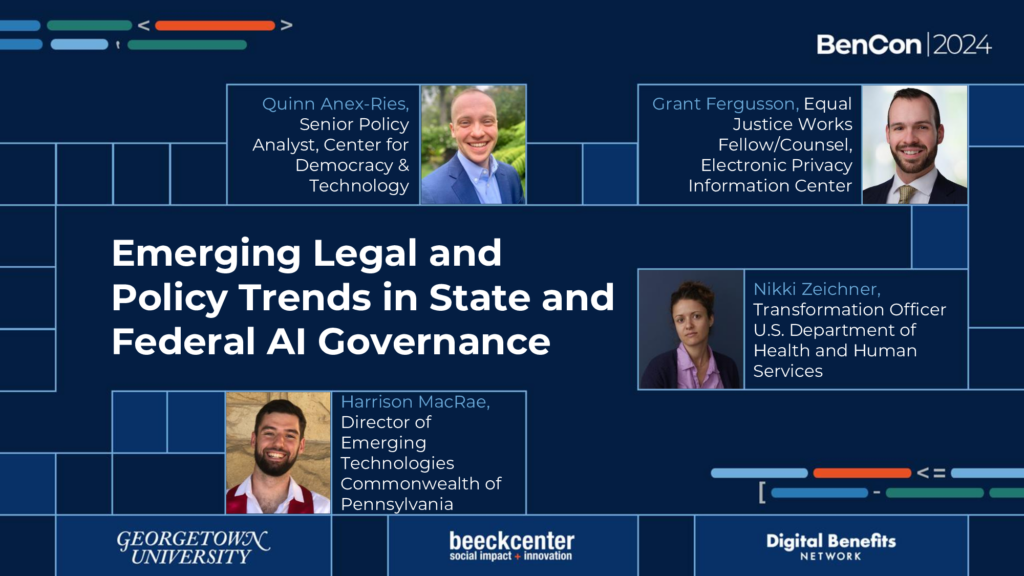
BenCon 2024 explored state and federal AI governance, highlighting the rapid increase in AI-related legislation and executive orders. Panelists emphasized the importance of experimentation, learning, and collaboration between government levels, teams, agencies, and external partners.
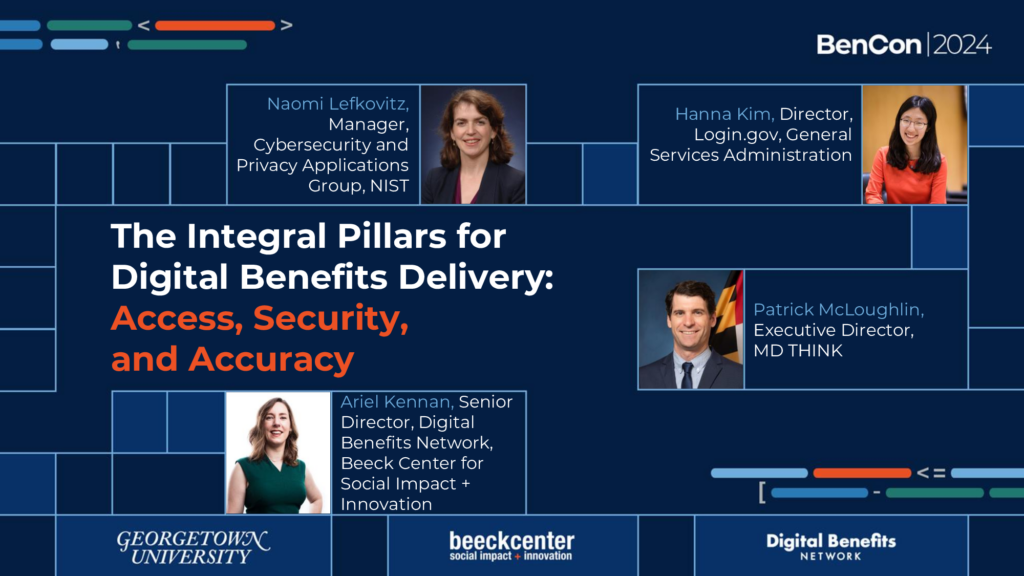
Government leaders discuss how to ensure seamless access to public benefits through breaking down silos, user-friendly digital identities, and privacy-focused security measures.
Presentation covering the findings of a research study analyzing the structural and budgetary layout of of eleven US-based Digital Service Teams (DSTs) at the municipal, county, and state levels.
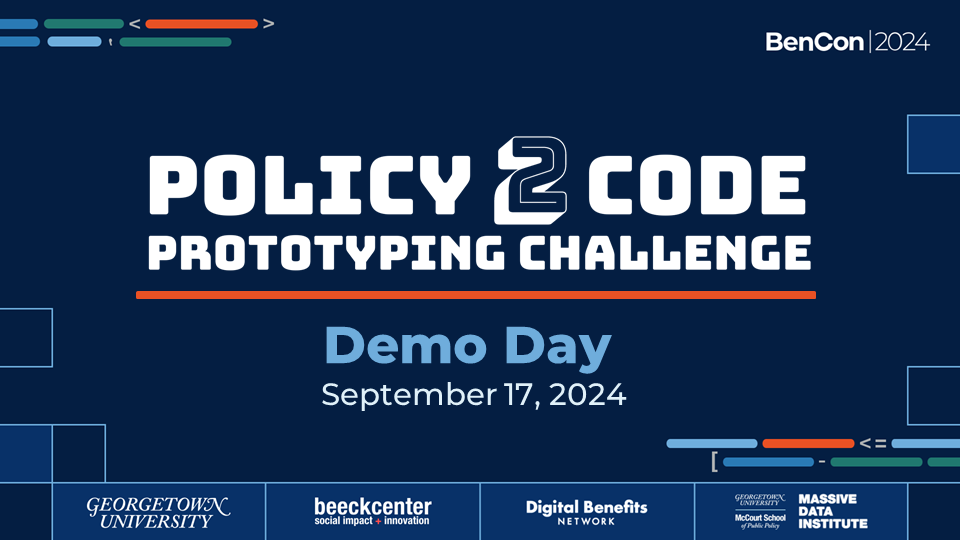
The Policy2Code Prototyping Challenge explored utilizing generative AI technology to translate U.S. government policies for public benefits into plain language and code, culminating in a Demo Day where twelve teams showcased their projects for feedback and evaluation.
This session from FormFest 2024 featured the Department of Homeland Security and the United States Digital Service talking about their work to reduce form burdens for internal and external users.
This section of the Building Resilience plan outlines strategies to improve the long-term solvency and sustainability of state unemployment insurance (UI) trust funds through better funding practices and legislative reform.
The article presents the True Cost of Economic Security (TCES) measure, showing that over half of U.S. families struggle to meet the comprehensive costs required to thrive, highlighting significant disparities based on family type, location, and race.
This report focuses on the impact of adopting a national PFML program modeled on existing state programs, known as the Family and Medical Insurance Leave (FAMILY) Act.
This page includes data and observations about account creation and identity proofing steps specifically for online applications that include MAGI Medicaid.