This report documents the key lessons learned from the UK Universal Credit Programme between 2010 and 2025, reflecting on the program’s management, implementation, and development over its lifecycle.
An impact report summarizing how a small public-sector innovation team tested, built, and piloted shared digital services to reduce administrative burden in public benefits delivery.
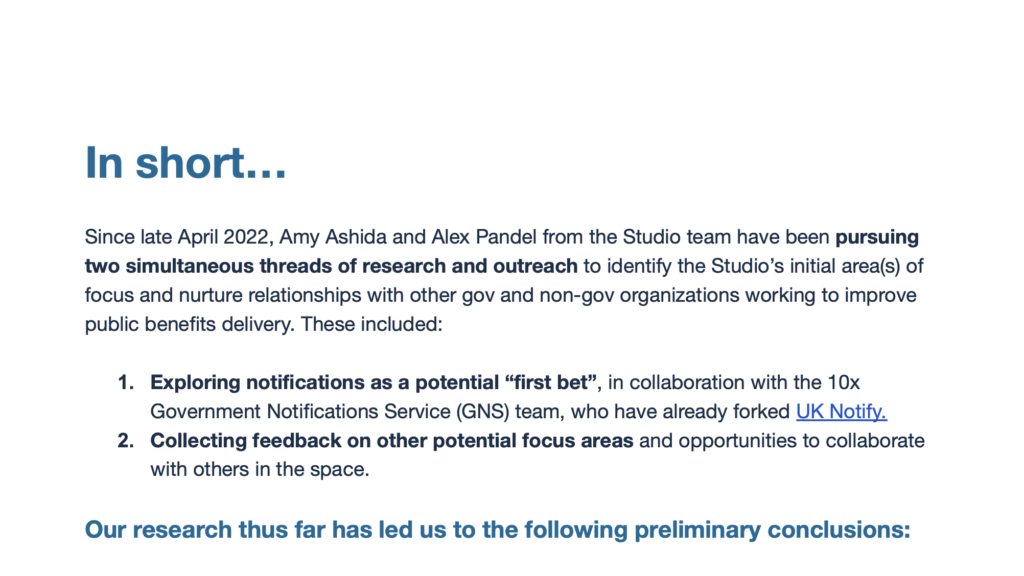
A research snapshot summarizing early findings from outreach and discovery work to identify high-impact opportunities for improving public benefits delivery, with an initial focus on notifications.
A TLDR of the State CDO Archetypes report—covering how state CDO offices operate and the six archetypes that define them. Written for event attendees and government staff: governor's office, IT and budget leadership, legal and data officials, and legislators who oversee CDO funding and establishment.
A tool for CDOs advocating for funding, authority, and expansion—and a primer for government leaders unfamiliar with the role. The report establishes shared vocabulary, identifies six CDO office archetypes, and offers cross-state insights on structures, priorities, and challenges.
This discussion paper advocates for states to use the implementation of OBBBA (One Big Beautiful Bill Act) as a catalyst to build integrated, cross-agency data systems.
A resource outlining state approaches to reducing payment error rates (PER) in SNAP and implementing new federal work requirements and other changes under H.R. 1.
American Public Human Services Association (APHSA)
This study describes the potential of human-centered design principles to identify burdens, reducing the effects of what we label as administrative checkpoints.
This section of the Department of Labor’s Building Resilience plan focuses on improving customer experience across unemployment insurance (UI) systems by promoting timely, accessible, and equitable service delivery for all claimants.
The blog post emphasizes advancements in digital services, user engagement, and inter-agency collaborations that enhanced public access to government services.
An event recap from one of FormFest 2024's breakout sessions featuring speakers from Digital Service Teams across the United States and the Department of Veteran Affairs.