This OPRE brief provides strategies for enhancing cultural responsiveness in social service agencies, focusing on improving services for diverse communities through organizational change, staff development, and culturally informed program design.
U.S. Department of Health and Human Services (HHS)
This article examines the concept of "viral cash" and suggests that the future growth of basic income programs will depend on advocacy networks rather than traditional policy diffusion across jurisdictions.
The RFI summary report consolidates submissions received from the open-source software community and details twelve activities that members of the OS3I plan—or have completed—in 2024-2025.
AI resources for public professionals on responsible AI use, including a course showcasing real-world applications of generative AI in public sector organizations.
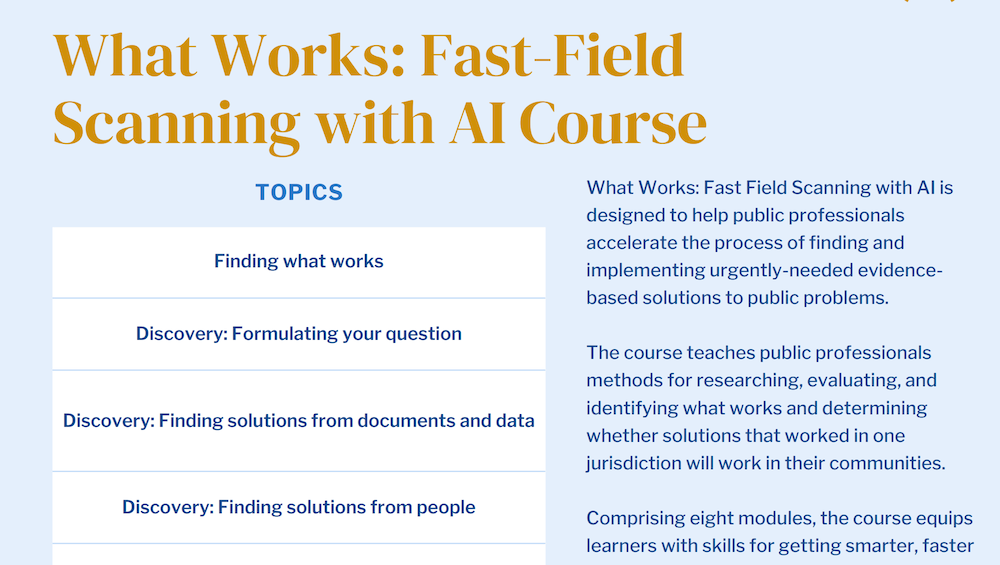
This course is designed to help public professionals accelerate the process of finding and implementing urgently-needed evidence-based solutions to public problems.
NYC's My File NYC and New Jersey's unemployment insurance system improvements demonstrate how successful digital innovations can be scaled across various programs, leveraging trust-building, open-source technology, and strategic partnerships.
This research study analyzes the structural and budgetary layout of eleven US-based Digital Service Teams (DSTs) at the municipal, county, and state levels. In doing so, it sets out to answer the research question: “How are digital service teams structured and funded?”
The team developed an AI solution to assist benefit navigators with in-the-moment program information, finding that while LLMs are useful for summarizing and interpreting text, they are not ideal for implementing strict formulas like benefit calculations, but can accelerate the eligibility process by leveraging their strengths in general tasks.
The team developed an AI-powered explanation feature that effectively translates complex, multi-program policy calculations into clear and accessible explanations, enabling users to explore "what-if" scenarios and understand key factors influencing benefit amounts and eligibility thresholds.
The team examined how AI, specifically LLMs, could streamline the case review process for SNAP applications to alleviate the burden on case workers while potentially improving accuracy.
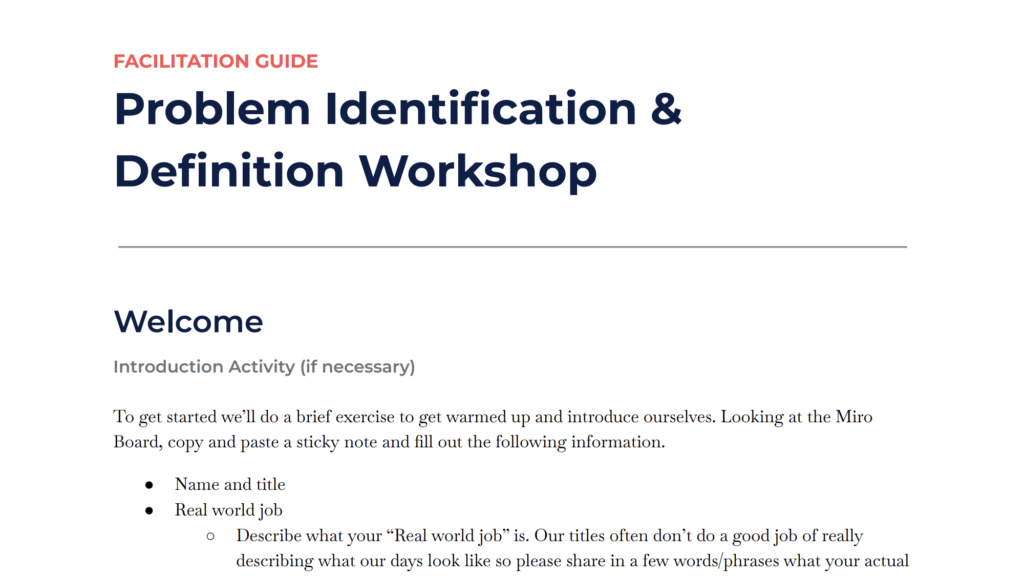
This workshop guide offers teams an opportunity to jointly work toward understanding core problems impacting digital delivery in their organization. The guide is structured in two parts: (1) a Miro template and (2) a Facilitation Guide.
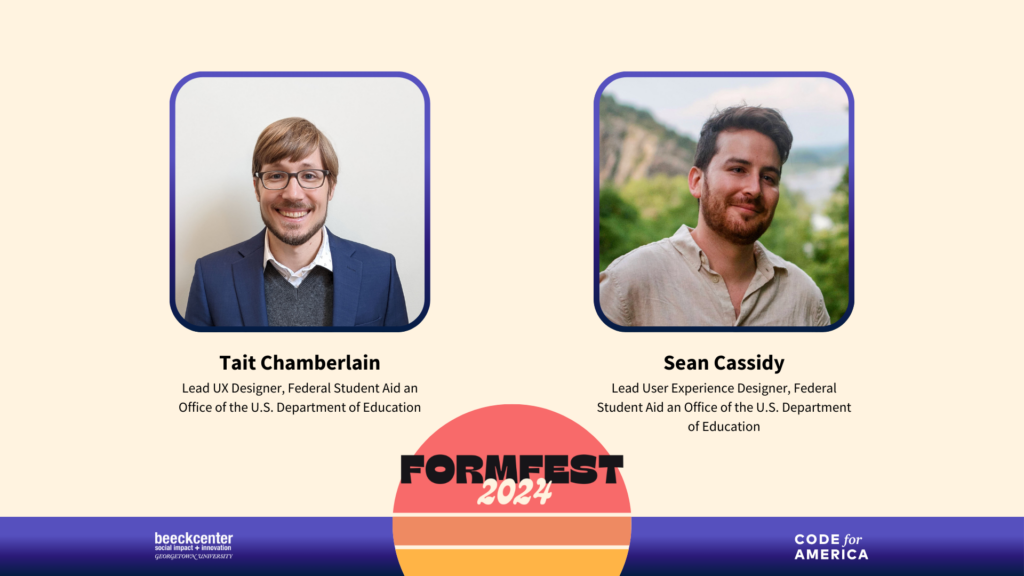
A profile on FormFest speakers Tait Chamberlain and Sean Cassidy, featuring stories about their motivations for working on public sector form innovation.