The Digital Benefits Network's second Digital Identity Community of Practice quarterly call centered exploring client support models in digital identity and an update on the Balance ID project.
This internal glossary defines key terms and concepts related to automating enrollment proofs for public benefits programs to support shared understanding among product and policy teams.
The AI RMF Playbook offers organizations detailed, voluntary guidance for implementing the NIST AI Risk Management Framework to map, measure, manage, and govern AI risks effectively.
National Institute of Standards and Technology (NIST)
The Service and Digital Toolkit is a bilingual, practical resource developed by the Canadian Digital Service to help government teams design and deliver user-centered, accessible, and agile digital services aligned with federal policies and standards.
A strategy document that sets out USAID’s vision, goals, principles, and operational requirements for promoting open, inclusive, secure, and rights-respecting digital ecosystems to advance development and humanitarian outcomes worldwide.
United States Agency International Development (USAID)
This provides a comprehensive look at child well-being across the U.S., ranking states and highlighting policy recommendations to improve outcomes for children.
On July 16, members of the Digital Identity Community of practice gathered to learn how peers are gathering beneficiary feedback on their experiences with accounts and proving their identity.
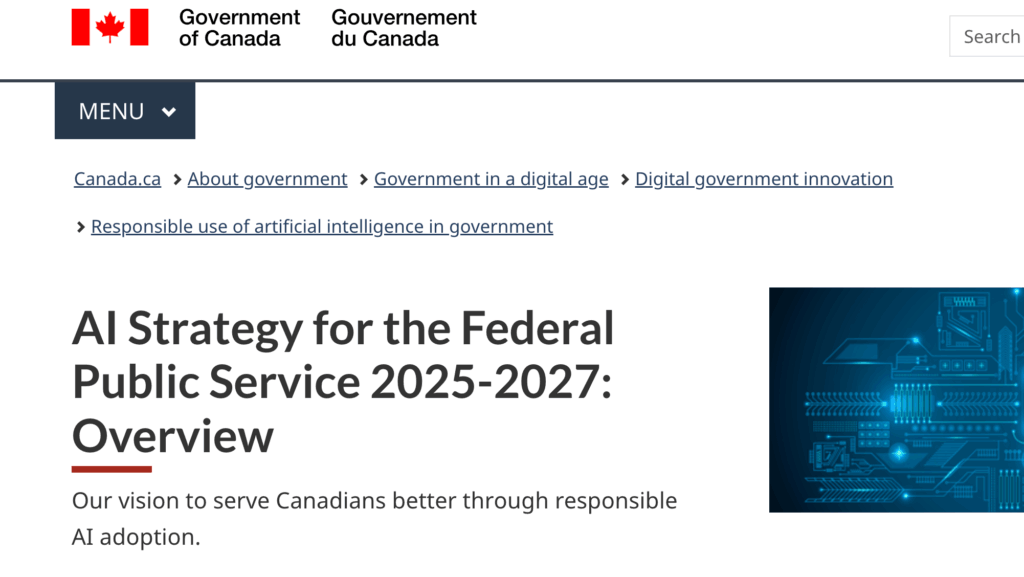
This strategy document establishes a governance framework and roadmap to ensure responsible, trustworthy, and effective AI use across Canadian federal institutions.
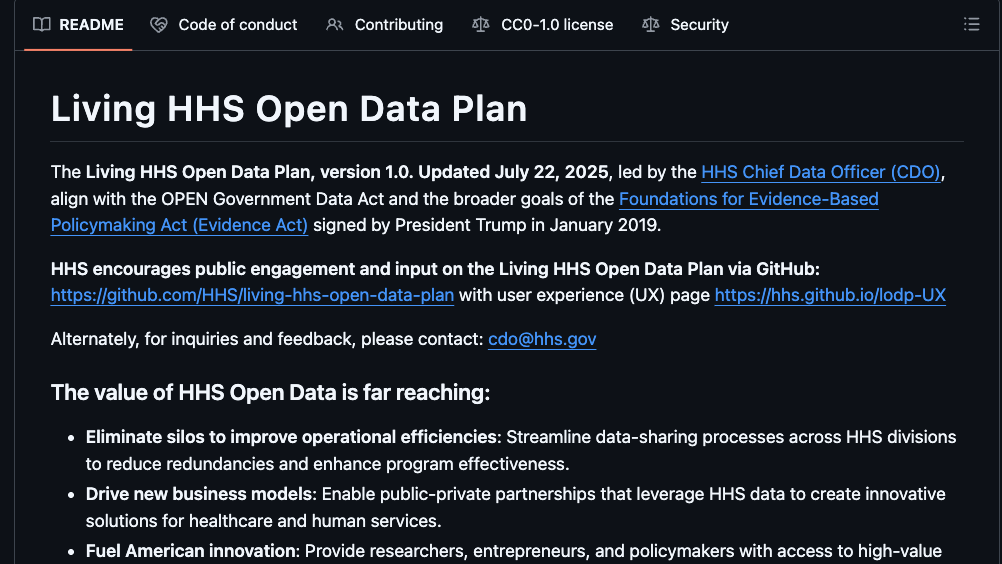
This is a modular, dynamic roadmap guides the U.S. HHS's ongoing implementation of open data policies while inviting public collaboration and feedback.
U.S. Department of Health and Human Services (HHS)