This playbook is designed to help government and other key sectors use data sharing to illuminate who is not accessing benefits, connect under-enrolled populations to vital assistance, and make the benefits system more efficient for agencies and participants alike.
In a time of crisis, behavioral science offers insights into how to reduce the paperwork and other administrative burdens that prevent people from taking advantage of crucial support services.
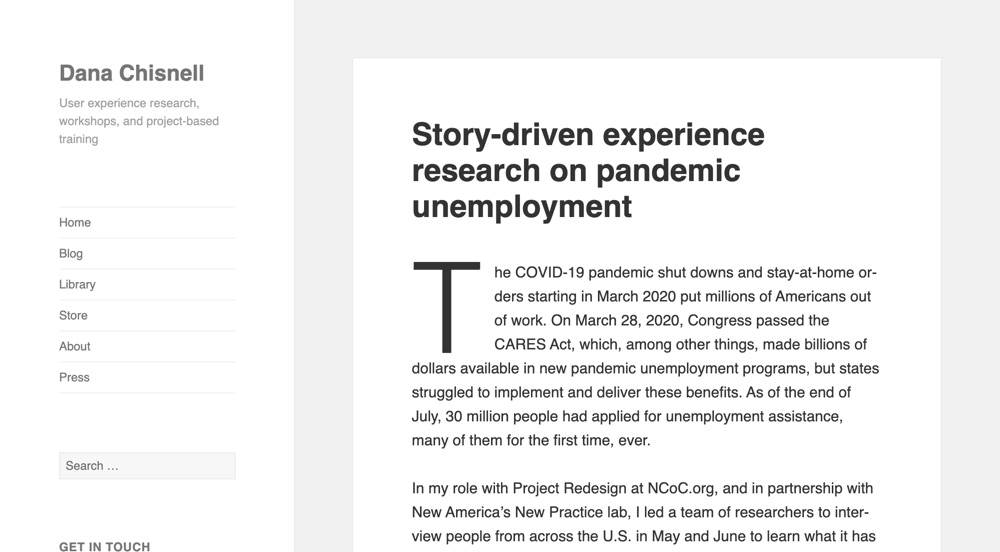
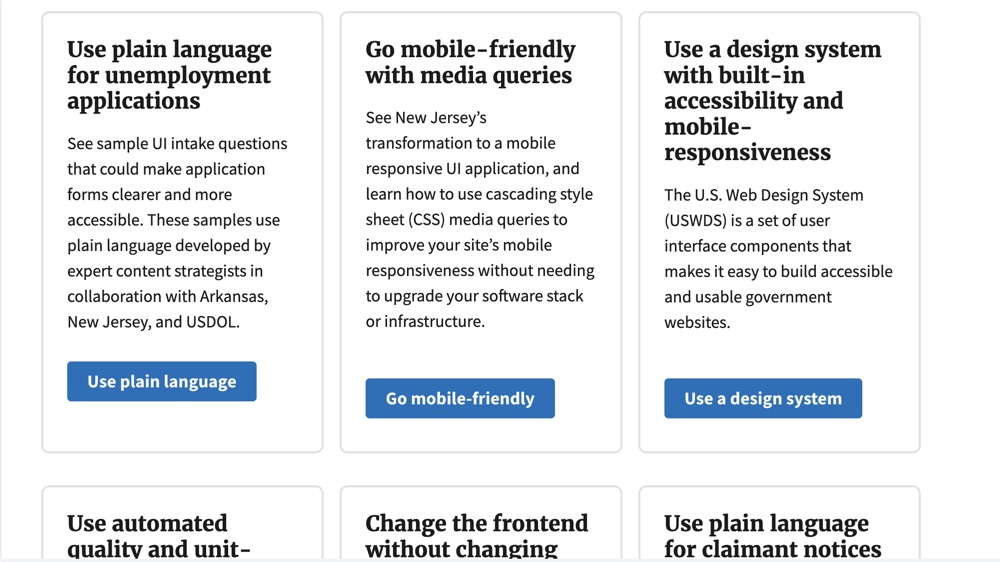
Dana Chisnell describes work leading a team of researchers to interview people from across the US on their experiences applying for unemployment and other benefits during the pandemic.
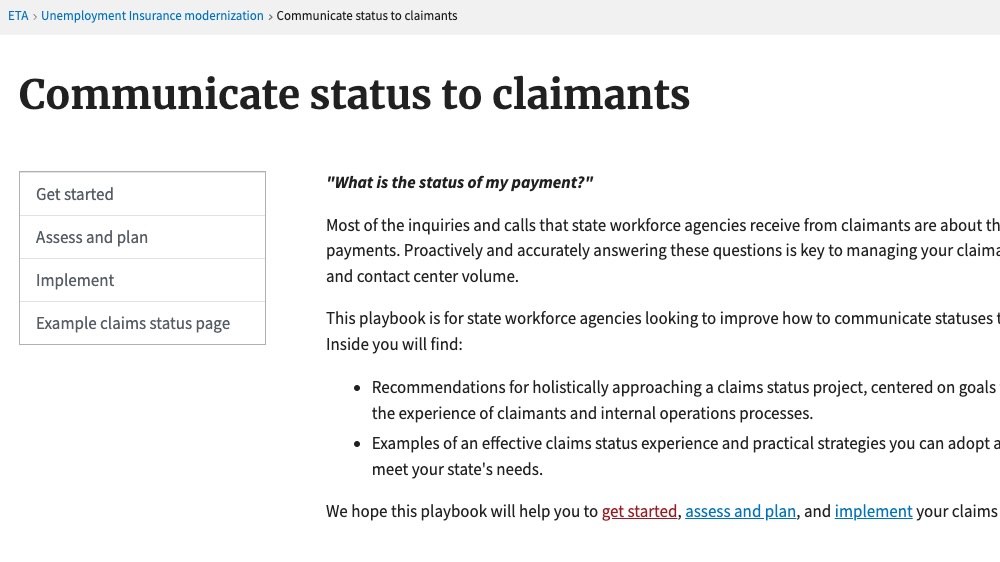
The U.S. Department of Labor provides a playbook to help state workforce agencies enhance communication with unemployment claimants by offering clear, proactive updates on claim statuses, thereby improving claimant satisfaction and reducing call center inquiries.
This toolkit is designed to assist state and local TANF agencies in accessing, linking, and analyzing employment data from unemployment insurance (UI) systems.
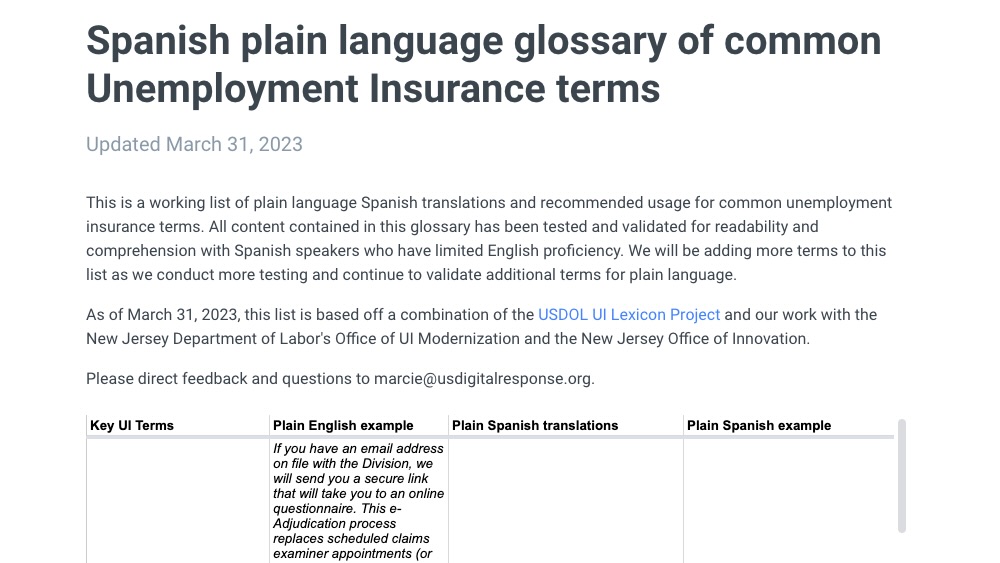
This is a working list of plain language Spanish translations and recommended usage for common unemployment insurance terms. All content contained in this glossary has been tested and validated for readability and comprehension with Spanish speakers who have limited English proficiency.
The Sprint 2 Report: Michigan UI Claimant Experience by Civilla and New America examines challenges in Michigan’s unemployment insurance (UI) system and provides human-centered design recommendations to improve accessibility, clarity, and user experience.
Due to technology’s disruptive force in society and on the labor force, it is necessary to revisit the relationship between employees, governments, and citizens. This report asserts that the next president should immediately sign two Executive Orders (EOs) to address the current work crisis and the urgent economic emergency that has left Americans evicted, unable to pay bills, make rent, or put food on the table.
The U.S. Department of Labor is working with states, territories, and the public to develop strategies to continuously improve the nation’s unemployment insurance (UI) systems.
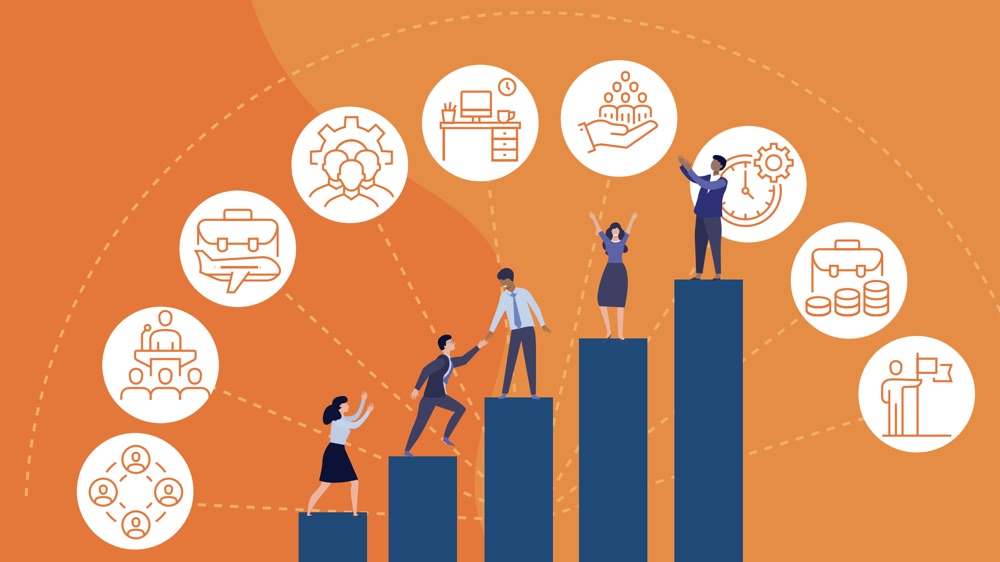
Report by the Aspen Institute discussing Benefits21, a multi-stakeholder, multi-faceted initiative to integrate and modernize benefits systems. This paper provides an overview of Benefits21, along with a discussion of the shortcomings of current public and private benefit systems.