This case study highlights a collaborative effort to enhance Nevada’s unemployment insurance (UI) program by simplifying claimant-facing communications and improving user experiences through behavioral science and human-centered design.
National Association of State Workforce Agencies (NASWA)
This impact report showcases the office's initiatives and achievements in enhancing state government services through innovative, user-centered approaches.
This article highlights how state unemployment insurance (UI) agencies are leveraging data to modernize systems and enhance access for unemployed workers.
This research used observational research with unemployment insurance (UI) claimants to identify pain points in the application process and inform customer experience improvements.
This U.S. Department of Labor (DOL) strategy outlines a roadmap for modernizing the Unemployment Insurance (UI) system to enhance efficiency, equity, and access for workers.
This resource allows policymakers, employers, benefits providers, and researchers assess benefits performance for constituents and identify opportunities in market and policy innovation to ensure equitable benefits distribution.
This paper describes the policy choices, business practices, and technology innovations that the State of New Jersey is employing to ensure that the right people get benefits — accurately and on time.
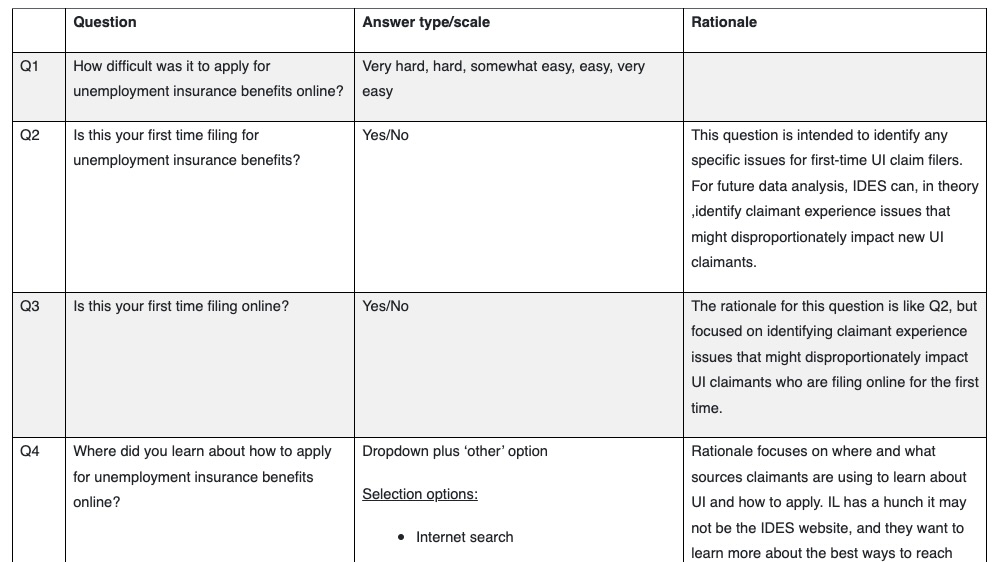
In the Fall of 2022, the USDOL Office of Unemployment Insurance Modernization (OUIM) consulted with the Illinois Department of Employment Security (IDES) to provide hands-on support with IT modernization and customer experience strategy. Primary discussions focused on making informed product, service, and business decisions based on qualitative and quantitative data— how might IDES leverage existing data streams to identify the most pressing technology issues in their unemployment insurance system, and how might IDES act upon this information in a timely and impactful manner?
For the past year, modernization teams at the Department of Labor (DOL) have been helping states identify opportunities to automate rote, non-discretionary, manual tasks, with the goal of helping them speed up the time that it takes to process claims. This post provides more context on Robotic Process Automation (RPA) and potential use cases in unemployment insurance.
This guide highlights best practices in benefits access, showcasing how Michigan, New York City, and San José improve accessibility through plain language, multilingual translation, resident co-creation, and technology tools.
Article describing the “time tax,” the costs to people applying or benefits in terms of spending substantial amounts of time navigating user-unfriendly interfaces. The article describes the necessity of simplifying safety-net programs and cross-coordinating across various social service programs.
The Technology Transformation Service at GSA recently created a new Public Benefits Studio to focus on fostering a more cohesive, coordinated experience for the public, across programs.