This is a working list of plain language Spanish translations and recommended usage for common unemployment insurance terms. All content contained in this glossary has been tested and validated for readability and comprehension with Spanish speakers who have limited English proficiency.
The Sprint 2 Report: Michigan UI Claimant Experience by Civilla and New America examines challenges in Michigan’s unemployment insurance (UI) system and provides human-centered design recommendations to improve accessibility, clarity, and user experience.
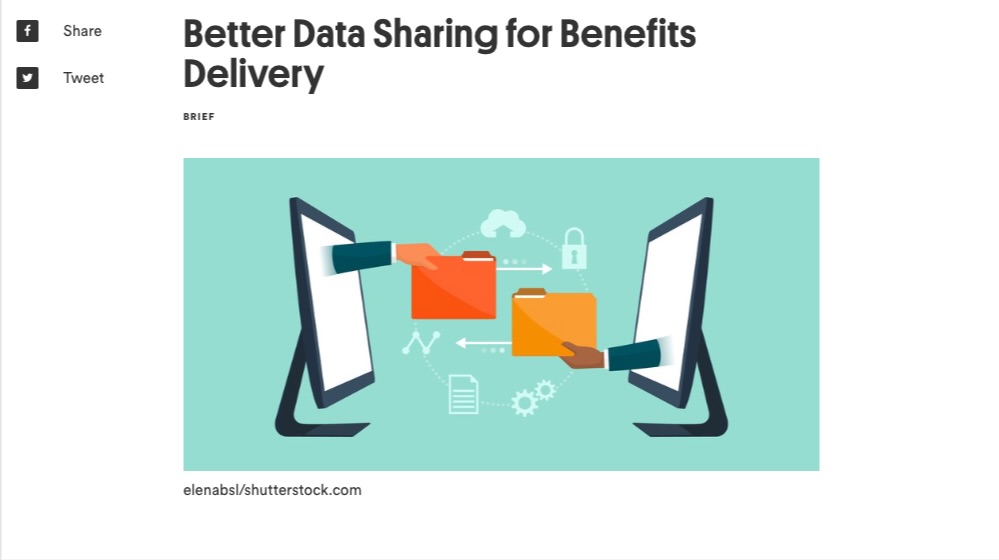
This policy brief outlines how improved data sharing between federal agencies, state and local governments, and institutions can leverage existing data from other benefits programs to streamline eligibility processes and benefits uptake for the Affordable Connectivity Program (ACP) and other programs.
The Center on Budget and Policy Priorities (CBPP) report discusses how reducing administrative burdens in Medicaid can enhance health outcomes and promote racial equity.
This report analyzes the impact of waivers that allowed WIC participants to be certified without in-person visits during the COVID-19 public health emergency, assessing effects on access, participation, and service delivery.
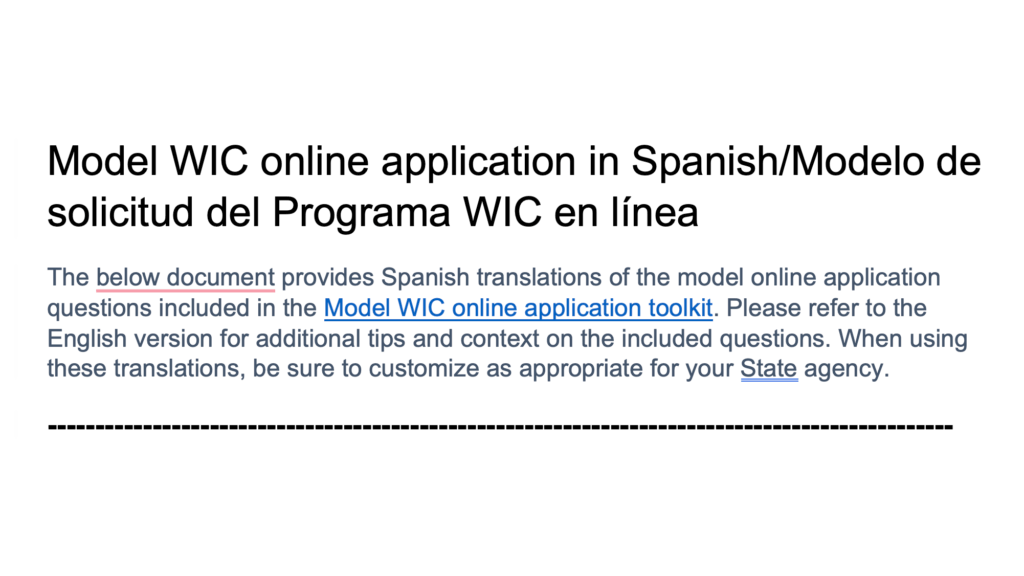
This document is the Spanish-language version of the Model WIC Online Application. It provides a full set of translated application questions and instructions for applying to the Special Supplemental Nutrition Program for Women, Infants, and Children (WIC).
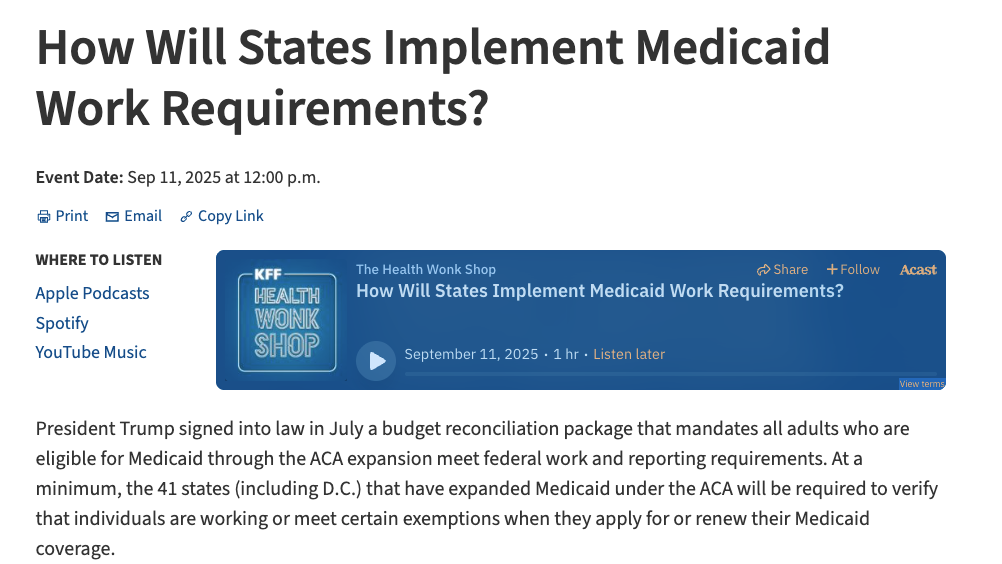
This event convened policy experts and state leaders to explore how states can operationalize new Medicaid work reporting mandates—covering technical, legal, and implementation challenges.
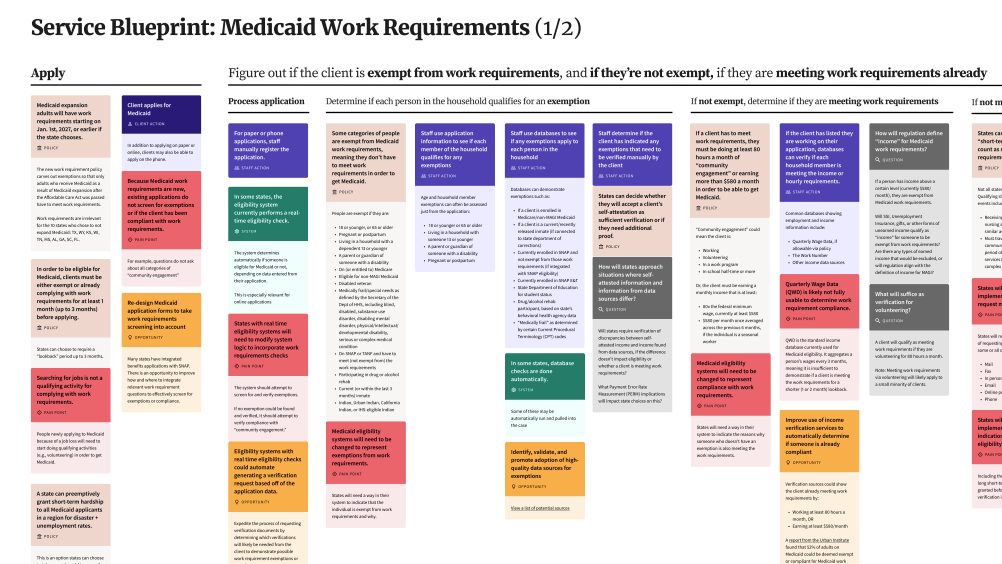
This 11x17 service blueprint visualizes every step, system, and policy decision involved in implementing Medicaid work requirements under H.R. 1—from application to renewal—identifying pain points, questions, and opportunities for states to streamline and humanize the process
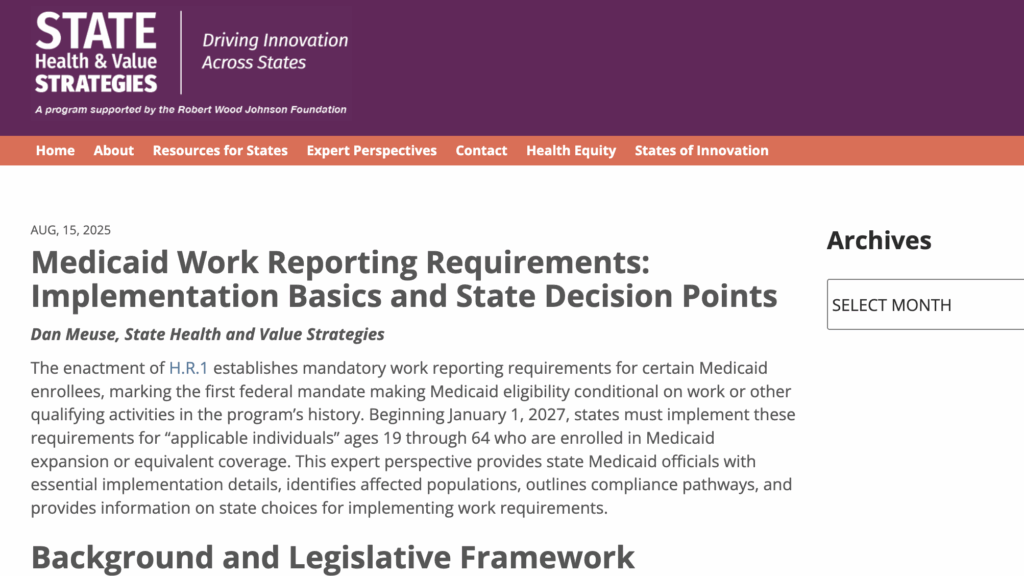
This report outlines the foundational requirements and policy choices that states must consider as they prepare to implement mandatory Medicaid work reporting under H.R. 1.
This report provides detailed guidance for states on how to verify compliance with and exemptions from Medicaid work reporting requirements established under H.R. 1.
This memorandum summarizes the fiscal and programmatic impacts of Public Law 119-21 (H.R. 1 – “One Big Beautiful Bill”) on the state, detailing major provisions related to SNAP, Medicaid, higher education, taxation, and other federally funded programs.