This presentation, from the Data Sharing Working Group, highlights a Michigan Department of Health and Human Services and Benefits Data Trust project to increase enrollment in the Women, Infants, and Children (WIC) program.
The article discusses key takeaways from BenCon 2023, highlighting the importance of creating equitable and ethical public benefits technology. It emphasizes the need for tech solutions that address systemic inequalities, ensure accessibility, and promote inclusivity for underserved communities in accessing public services.
The report evaluates the feasibility, costs, taxpayer interest, and operational challenges of implementing an IRS-run free direct e-file tax return system, as required by the Inflation Reduction Act.
The Ethical Artificial Intelligence (AI) Policy of the City of Tempe establishes principles and governance structures to ensure the responsible, fair, and transparent use of AI in municipal operations.
This toolkit offers strategies and tools to help agencies build the culture and infrastructure needed to apply data analysis routinely, effectively, and accurately – referred to in this publication as “sustainable data use.”
The Unemployment Insurance Equitable Access Toolkit contains common equity recommendations, promising practices, and insights, represented visually as a different floor of an agency office building, compiled in one interactive document.
This resource is a communications toolkit designed to help states and stakeholders inform Medicaid and CHIP recipients about the eligibility renewal process, ensuring they take necessary steps to maintain or transition to alternative health coverage.
This presentation from Steph White, Cross Enrollment Coordinator at the Michigan Department of Health and Human Services offers an in-depth example on implementing cross enrollment with WIC and general tools for cross enrollment.
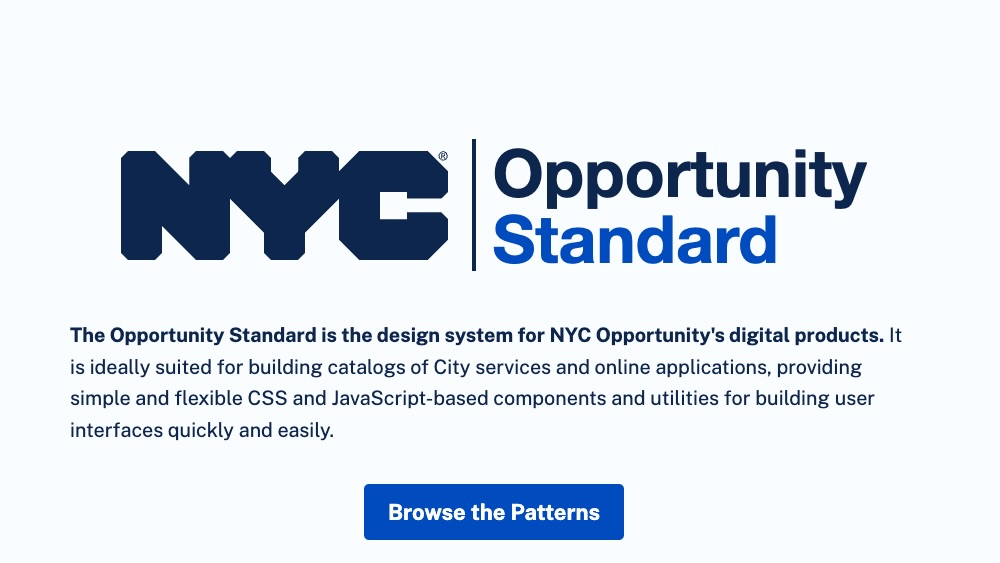
The design system for NYC Opportunity's digital products. It is ideally suited for building catalogs of City services and online applications, providing simple and flexible CSS and JavaScript-based components and utilities for building user interfaces quickly and easily.
This memorandum provides guidance to agencies on how to design and deliver websites and digital services to the public and to assist agencies as they continue to implement the 21st Century Integrated Digital Experience Act1 (21st Century IDEA). It summarizes relevant statutory requirements, clarifies policy requirements, and expands best practices for agency websites and digital services.