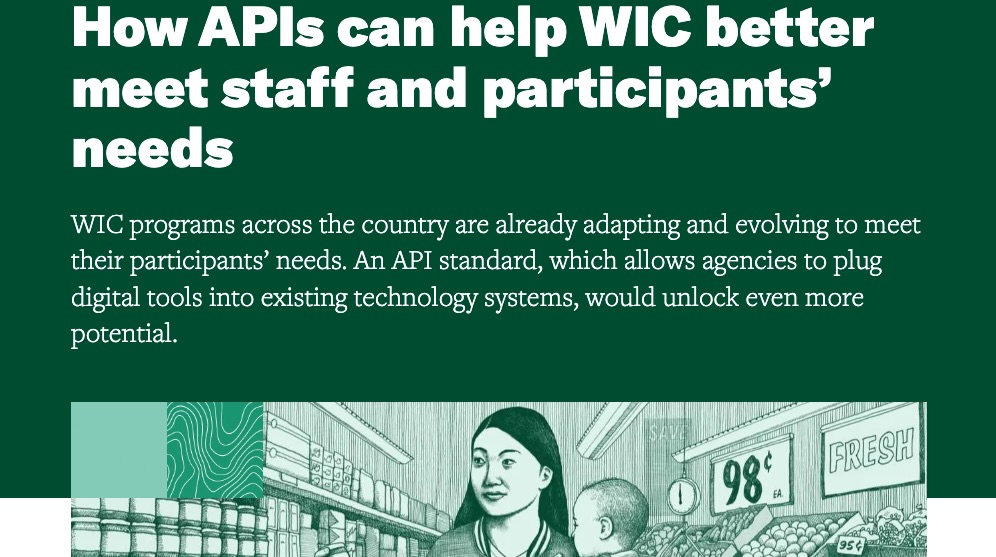
Implementing an API standard for WIC Management Information Systems (MIS) would enable seamless integration of digital tools, enhancing service delivery and accessibility for participants and staff.
The Advancing Economic Mobility for Low-Income Families report, published by the National Governors Association (NGA) Center for Best Practices, provides policy options for governors to strengthen economic security, workforce participation, and wealth-building opportunities for low-income families.
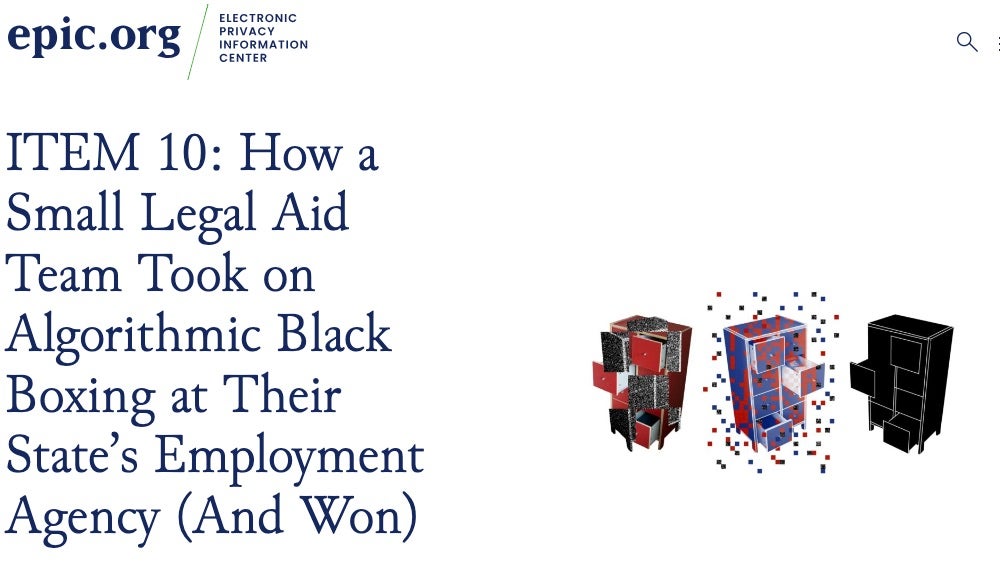
This report investigates how D.C. government agencies use automated decision-making (ADM) systems and highlights their risks to privacy, fairness, and accountability in public services.
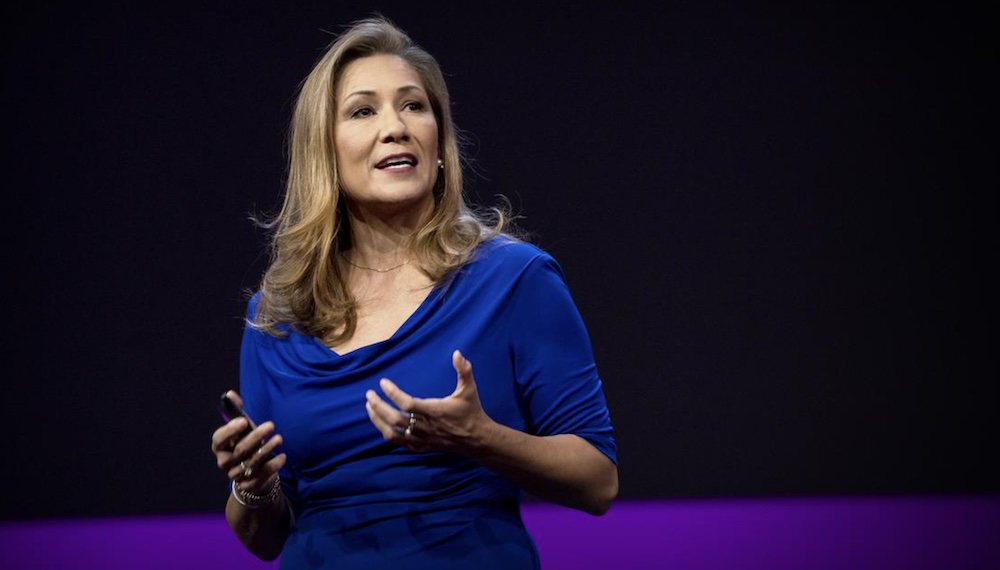
Code for America CEO introduces the Safety Net Innovation Lab in a TED Talk, their initiative to work with state governments to reimagine and rebuild delivery of accessible and equitable benefits. This article also includes the video of Renteria’s talk and a transcript.
Implementing client-centered communication strategies, such as clear language and digital reminders, can significantly reduce churn in public benefit programs, ensuring eligible individuals maintain continuous access to essential services.
This resource describes how different agencies have updated their systems to increase online and mobile access to benefits information and applications, including using text messages to share benefits information with residents.
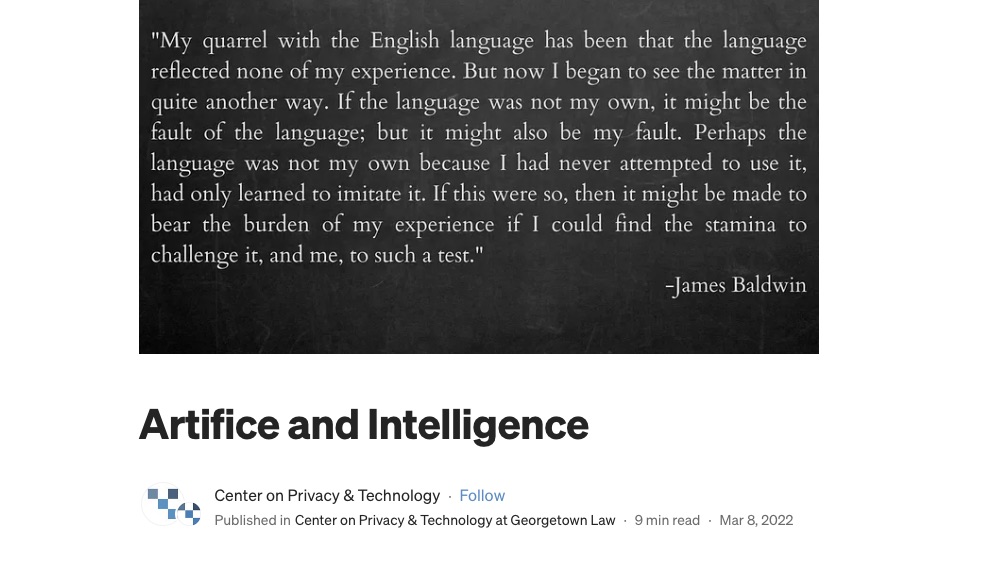
This essay explains why the Center on Privacy & Technology has chosen to stop using terms like "artificial intelligence," "AI," and "machine learning," arguing that such language obscures human accountability and overstates the capabilities of these technologies.
Building on our February 2022 report Benefit Eligibility Rules as Code: Reducing the Gap Between Policy and Service Delivery for the Safety Net, the Beeck Center’s Digital Benefits Network (DBN) recently held a convening to share progress and potential in digitizing benefits eligibility and to begin addressing how a national approach could be started.
Working with TANF administrators and human services leaders across the country, the American Public Human Services Association (APHSA) embraces the call to reimagine how TANF can work in support of the families it serves and has established a set of TANF Modernization Core Principles to guide our vision for the future of TANF. Grounded in these Core Principles, APHSA’s members have laid out a legislative framework to unlock the potential of TANF. We call upon Congress to use this framework as a starting point to build common ground to achieve a TANF reauthorization that promotes a more equitable and prosperous future for all Americans.
American Public Human Services Association (APHSA)
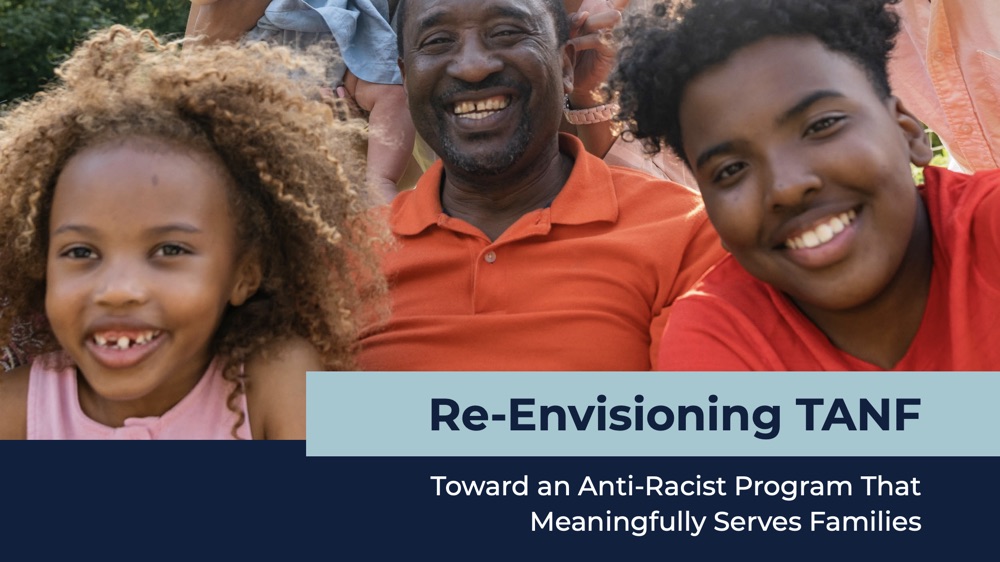
An America where no one experiences poverty is possible. Already, the U.S. has programs with the potential to make this vision a reality, including programs that provide cash assistance, like Temporary Assistance for Needy Families (TANF). The current TANF program provides very little cash assistance and is marked by stark racial disparities, but it has the potential to reduce child poverty, increase economic security, and advance racial equity. This report offers a vision for an anti-racist approach to the TANF program, with new statutory goals and policy recommendations to advance racial justice.