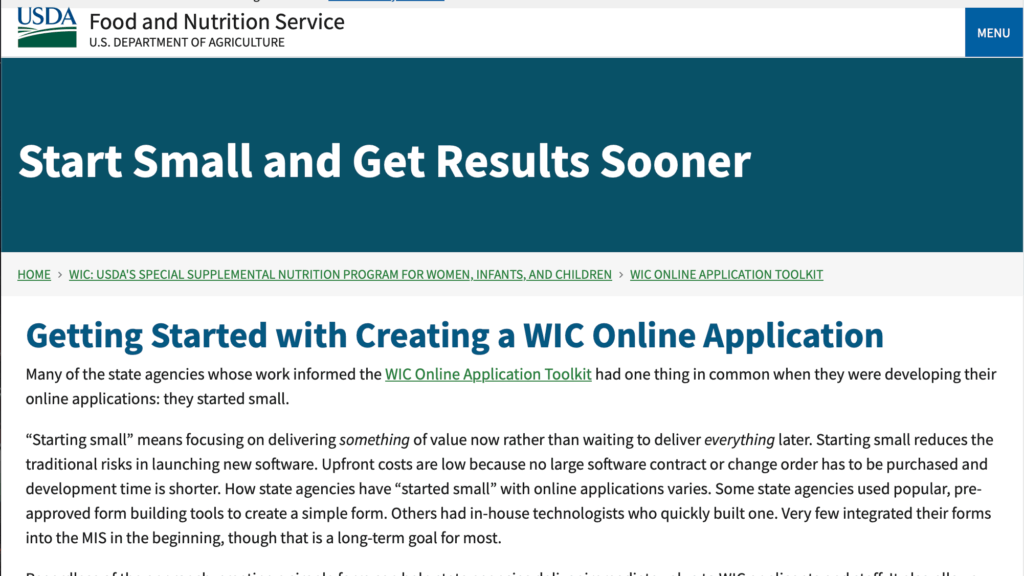
The “Start Small” approach encourages agencies to begin with targeted, manageable improvements in their WIC application process before expanding changes more broadly, fostering easier implementation and measurable early successes.
Design systems are a foundational component of good government digital service delivery. This publication explores why design systems matter and includes a tracker of centralized design systems across U.S. states.
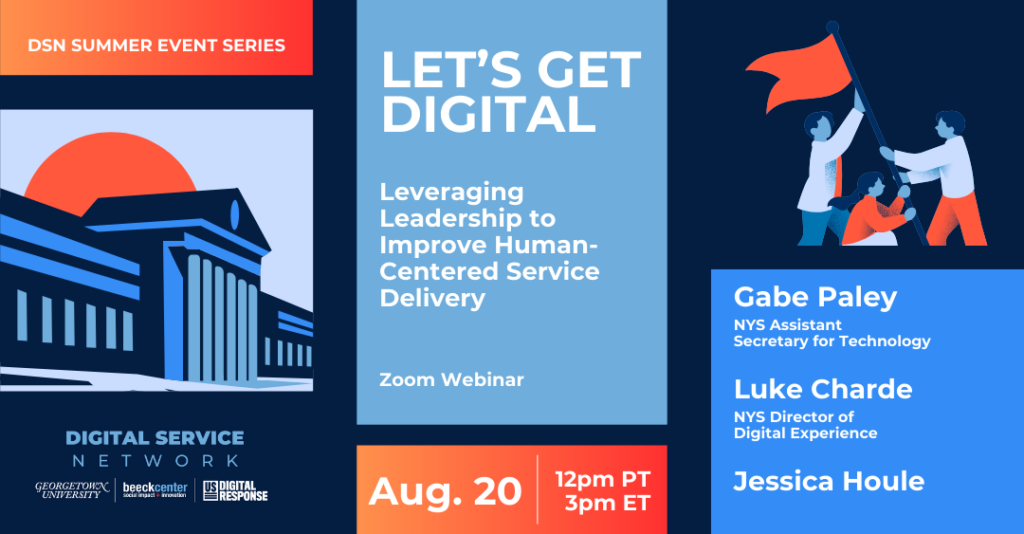
For the Digital Service Network’s (DSN) final installment of its summer event series, Let’s Get Digital, we heard about New York State’s (NYS) human-centered design (HCD) journey and how relationships between leadership and digital service teams have been pivotal in advancing user-centric service delivery.
This guidance provides detail on activities to be conducted by designated High-Impact Service Providers (HISPs) under the Executive Order on Customer Experience.
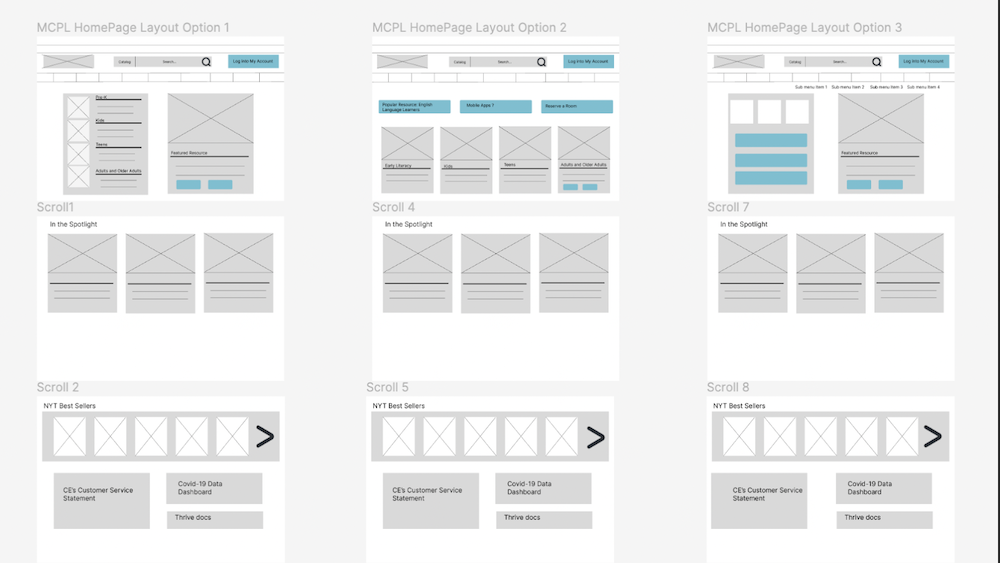
The folder for the Montgomery County Library Website Redesign contains draft materials, including design specifications of the current menu, an audit of menu items, and wireframes for the new homepage layout, providing a foundation for the site's improved structure and navigation.
Governor Kathy Hochul announced a new client feedback initiative in partnership with Code for America to improve New York's WIC program by implementing live online chat to gather input from participants, streamline enrollment, and increase access to healthy food for eligible families.
This mainstage session from FormFest 2024 included conversations about form design, accessibility, user experience, and data collection to show how good forms can build trust and confidence in government.
This user guide provides step-by-step instructions for families in Iowa to find licensed child care providers online based on location, schedule, and program preferences.
This report presents findings and recommendations from a user experience study based on interviews with 156 participants enrolled in Medicaid and SNAP.