This presentation shares user experience research on the challenges, priorities, and opportunities for improving the journey of Bay Area residents seeking affordable housing.
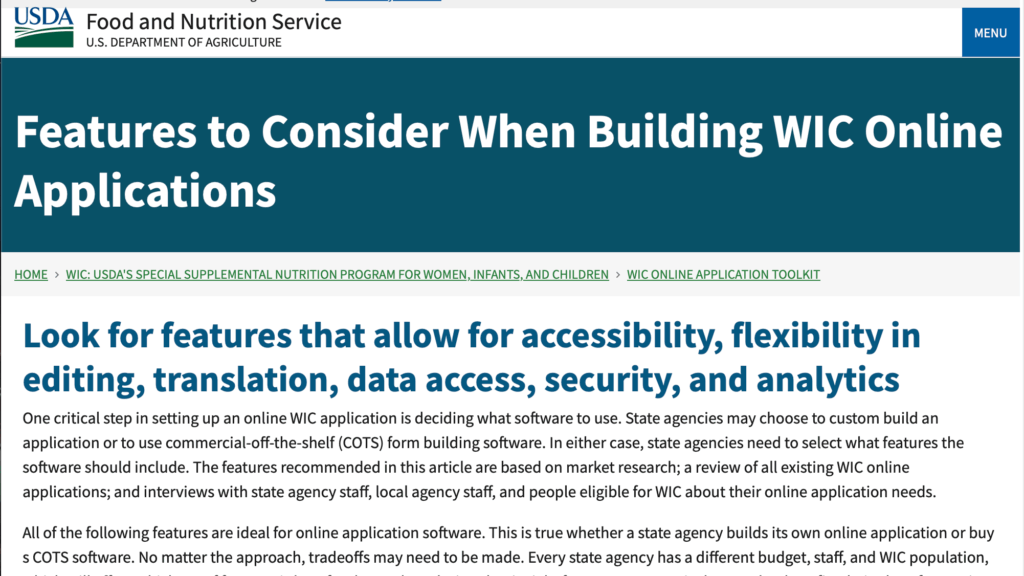
Key functionalities and design elements recommended for creating effective online WIC applications, focusing on usability, accessibility, and compliance to improve participant experience and streamline agency operations.
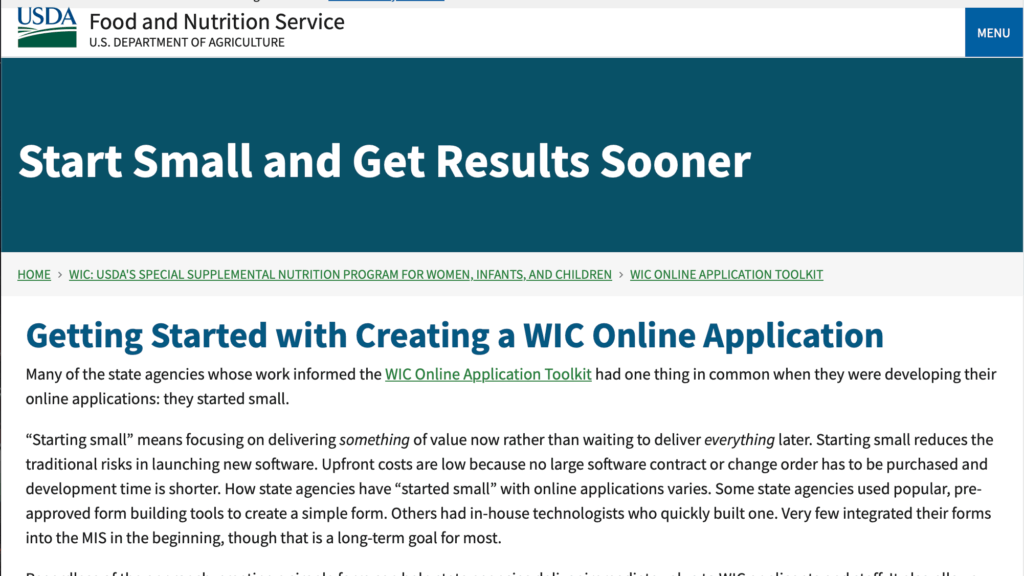
The “Start Small” approach encourages agencies to begin with targeted, manageable improvements in their WIC application process before expanding changes more broadly, fostering easier implementation and measurable early successes.
Provides state and local Special Supplemental Nutrition Program for Women, Infants, and Children (WIC) agencies with a practical guide for developing or improving online WIC application systems.
This research paper explores how government design systems function as the “translation layer” of digital public infrastructure, transforming technical systems into accessible, trustworthy citizen experiences.
A comprehensive guide that provides role definitions, hiring guidance, interview materials, and evaluation rubrics for building effective UX design and research teams.
This blog post discusses the importance of prototyping in the public sector, focusing on how it helps test assumptions, gather user feedback, and refine ideas before making significant investments in building or launching a product or service.
This publication shares ten ways states can improve start-to-finish customer experience for unemployment insurance claimants. These approaches can increase overall equitable access and system integrity for UI administration.
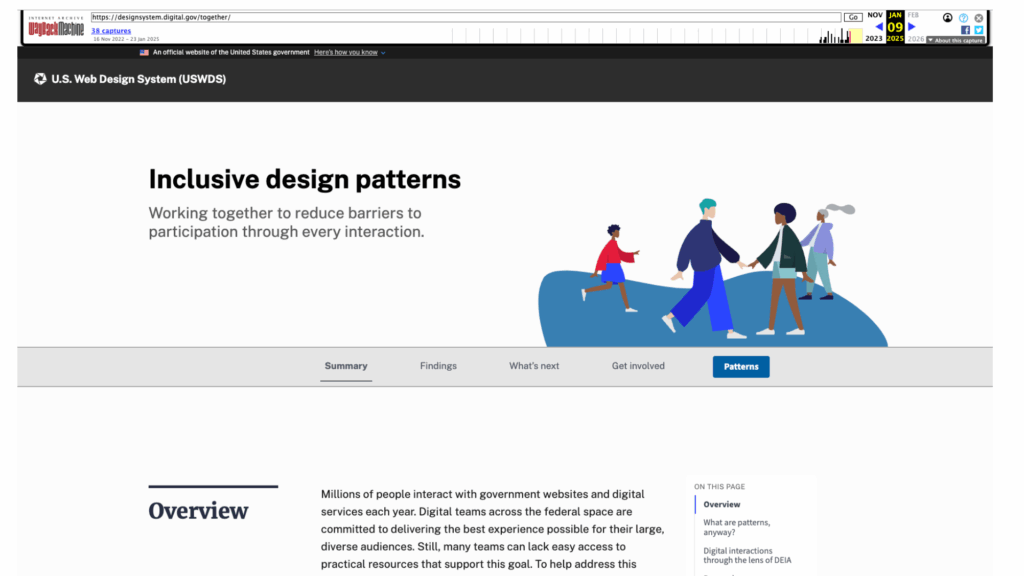
USWDS provides a new library of guidance and examples focused on key digital interactions that foster effective. inclusive, and equitable digital experiences.
The ubiquity of mobile devices makes it imperative to build “mobile first” services, i.e. services built with the expectation that they will primarily be accessed on mobile devices. This article also outlines important considerations and suggestions for implementing mobile-first user interfaces.