The article presents the True Cost of Economic Security (TCES) measure, showing that over half of U.S. families struggle to meet the comprehensive costs required to thrive, highlighting significant disparities based on family type, location, and race.
This brief examines the treatment of PFML for purposes of state and federal taxation, as well as determining income and eligibility in five means-tested programs.
In this summary, the authors use WBNS data to provide updated estimates of chilling effects in 2023 among immigrant families (i.e., in which the respondent or a family member living with them was not born in the US).
This report explores policy options Utah and other states can adopt to mitigate benefit cliffs, which occur when small income increases lead to sudden loss of public assistance.
This report shares the progress of the Biden-Harris Administration on health care access, prescription drug affordability, mental health, maternal health, and public health investments.
A policy directive that establishes standards and guidance for federal executive agencies to manage, secure, and deliver public websites and digital services that are user-centered, accessible, and data-driven.
This provides a comprehensive look at child well-being across the U.S., ranking states and highlighting policy recommendations to improve outcomes for children.
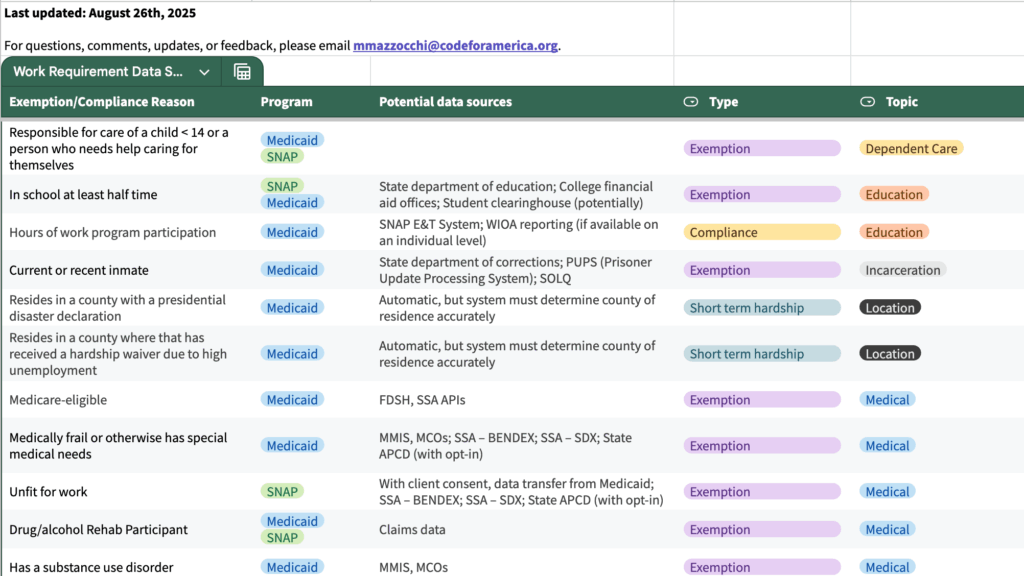
This article offers three human‑centered strategies to help state agencies implement expanded work reporting requirements in SNAP and Medicaid under H.R. 1 with minimal burden on clients and staff.
This report catalogs the policy choices, demonstration projects, and waivers each state uses to administer SNAP, highlighting how states adapt federal rules to local needs.
This overview introduces direct cash transfers (DCTs) in the United States, outlining their history, major programs, and findings from contemporary guaranteed income demonstrations that show how cash supports improve family stability, health, and economic mobility