The Temporary Assistance for Needy Families (TANF) Data Collaborative Pilot Initiative is a component of the TANF Data Innovation project. The 30-month pilot offered technical assistance and training to support cross-disciplinary teams of staff at eight state and county TANF programs in the routine use of TANF and other administrative data to inform policy and practice.
This article examines the concept of "viral cash" and suggests that the future growth of basic income programs will depend on advocacy networks rather than traditional policy diffusion across jurisdictions.
In this report, the U.S. Chamber of Commerce Foundation examines benefits cliffs – the loss of eligibility for public safety-net programs and benefits they provide as income rises above eligibility limits.
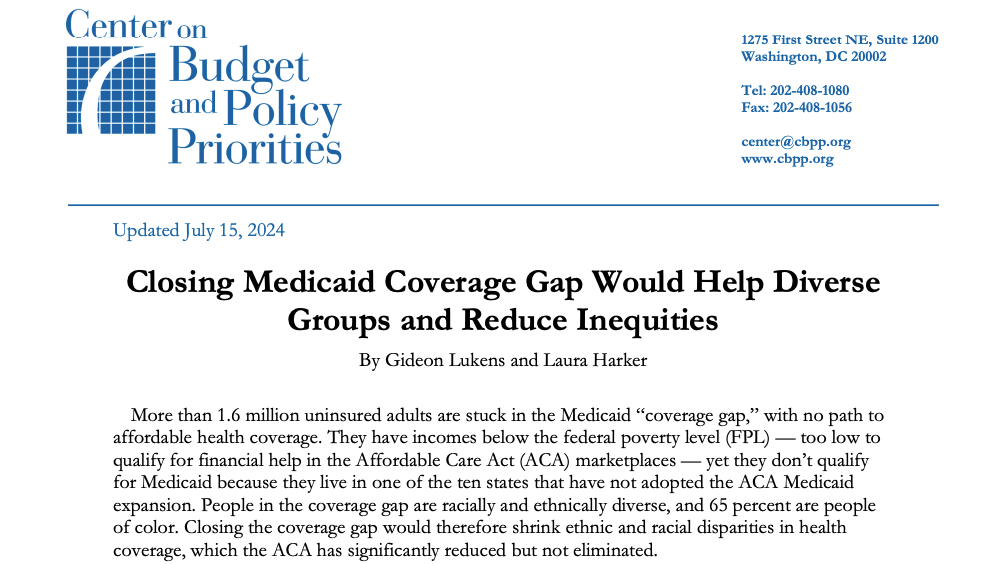
Closing the Medicaid coverage gap could significantly reduce healthcare disparities as 65% of those affected are people of color, specifically impacting low-wage workers and caregivers who often experience economic and health vulnerabilities.
This report celebrates 50 years of improving maternal and child health in the U.S. through WIC and offers advancements, challenges, and solutions for the future.
While much has been written on digital government as a general trend, this working paper instead examines how civic tech is changing American government, focusing on an influential constellation of actors who shape the understanding and implementation of technological opportunities.
The document outlines revisions to OMB's SPD No. 15, which updates the standards for collecting and presenting federal race and ethnicity data, including the integration of race and ethnicity questions, the addition of a MENA category, and requirements for more detailed data collection.
The article analyzes the impacts of Arkansas's Medicaid work requirements, finding that while coverage losses were reversed after the policy was halted, it did not improve employment and led to negative consequences such as increased medical debt and delayed care.
The article highlights the growing issue of SNAP benefit theft through skimming and advocates for permanent security measures and benefit replacements to protect vulnerable households.