These principles and best practices for AI developers and employers to center the well-being of workers in the development and deployment of AI in the workplace and to value workers as the essential resources they are.
This panel discussion from the Academy's 2025 Policy Summit explores the intersection of artificial intelligence (AI) and public benefits, examining how technological advancements are influencing policy decisions and the delivery of social services.
This is a searchable tool that compiles and categorizes over 4,700 policy recommendations submitted in response to the U.S. government's 2025 Request for Information on artificial intelligence policy.
A comprehensive guide to help government agencies establish, implement, and oversee responsible artificial intelligence (AI) governance policies and review processes.
A central hub of guidance, standards, and supporting documentation explaining how UK public sector bodies should record and publish information about algorithmic systems to ensure transparency and accountability.
This guide helps UK public bodies understand how to responsibly procure, develop, and use AI while meeting their legal duties to prevent discrimination and promote equality under the Public Sector Equality Duty (PSED).
This resource helps individuals with aligning their work with the needs of the communities they wish to serve, while reducing the likelihood of harms and risks those communities may face due to the development and deployment of AI technologies.
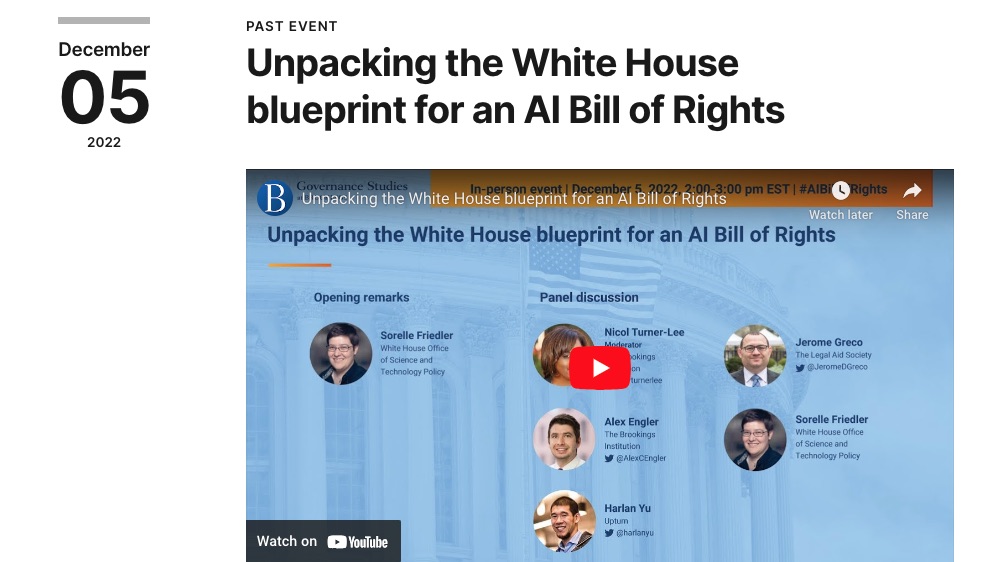
On December 5, 2022, an expert panel, including representatives from the White House, unpacked what’s included in the AI Bill of Rights, and explored how to operationalize such guidance among consumers, developers, and other users designing and implementing automated decisions.