This report analyzes lawsuits that have been filed within the past 10 years arising from the use of algorithm-driven systems to assess people’s eligibility for, or the distribution of, public benefits. It identifies key insights from the various cases into what went wrong and analyzes the legal arguments that plaintiffs have used to challenge those systems in court.
This report by EPIC investigates how automated decision-making (ADM) systems are used across Washington, D.C.’s public services and the resulting impacts on equity, privacy, and access to benefits.
A comprehensive series of workshops and courses designed to equip public sector professionals with the knowledge and skills to responsibly integrate AI technologies into government operations.
Sarah Bargal provides an overview of AI, machine learning, and deep learning, illustrating their potential for both positive and negative applications, including authentication, adversarial attacks, deepfakes, generative models, personalization, and ethical concerns.
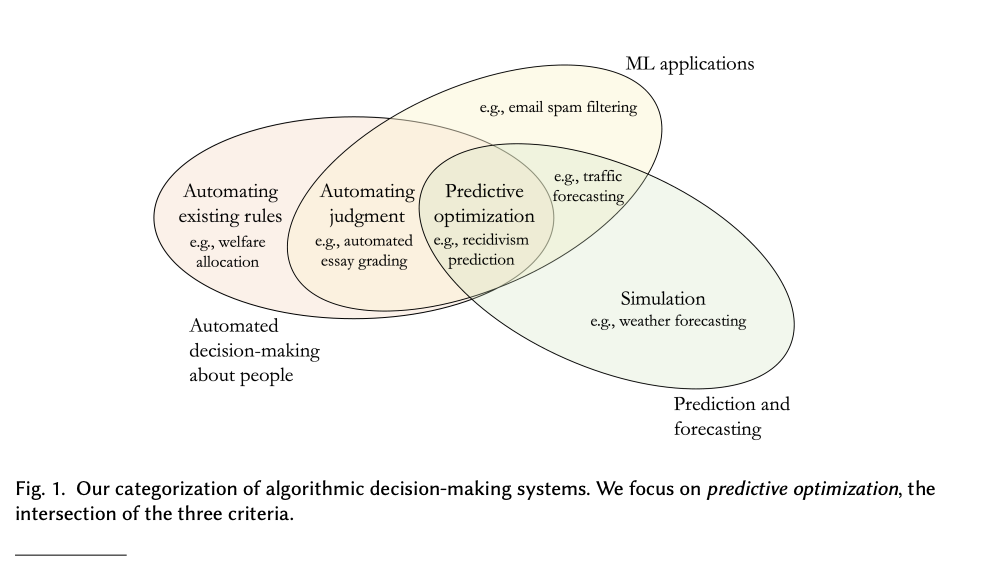
This academic paper examines predictive optimization, a category of decision-making algorithms that use machine learning (ML) to predict future outcomes of interest about individuals. Through this examination, the authors explore how predictive optimization can raise concerns that make its use illegitimate and challenge claims about predictive optimization's accuracy, efficiency, and fairness.
This is a searchable tool that compiles and categorizes over 4,700 policy recommendations submitted in response to the U.S. government's 2025 Request for Information on artificial intelligence policy.
This resource helps individuals with aligning their work with the needs of the communities they wish to serve, while reducing the likelihood of harms and risks those communities may face due to the development and deployment of AI technologies.
This report offers a detailed assessment of how AI and emerging technologies could impact the Social Security Administration’s disability benefits determinations, recommending guardrails and principles to protect applicant rights, mitigate bias, and promote fairness.
This guidebook offers an introduction to the risks of discrimination when using automated decision-making systems. This report also includes helpful definitions related to automation.
The Digital Benefit Network's Digital Identity Community of Practice held a session to hear considerations from civil rights technologists and human-centered design practitioners on ways to ensure program security while simultaneously promoting equity, enabling accessibility, and minimizing bias.
The AI RMF Playbook offers organizations detailed, voluntary guidance for implementing the NIST AI Risk Management Framework to map, measure, manage, and govern AI risks effectively.
National Institute of Standards and Technology (NIST)