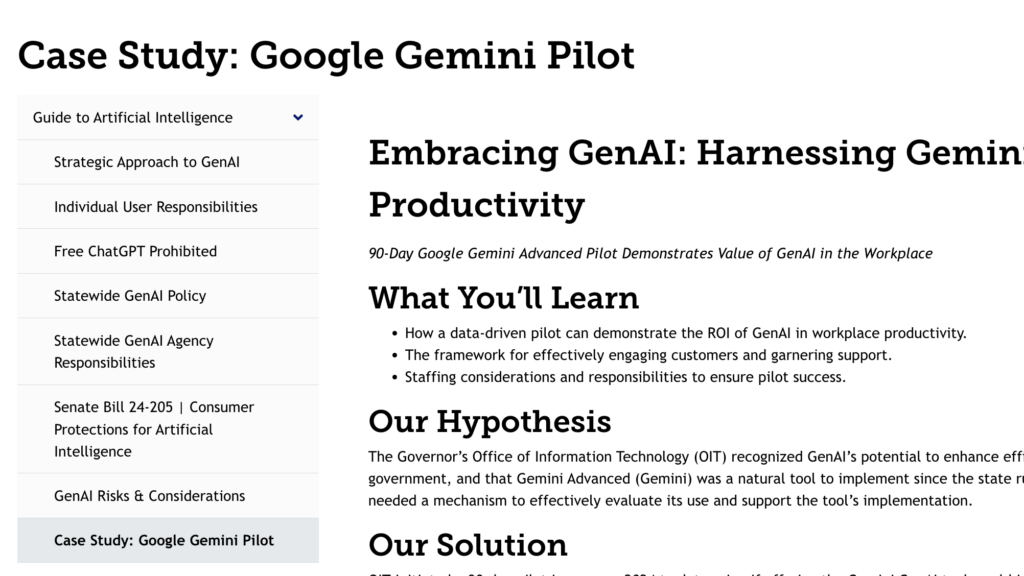
A case study describing how a 90-day generative AI (GenAI) pilot using Google’s Gemini tool was conducted across state agencies to assess productivity, creativity, and responsible use in government work.
Colorado Governor's Office of Information Technology (OIT)
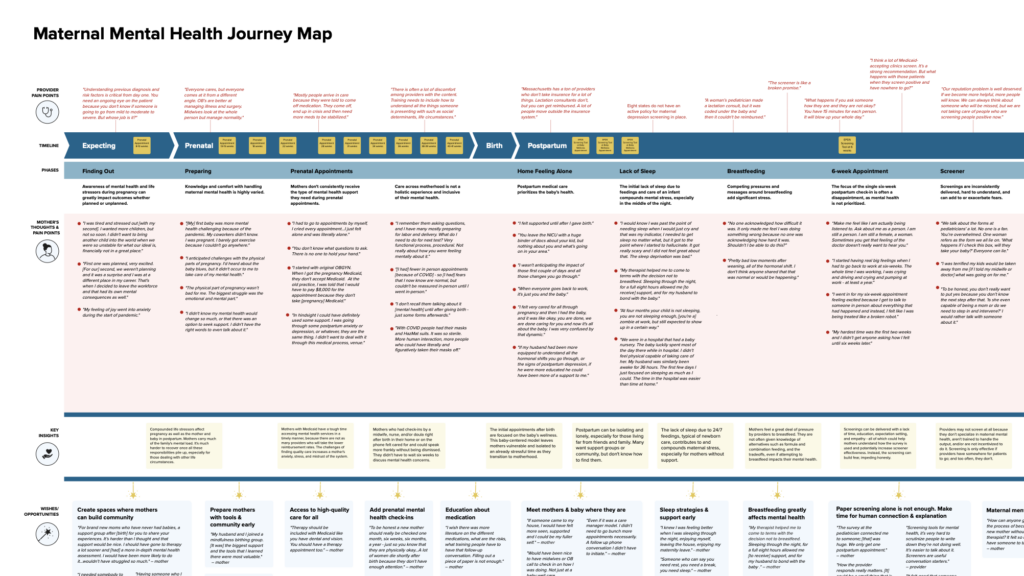
This research visualizes the complex emotional and clinical stages of the maternal mental health experience, from initial pregnancy through postpartum recovery and the return to work.
A four-part U.S. Digital Service blog series detailing how the federal “Birth of a Child and Early Childhood” Life Experience team used human-centered design to improve benefit access, peer support, and maternal mental health services for families with children ages 0–5.
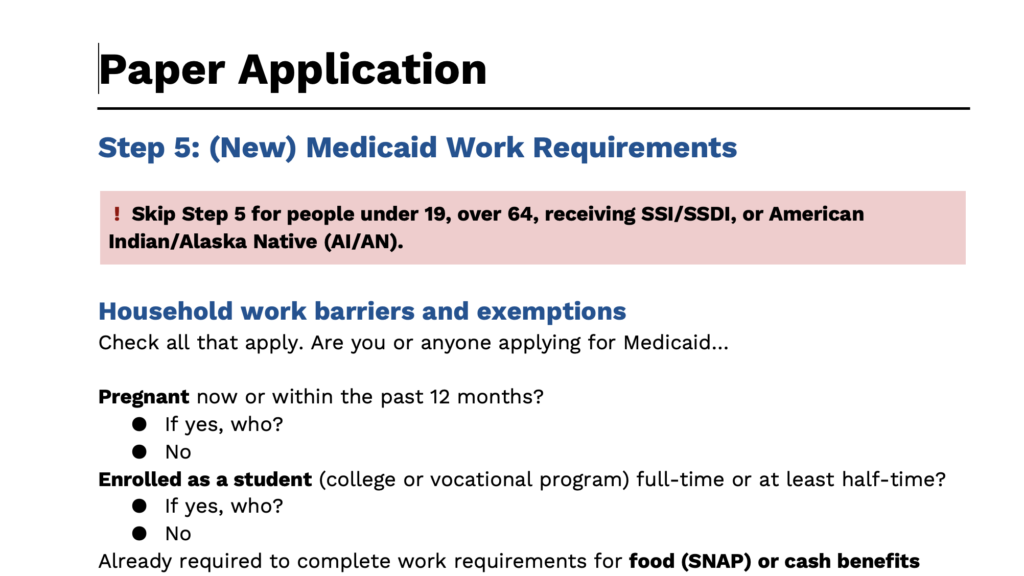
This report provides human-centered design templates and implementation guidance to help states integrate Medicaid work requirement questions into benefits applications while minimizing administrative burden and coverage loss.
This folder contains Medicaid work requirement implementation toolkit, including policy guidance, application templates, question libraries, and a digital prototype designed to help states integrate work requirement questions into Medicaid applications.
A practical, step-by-step guide for government agencies to design, implement, and evaluate community engagement efforts around the use of artificial intelligence.
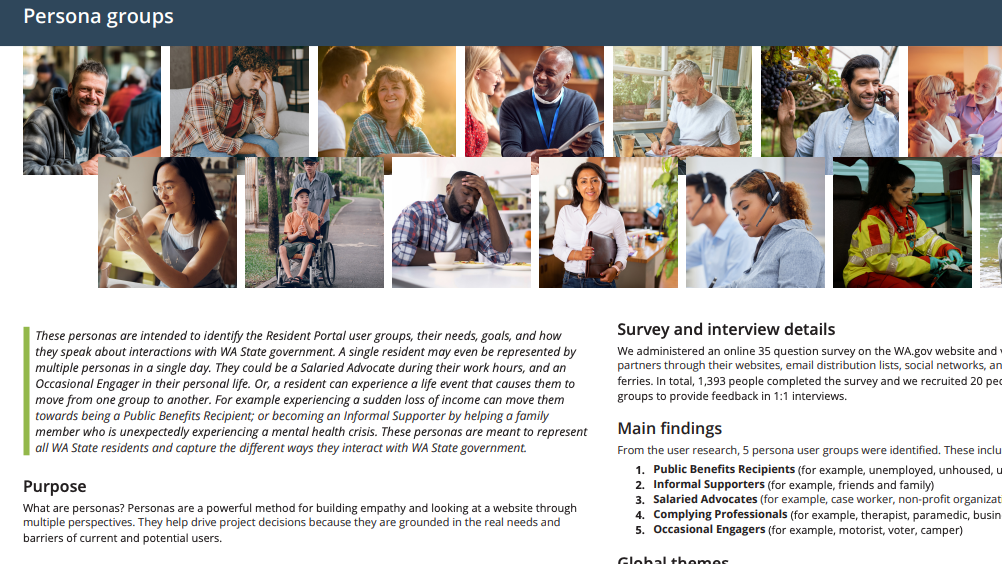
A user research–driven persona framework that identifies key resident groups interacting with government services and outlines their needs, behaviors, and pain points to inform digital service design.
A participant handbook that explains how a child care wage boost pilot works, including eligibility, enrollment, payments, privacy protections, and ongoing responsibilities for facilities and workers.
King County Department of Community and Human Services
Key functionalities and design elements recommended for creating effective online WIC applications, focusing on usability, accessibility, and compliance to improve participant experience and streamline agency operations.
This 2015 project presentation outlines the vision, research, and product requirements for DAHLIA, San Francisco’s online platform to centralize and simplify affordable housing searches and applications.
San Francisco Mayor's Office of Housing and Community Development
This toolkit is designed to support government agencies in evaluating the effectiveness of their public participation and community engagement (PPCE) activities.