This article reviews two examples of how Nava has used open-source technologies to bring human-centered testing practices to government services software.
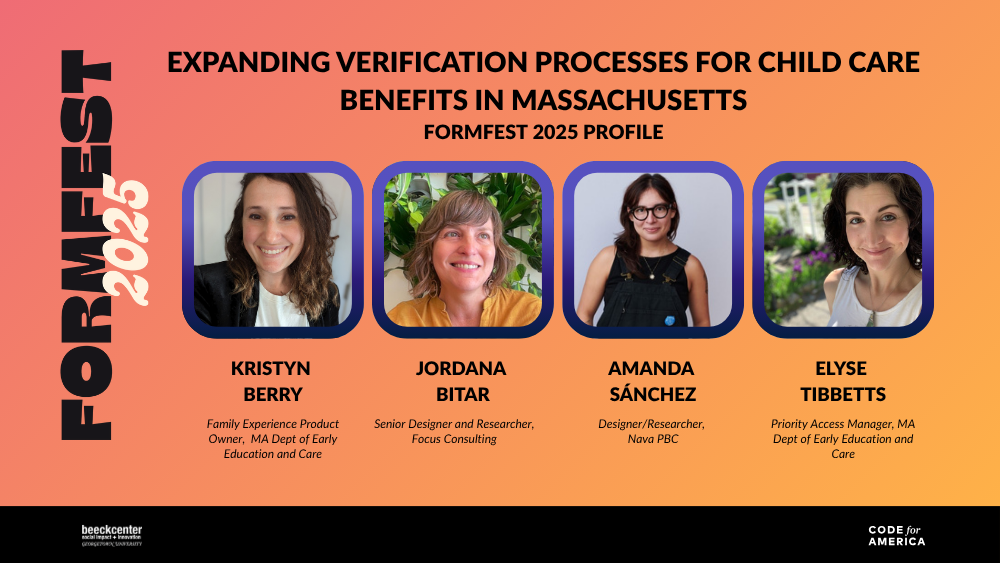
This FormFest profile examines how Massachusetts’ Department of Early Education and Care is modernizing its child care benefits system through human-centered design, making verification and application processes simpler, more compassionate, and more efficient for families and staff.
This resource describes how different agencies have updated their systems to increase online and mobile access to benefits information and applications, including using text messages to share benefits information with residents.
This blog post discusses strategies that states can implement to make public assistance applications more accessible during the COVID-19 crisis, emphasizing the importance of flexibility in application processes to accommodate increased demand and social distancing measures.
Code for America’s Integrated Benefits Initiative has been working in partnership with the State of Colorado to demonstrate how user-centered approaches lead to measurably better delivery of safety net programs. This article describes their work with the state of Colorado in simplifying how clients report common life changes that can affect their eligibility.
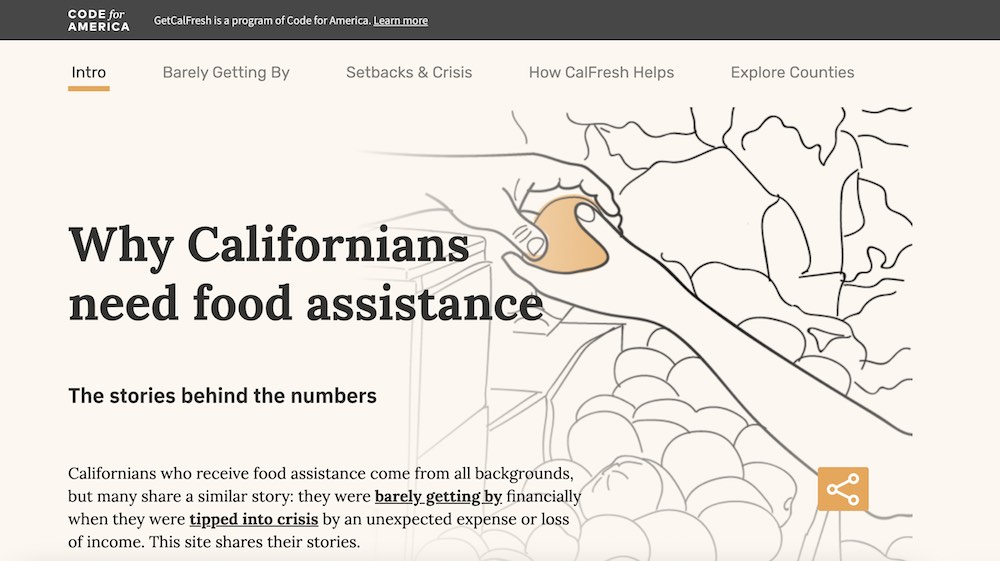
Californians who receive food assistance come from all backgrounds, but many share a similar story: they were barely getting by financially when they were tipped into crisis by an unexpected expense or loss of income. This site shares their stories.
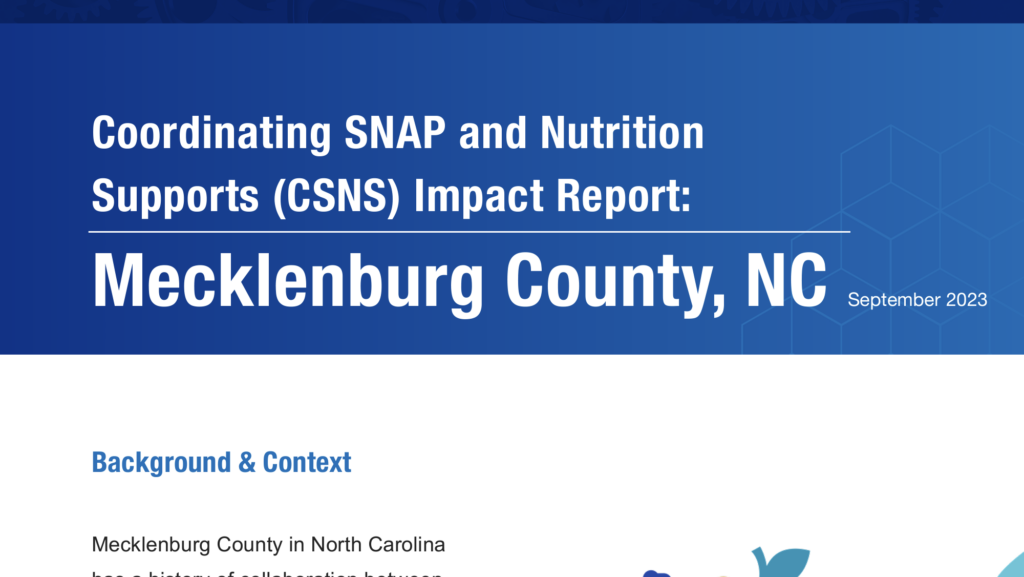
Through the Coordinating SNAP & Nutrition Supports program, Mecklenburg County, NC leveraged a Food Security Navigator model and data analysis to increase access to nutrition supports. This report documents best practices and lessons learned from their project.
American Public Human Services Association (APHSA)
The UX Lead in the Data Strategy & Analytics division will be responsible for maintaining a user-centric focus throughout product development and creating a positive end user experience for a set of educational data and technology projects across multiple teams and will provide expertise and support to other agency initiatives.