This report evaluates the effectiveness and implementation of a generative AI-powered assistive chatbot designed to help caseworkers navigate complex public benefit programs like Medicaid and SNAP.
This report on the use of Generative AI in State government presents an initial analysis of the potential benefits to individuals, communities, government and State government workers, while also exploring potential risks.
This policy supports the appropriate development, deployment, and use of generative artificial intelligence (GenAI) systems, products, services, tools, and content within consolidated state agencies in Colorado.
Colorado Governor's Office of Information Technology (OIT)
This session from FormFest 2024 walked attendees through some of the major changes AI is bringing to form design. Learn about the National Head Start Association’s use of AI to reduce administrative burden and the Canadian Digital Service’s tips for protecting government applications systems from AI.
Guidance from Washington Technology Solutions (WaTech) outlining the state’s framework for responsibly procuring, deploying, and monitoring generative AI technologies across government agencies.
This report documents four experiments exploring if AI can be used to expedite the translation of SNAP and Medicaid policies into software code for implementation in public benefits eligibility and enrollment systems under a Rules as Code approach.
This executive order establishes governance, values, and oversight structures for the ethical and responsible use of generative AI technologies within the Commonwealth of Pennsylvania.
This video shows you how to get started with using Generative AI tools, including Bard, Bing, and ChatGPT, in your work as public sector professionals.
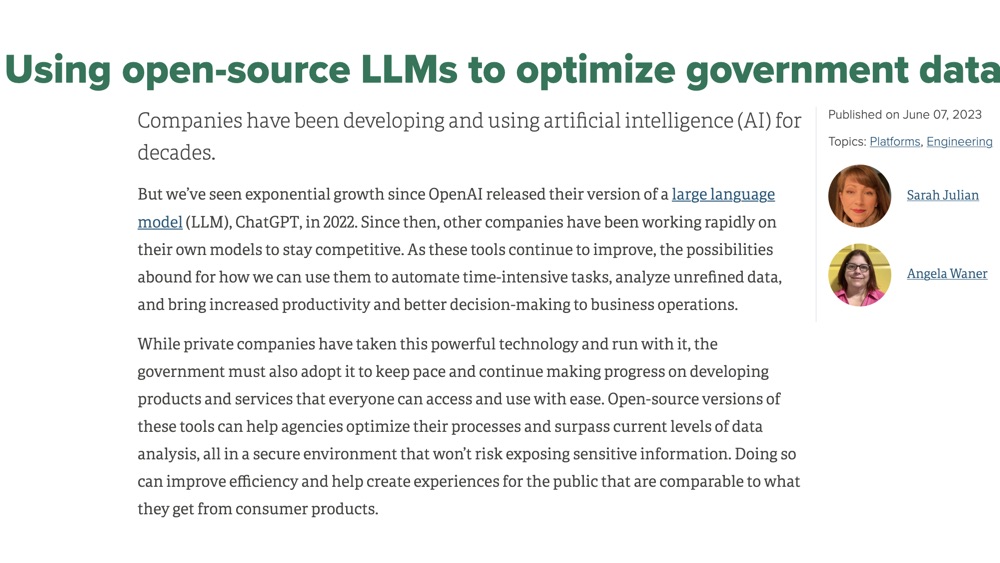
Companies have been developing and using artificial intelligence (AI) for decades. But we've seen exponential growth since OpenAI released their version of a large language model (LLM), ChatGPT, in 2022. Open-source versions of these tools can help agencies optimize their processes and surpass current levels of data analysis, all in a secure environment that won’t risk exposing sensitive information.
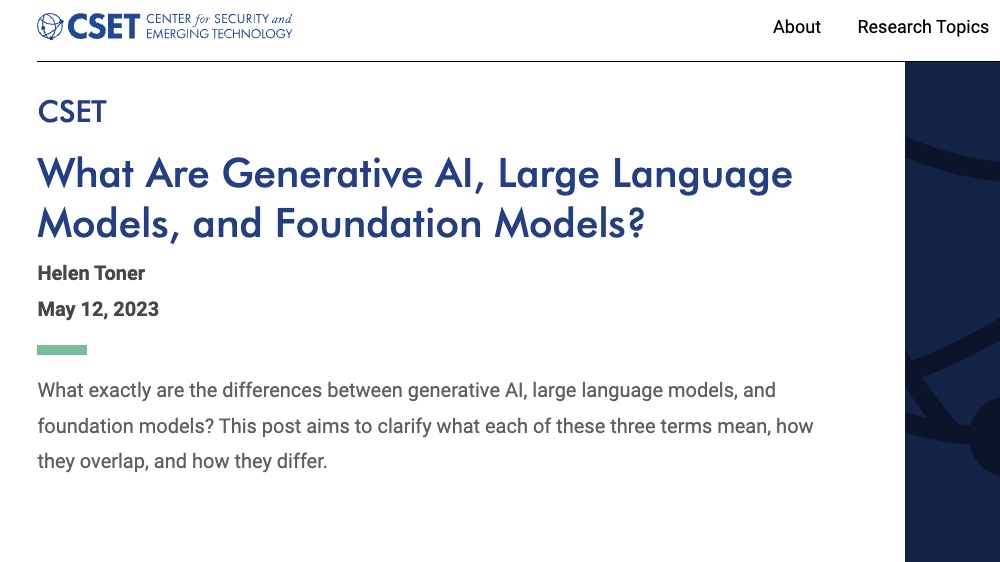
What exactly are the differences between generative AI, large language models, and foundation models? This post aims to clarify what each of these three terms mean, how they overlap, and how they differ.
Center for Security and Emerging Technology (CSET)