
Topic: Forms
-
AI Agents for Streamlining Safety Net Applications
Explore how generative AI is changing public benefits by automating application tasks, boosting accuracy, and freeing up caseworker time.
-
Around the Form
This fast paced panel will recap highlights from FormFest 2025, including key takeaways, choice quotes, and memorable moments.
-
Before the Research: Rethinking Internal Government Forms
Explore how improving internal forms can unlock more agile government, with a focus on New York City's research forms.
-
Blueprint → Browser How NY Turns Wireframes to Working Code
See how New York is transforming form design with fast, repeatable workflows that use tools like Figma, GitHub Copilot, and Code Connect.
-
How to Build and Scale a Simple, Powerful Feedback Widget
Explore how statewide feedback platforms can turn real-time input into tools for building a more responsive, people-centered government.
-
Treating State Benefits as a Partnership, Not a Test
Discover how Massachusetts transformed child care benefits with a family portal using Requests for Information to simplify the process.
-
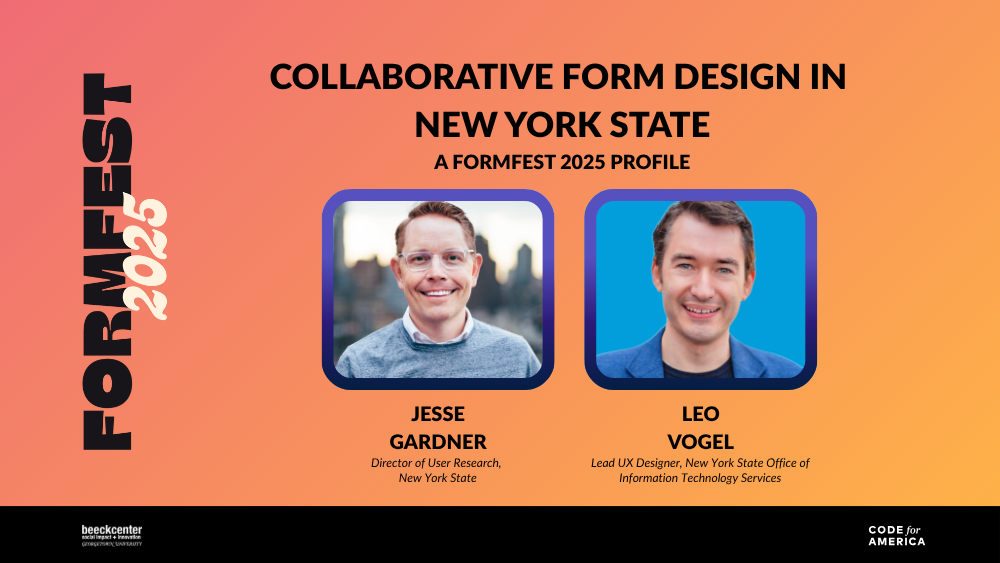
Collaborative Form Design in New York State: A FormFest 2025 Profile
A FormFest profile highlighting how New York State’s design and technology teams are reimagining form creation through collaborative, human-centered design methods that simplify processes and expand participation.
-
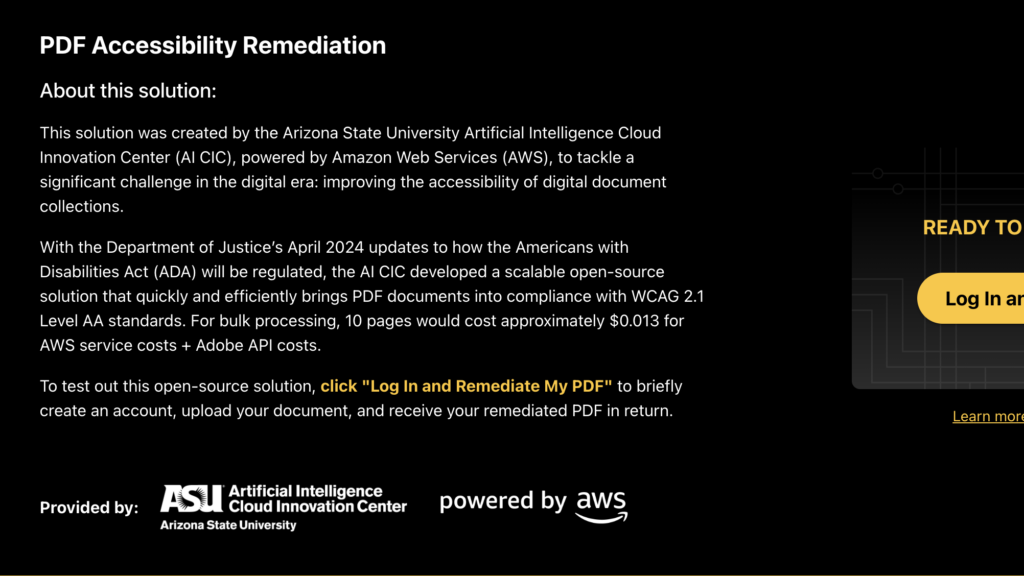
PDF Accessibility Remediation
An open-source tool that uses automation to help organizations quickly remediate PDF documents to meet WCAG 2.1 Level AA accessibility standards.
-
FormFest 2024 Recap: Education Forms from Preschool to College
An event recap from one of FormFest 2024's breakout sessions featuring speakers from South Carolina and the U.S. Department of Education.
-
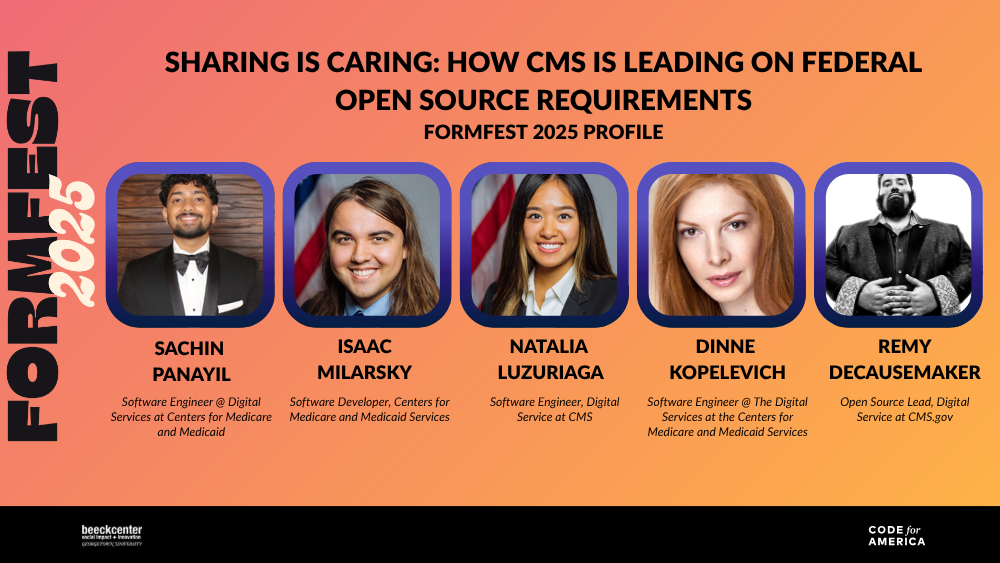
Sharing is Caring: How CMS is Leading on Federal Open Source Requirements: A FormFest 2025 Profile
This profile on the Centers for Medicare and Medicaid Services’ (CMS) Open Source Program Office, the first of its kind in the federal government, showcasing how it advances transparency, collaboration, and innovation across agencies through open source software.
-
Form-ing an Open Source Culture in Federal Agencies
See how CMS is putting the SHARE IT Act into action with open source tools that empower federal agencies to reuse and build on shared code.
-
Goodbye Manual Paper Forms Using AI to Review Paper Forms
Learn how the Bay Area transformed affordable housing access with a mobile-first portal and AI-powered tools.