This session from FormFest 2024 features the South Carolina Early Childhood Advisory Council’s work developing a single portal to integrate applications for publicly funded programs and services, and the office of Federal Student Aid’s work on the FAFSA form.
An event recap from one of FormFest 2024's breakout sessions featuring speakers from the Canadian Digital Service and the National Head Start Association.
This toolkit outlines actionable changes for government practitioners looking to improve the accuracy and accessibility of the questions on their forms that collect information about a user’s gender.
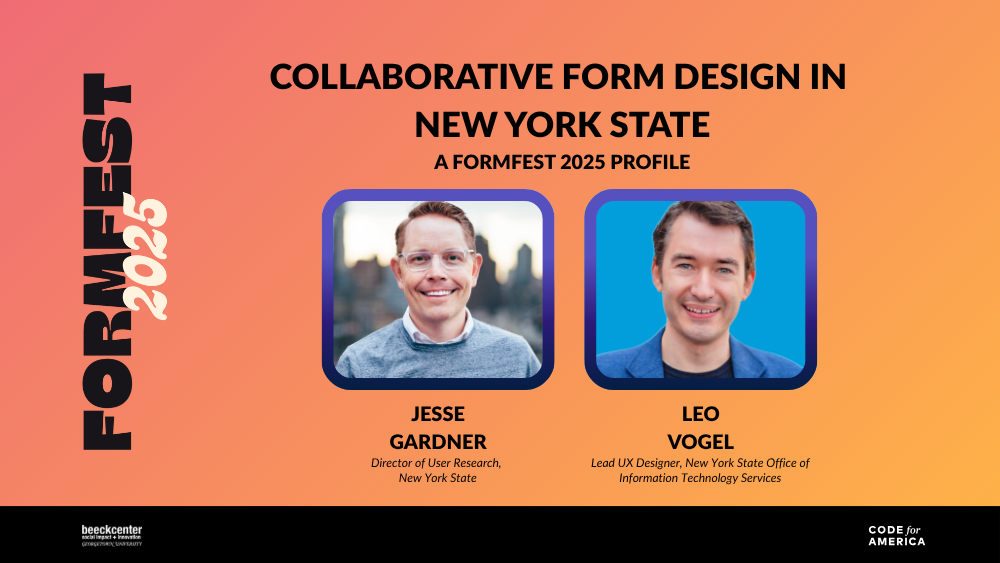
A profile on FormFest speakers Greg Clapp, Josh Gregor, Sophia Tareen, Sourabh Chakraborty, featuring stories about their motivations for working on public sector form innovation.

This session from FormFest 2024 featured the Department of Homeland Security and the United States Digital Service talking about their work to reduce form burdens for internal and external users.
This session from FormFest 2024 focused on human centered form improvements from the City of Reykjavik and the German Digital Service’s form simplification project.
This session from FormFest 2024 focused on improving service delivery by hearing about work in multiple cities to rapidly digitize service delivery and work by the Department of Veteran Affairs around implementing service design principles in form revisions.
This session from FormFest 2024 focuses on accessibility, featuring British Columbia’s work to improve legal form usability and tips from the Wisconsin Department of Public Instruction on making forms more accessible overall.
A profile on FormFest speaker Karissa Minnich, a civic design manager with The Lab @ DC, whose innovative approach to redesigning government forms has transformed paperwork into a model of human-centered design.
Explains that government service forms should be designed to reduce anxiety and build trust—especially for marginalized people—by minimizing requests for highly sensitive personal information or explaining clearly why and how such data will be used, making optional fields and alternatives available, and providing context and reassurance throughout the application process.