This field guide provides practical guidance for conducting usability testing on ballots to identify design issues and ensure voters can successfully cast their votes as intended.
This session from FormFest 2024 focused on improving service delivery by hearing about work in multiple cities to rapidly digitize service delivery and work by the Department of Veteran Affairs around implementing service design principles in form revisions.
This toolkit outlines actionable changes for government practitioners looking to improve the accuracy and accessibility of the questions on their forms that collect information about a user’s gender.
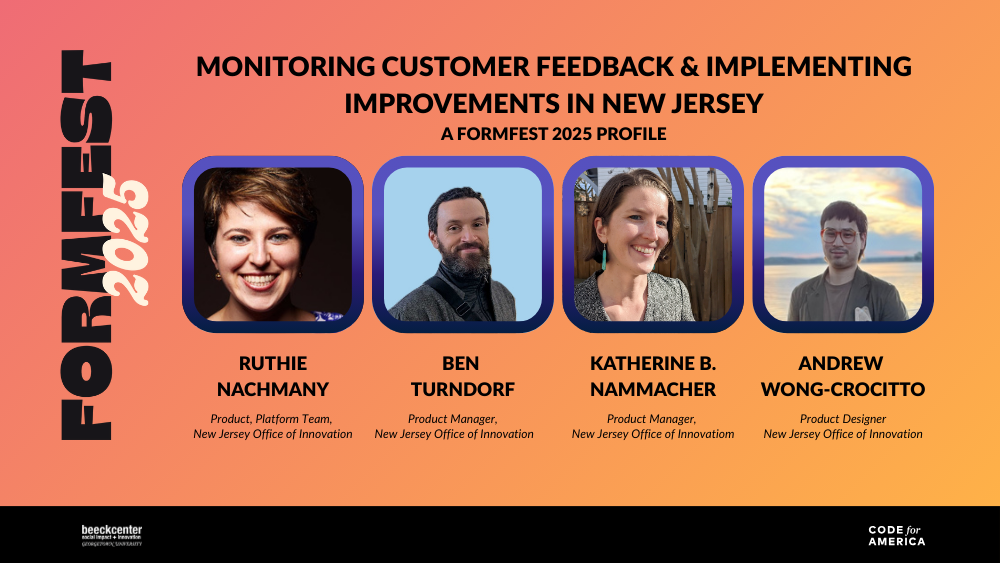
This FormFest profile spotlights the New Jersey State Office of Innovation’s Feedback Widget team, which collects resident input across state websites to improve services and empower agencies to act on real-time feedback.
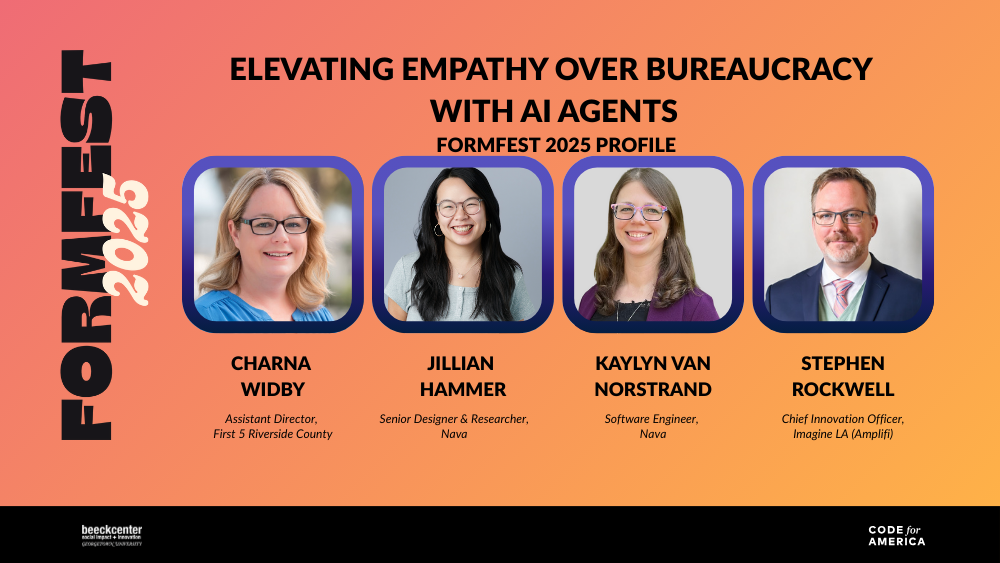
This FormFest profile highlights Riverside County’s pilot of AI-powered interviews that streamline benefit applications, reducing bureaucratic burden on families in crisis while freeing caseworkers to focus on human connection.
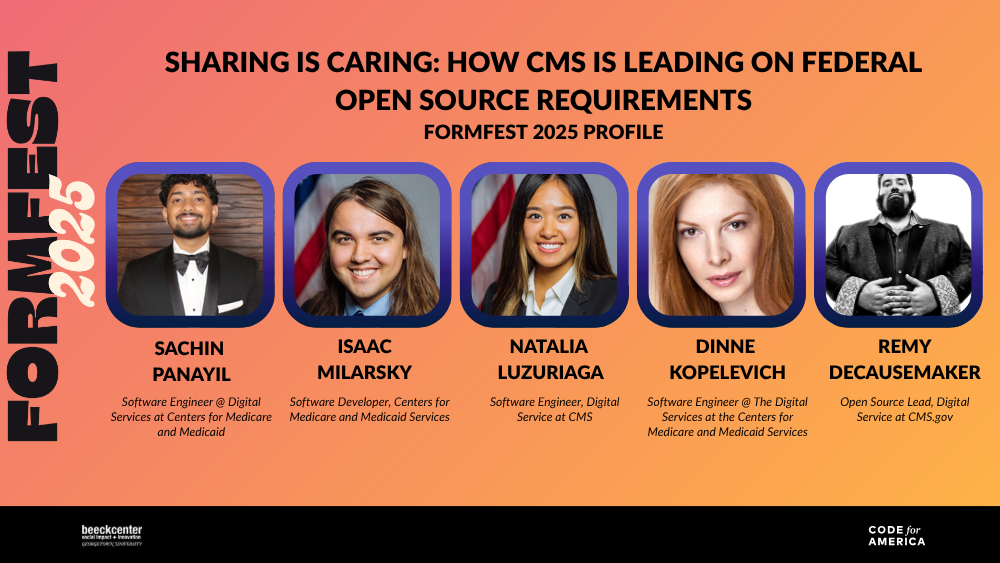
This profile on the Centers for Medicare and Medicaid Services’ (CMS) Open Source Program Office, the first of its kind in the federal government, showcasing how it advances transparency, collaboration, and innovation across agencies through open source software.
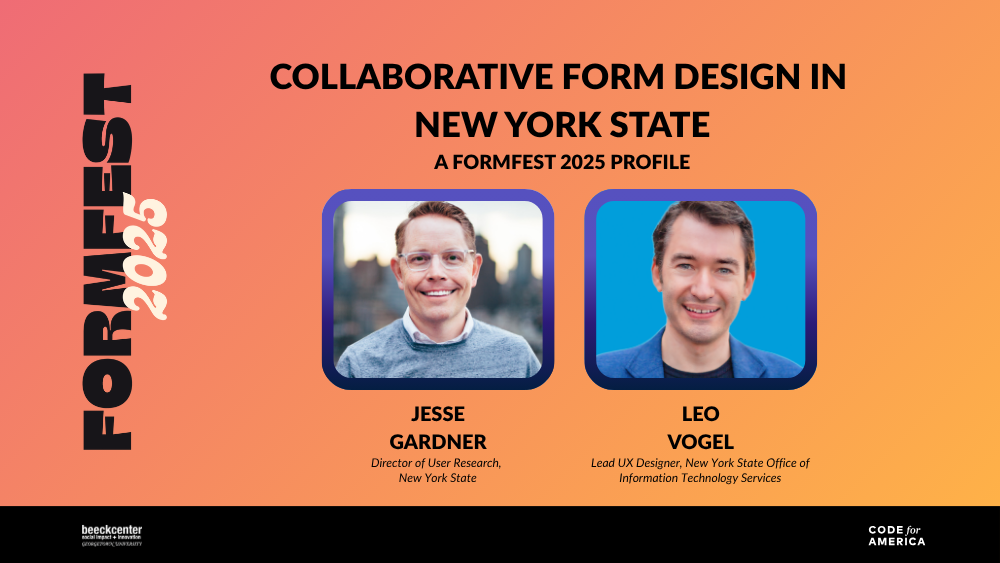
A FormFest profile highlighting how New York State’s design and technology teams are reimagining form creation through collaborative, human-centered design methods that simplify processes and expand participation.
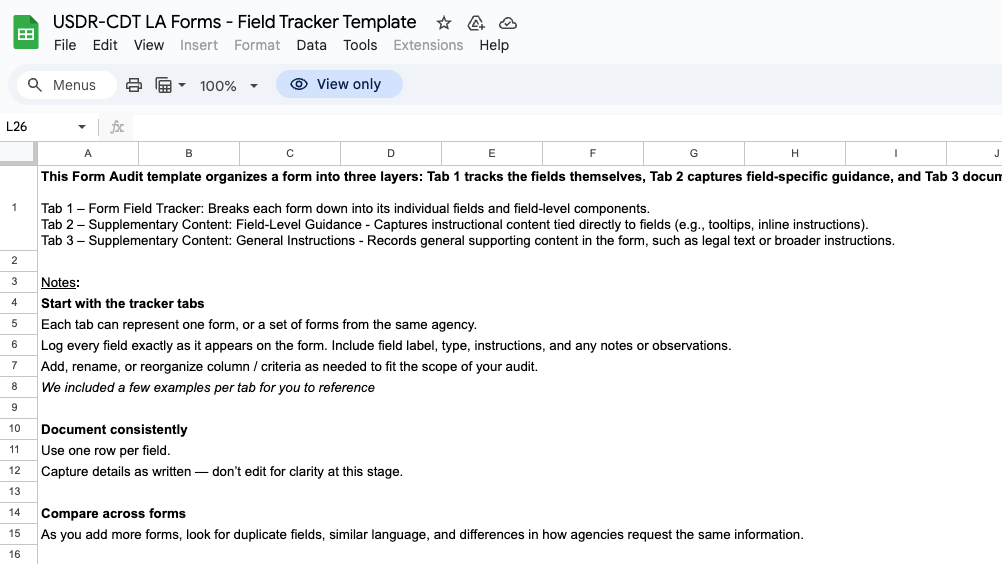
A structured spreadsheet template designed to audit, compare, and standardize government forms by breaking them down into individual fields, guidance, and general instructions.
This blog summarizes a FormFest session where the Center for Civic Design shared research on how screen reader users navigate voter registration forms and offered guidance for designing more accessible digital and PDF forms.