Remote identify proofing is the process federal agencies and other entities use to verify that the individuals who apply online for benefits and services are who they claim to be. If the applicant responds correctly to personal questions, their identity is considered to be verified. However, data stolen in recent breaches could be used fraudulently to respond to knowledge-based verification questions. Alternative methods are available that provide stronger security, but these methods may have limitations in cost, convenience, technological maturity, and they may not be viable for all segments of the public.
This report from the Joint Financial Management Improvement Program outlines efforts to use identity verification to reduce improper payments in government programs, while mitigating bias and disparate impacts.
The Joint Financial Management Improvement Program (JFMIP)
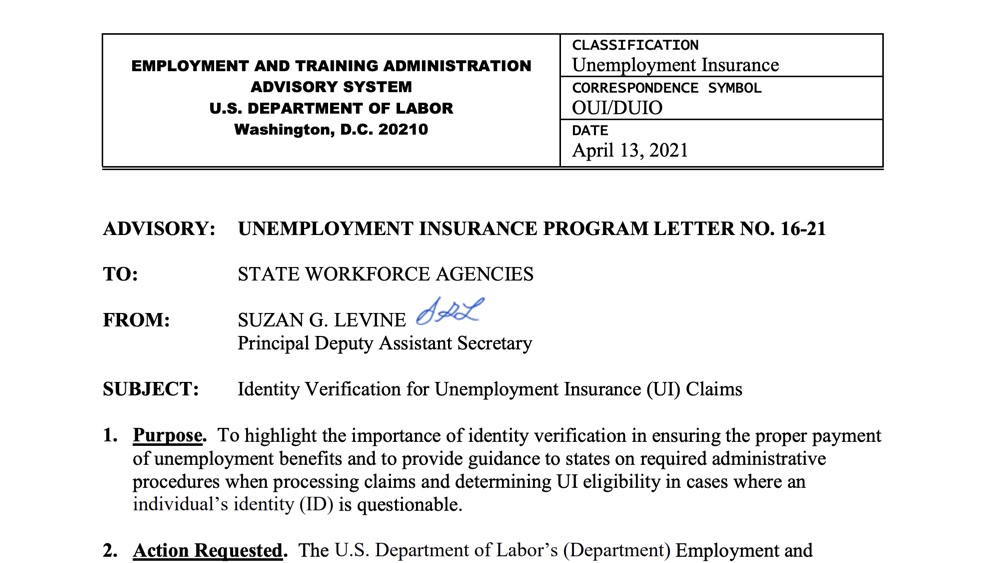
This program letter from the Employment and Training Administration Advisory System, U.S. Department of Labor to State Workforce Agencies highlights the importance of identity verification in ensuring the proper payment of unemployment benefits and provide guidance to states on required administrative procedures.
Employment and Training Administration Advisory System
In this updated primer, the DBN describes how identity proofing and authentication show up in public benefits applications and outlines equity and security concerns raised by common identity proofing and authentication methods.
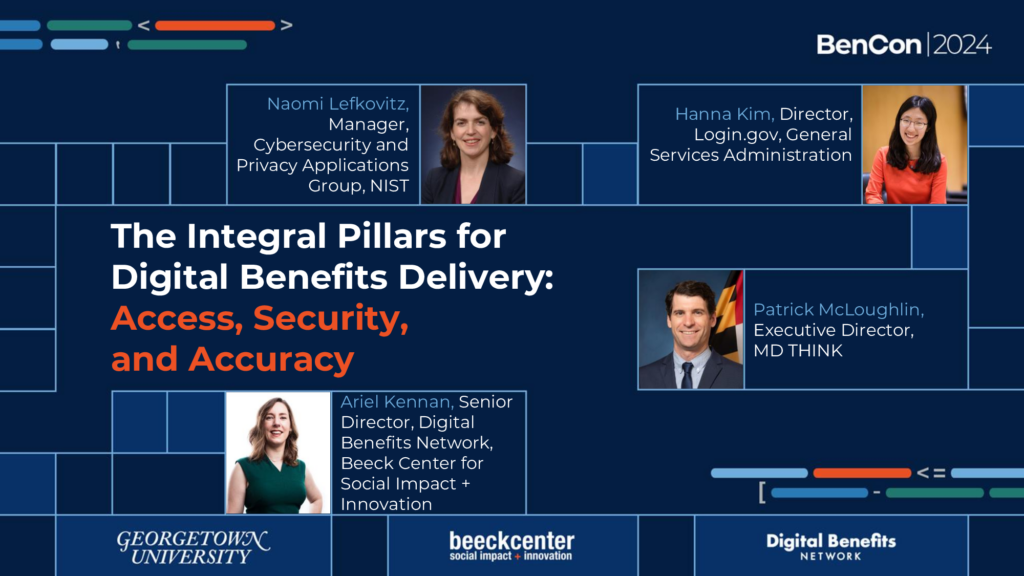
Government leaders discuss how to ensure seamless access to public benefits through breaking down silos, user-friendly digital identities, and privacy-focused security measures.
These recommendations outline privacy-focused guidelines for states adopting digital IDs, emphasizing protections against surveillance, ensuring equitable access, and maintaining control over personal data.
In February 2023, the Digital Benefits Network at the Beeck Center for Social Impact + Innovation released a dataset documenting authentication and identity verification requirements that unemployment insurance (UI) applicants encounter across the United States. This resource outlines high-level observations from the data and more information about the research process.