This book explores the current capabilities, future possibilities, and necessary governance for facial recognition technology. The report discusses legal, societal, and ethical implications of the technology, and recommends ways that federal agencies and others developing and deploying the technology can mitigate potential harms and enact more comprehensive safeguards.
National Academies of Sciences, Engineering, and Medicine
These guidelines provide technical requirements for federal agencies implementing digital identity services and are not intended to constrain the development or use of standards outside of this purpose. These guidelines focus on the authentication of subjects interacting with government systems over open networks, establishing that a given claimant is a subscriber who has been previously authenticated.
National Institute of Standards and Technology (NIST)
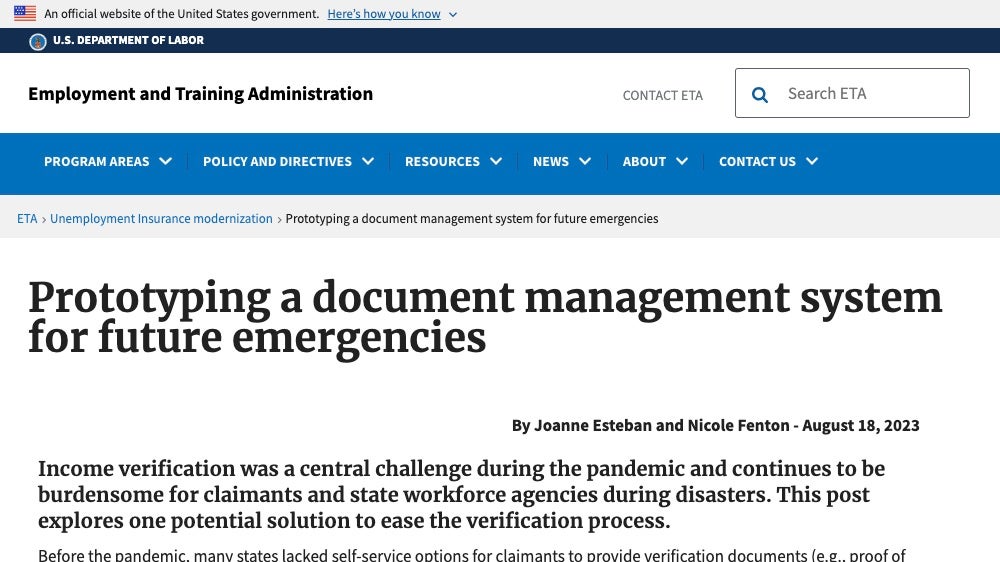
Research from the Department of Labor shows that document management systems reduce barriers for claimants and help states be more efficient. With additional improvements and investment, these systems can be even more effective in serving the public and reducing backlogs in times of crisis.
This research brief summarizes the ideas and recommendations from sessions with dozens of cross-sector stakeholders within the technology ecosystem to identify conditions for better, healthier, more secure digital ecosystems that could help guide the next generation of open protocols and platforms.
The Benefits Enrollment Field Guide looks at the landscape of America’s safety net benefits experience in 2023 and tracks the differences from our 2019 assessment based on expanded evaluation criteria. It also highlights successful paths to equitable, human-centered experiences. It examines online enrollment for Modified Adjusted Gross Income (MAGI) Medicaid, SNAP, TANF, the Child Care Assistance Program (CCAP), and WIC.
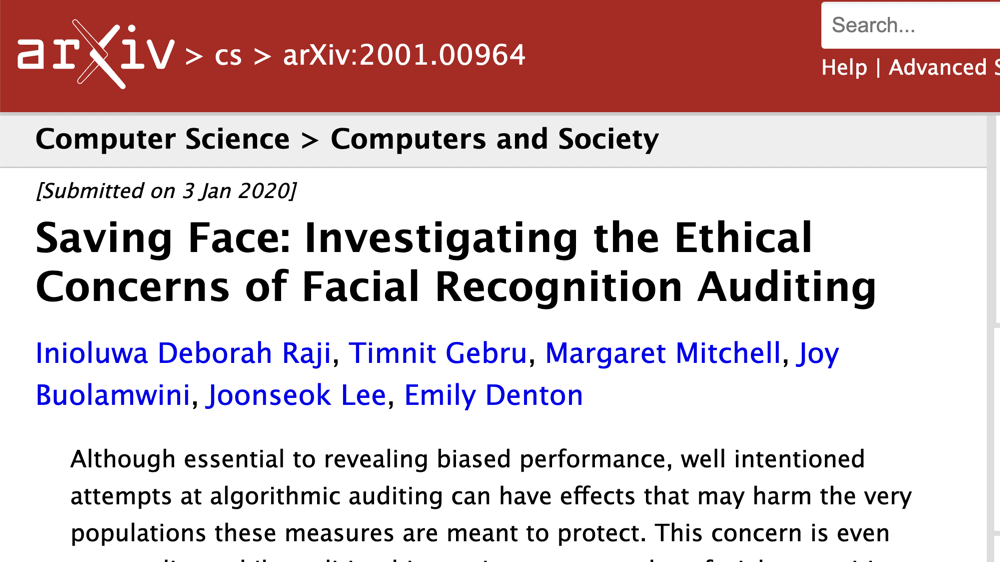
This policy brief offers recommendations to policymakers relating to the computational and human sides of facial recognition technologies based on a May 2020 workshop with leading computer scientists, legal scholars, and representatives from industry, government, and civil society