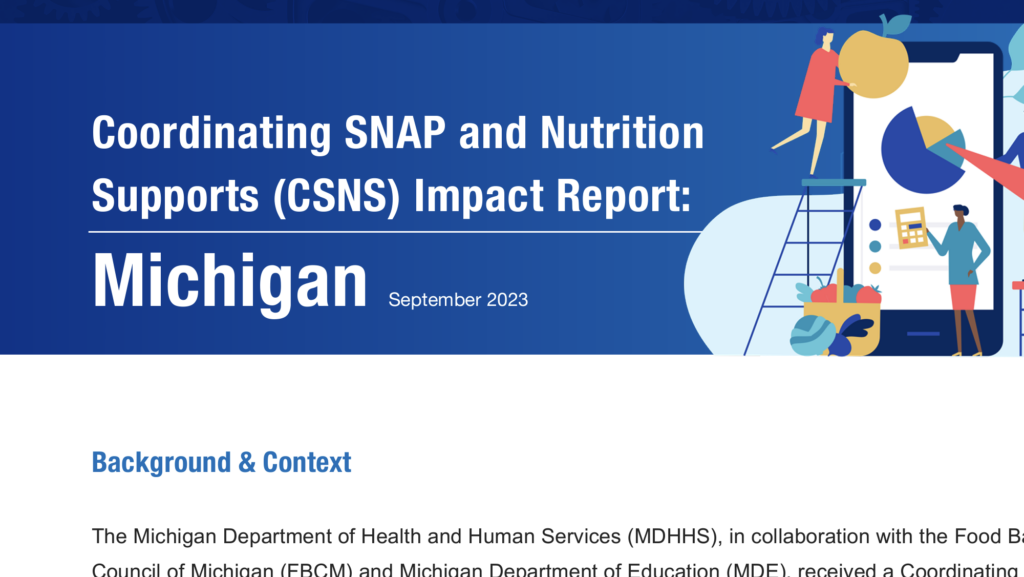
The Michigan Department of Health and Human Services, together with the Food Bank Council of Michigan and the Michigan Department of Education developed a comprehensive Food Insecurity Map and a closed-loop referral system for nutrition and economic supports.
American Public Human Services Association (APHSA)
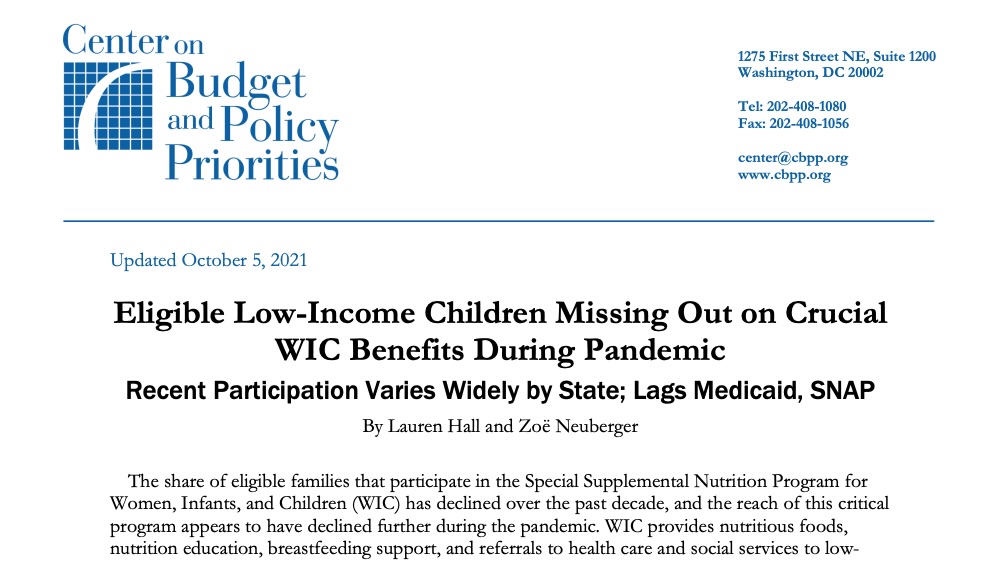
The report highlights that many eligible low-income children are not receiving WIC benefits during the COVID-19 pandemic, with participation rates varying significantly by state and lagging behind programs like Medicaid and SNAP.
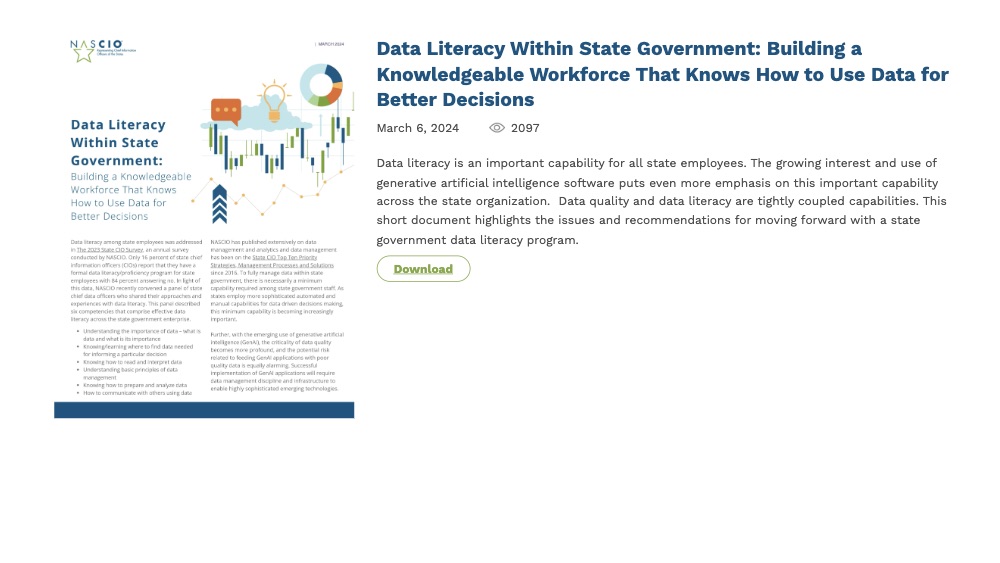
The National Association of State Chief Information Officers (NASCIO) convened a panel of state chief data officers who shared their approaches and experiences with data literacy. The panel provides recommendations for establishing a state-level data literacy program, ensuring that employees understand how to use data effectively for better decision-making.
National Association of State Chief Information Officers (NASCIO)
This case study examines how Michigan’s Department of Health and Human Services uses data practices to advance racial equity in child welfare through identity-informed data collection and anonymous decision-making.
U.S. Department of Health and Human Services (HHS)
An updated guide for public sector and civic data users to embed racial equity and community voice throughout the data life cycle—from planning to dissemination.
This interim final rule requires SNAP State agencies to provide information to the NAC regarding individuals receiving SNAP benefits in their states in order to ensure they are not already receiving benefits in another state.
This report analyzes the rise of digital driver’s licenses (DDLs) and warns that, without strong safeguards, they could threaten privacy, civil liberties, and equitable access to identification.
This one-pager introduces Iowa’s Child Care Search tool, a family-friendly application that helps users find real-time child care vacancies based on their commute, preferences, and provider offerings.