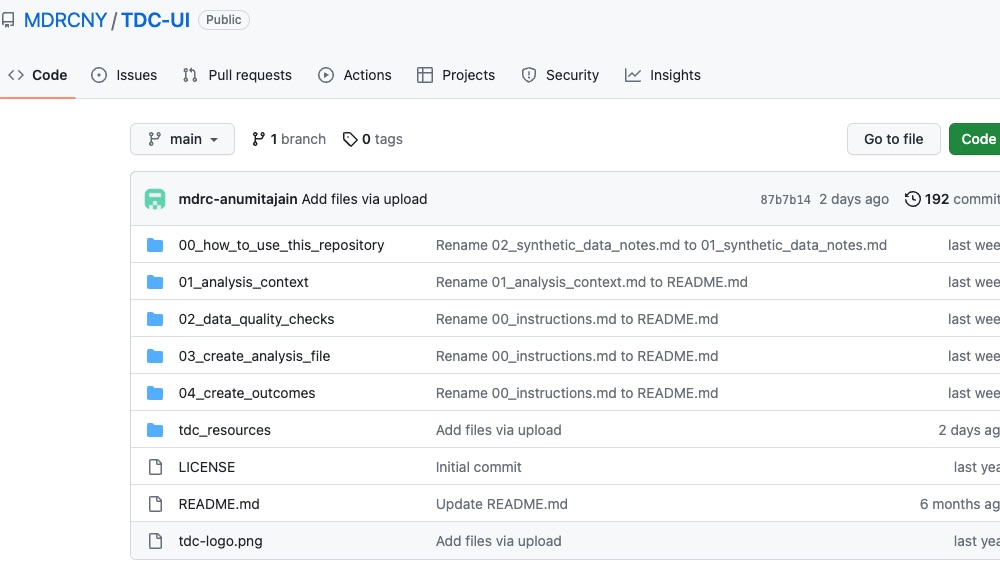
This GitHub repository includes resources that users of the UI wage data toolkit may find helpful. It covers a variety of topics, including equity, data security, programming, and data QC tips. It also serves as a place for our team to continue to post information that the TANF Data Collaborative (TDC) pilot sites found useful during our partnerships with them.
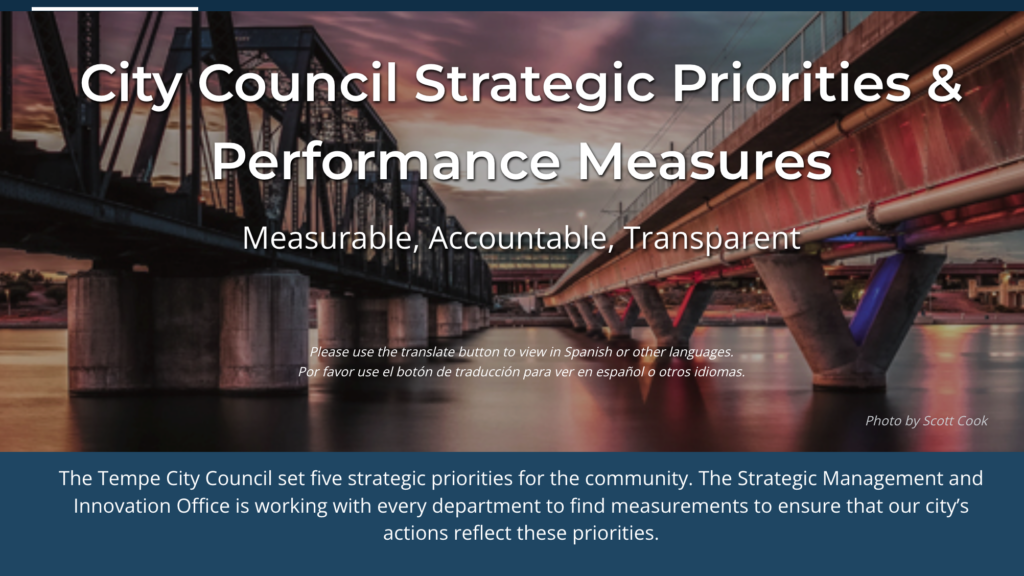
The Tempe City Council set five strategic priorities for the community. The Strategic Management and Innovation Office is working with every department to find measurements to ensure that our city’s actions reflect these priorities.
These standardized guidelines are intended to manage data quality across Hawaii state agencies, covering key dimensions, compliance expectations, and best practices for both general and geospatial data.
A collaborative resource document detailing the civic tech support offerings, state and local government resources, and civic tech organizational support.
To assist states in closing digital skill gaps and preparing for digital equity planning, this brief offers key questions and resources for state leaders to consider.
The article discusses key takeaways from BenCon 2023, highlighting the importance of creating equitable and ethical public benefits technology. It emphasizes the need for tech solutions that address systemic inequalities, ensure accessibility, and promote inclusivity for underserved communities in accessing public services.
The Hawai‘i Department of Human Services (DHS), in partnership with the Hawai‘i Department of Health (DOH) and the Children’s Healthy Living Center of Excellence (CHL Center) at the University of Hawai‘i at Mānoa, is building foundational capacity to share and analyze administrative data across the SNAP (Supplemental Nutrition Assistance Program) and the Special Supplemental Nutrition Program for Women, Infants and Children (WIC). This groundwork will enable Hawai‘i to increase access to nutrition support programs, in alignment with Hawai‘i’s ‘Ohana Nui framework, which aims to dismantle intergenerational poverty.
American Public Human Services Association (APHSA)
A growing observatory of examples of how open data from official sources and generative artificial intelligence (AI) are intersecting across domains and geographies.
The document outlines revisions to OMB's SPD No. 15, which updates the standards for collecting and presenting federal race and ethnicity data, including the integration of race and ethnicity questions, the addition of a MENA category, and requirements for more detailed data collection.