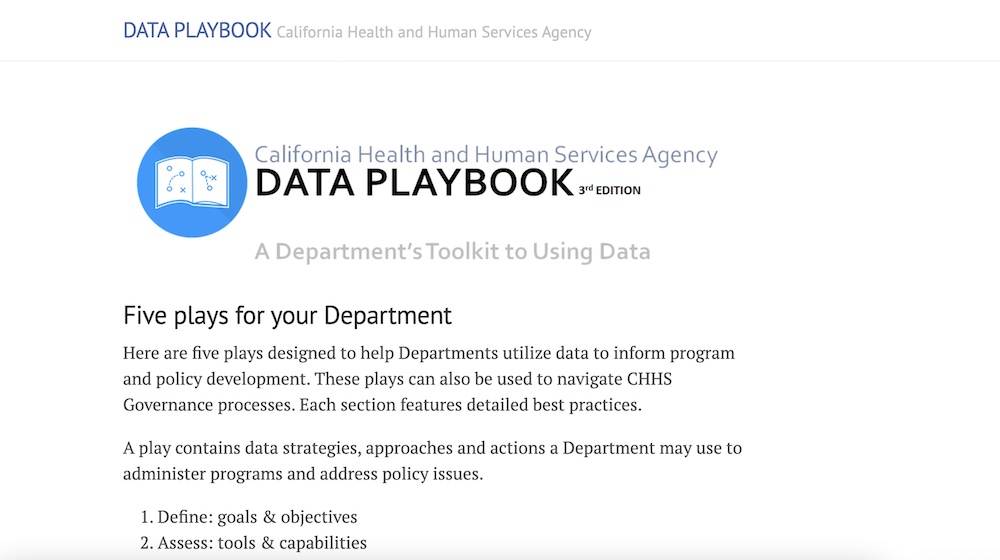
This data playbook created by the California Health and Human services agencies discusses five plays designed to help Departments utilize data to inform program and policy development.
California Health and Human Services Agency (Cal HHS)
This policy brief explores how federal privacy laws like the Privacy Act of 1974 limit demographic data collection, undermining government efforts to conduct equity assessments and address algorithmic bias.
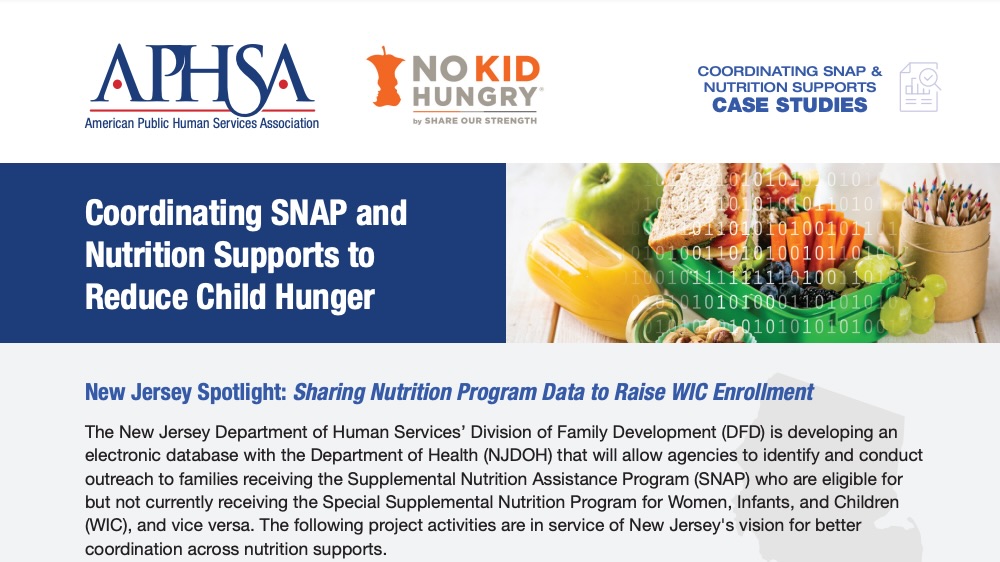
This report outlines how the New Jersey Department of Human Services’ Division of Family Development (DFD) and the Department of Health (NJDOH) are increasing SNAP & WIC co-enrollment through data sharing, outreach, and systems integration.
American Public Human Services Association (APHSA)
This assessment aims to help states gain a comprehensive understanding of their successes and shortcomings in their data strategies and enhance their strategic and tactical plans.
This page includes data and observations about authentication and identity proofing steps specifically for online applications that include child care applications.
This playbook is designed to help government and other key sectors use data sharing to illuminate who is not accessing benefits, connect under-enrolled populations to vital assistance, and make the benefits system more efficient for agencies and participants alike.
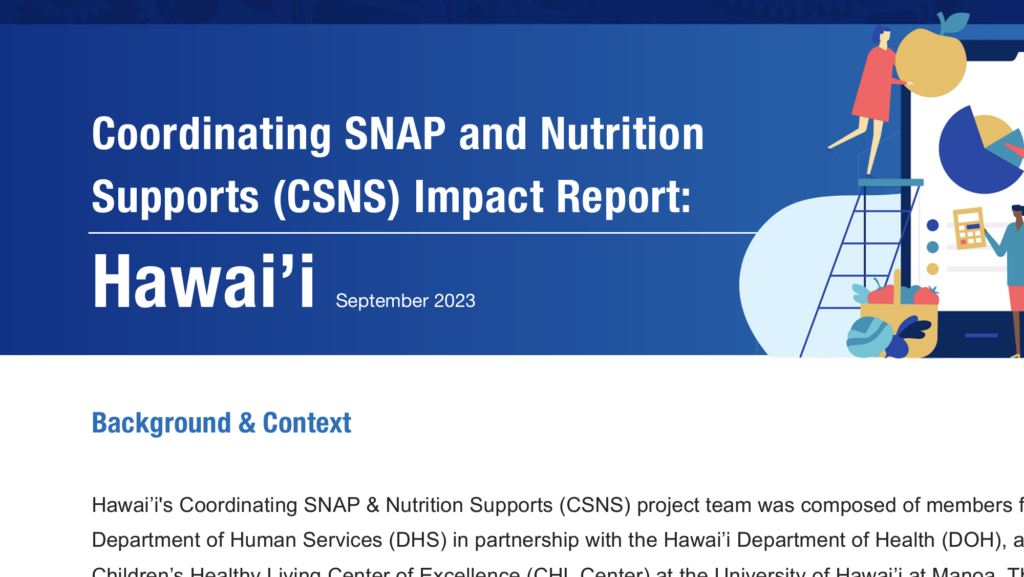
This report documents best practices and lessons learned from project streamlined data sharing between SNAP and WIC, enhancing cross-enrollment processes
American Public Human Services Association (APHSA)
In this presentation, team members from the North Carolina Department of Health and Human Services provide an overview of the implementation process for cross enrollment with SNAP, WIC, and Medicaid in North Carolina.
North Carolina Department of Health and Human Services
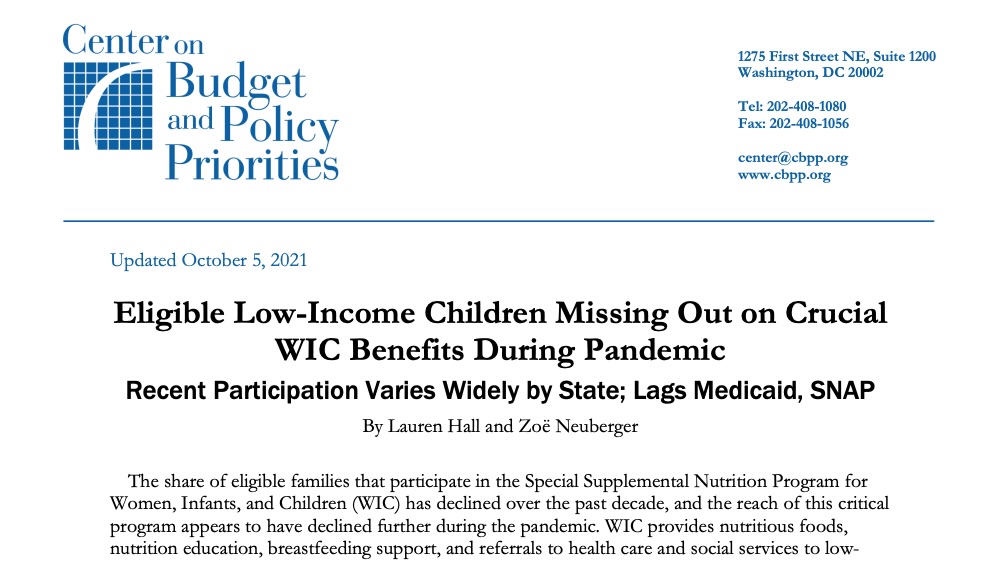
The report highlights that many eligible low-income children are not receiving WIC benefits during the COVID-19 pandemic, with participation rates varying significantly by state and lagging behind programs like Medicaid and SNAP.
This toolkit is designed to assist state and local TANF agencies in accessing, linking, and analyzing employment data from unemployment insurance (UI) systems.