Algorithmic impact assessments (AIAs) are an emergent form of accountability for organizations that build and deploy automated decision-support systems. This academic paper explores how to co-construct impacts that closely reflects harms, and emphasizes the need for input of various types of expertise and affected communities.
ACM Conference on Fairness, Accountability, and Transparency (ACM FAccT)
The primer–originally prepared for the Progressive Congressional Caucus’ Tech Algorithm Briefing–explores the trade-offs and debates about algorithms and accountability across several key ethical dimensions, including fairness and bias; opacity and transparency; and lack of standards for auditing.
Through a field scan, this paper identifies emerging best practices as well as methods and tools that are becoming commonplace, and enumerates common barriers to leveraging algorithmic audits as effective accountability mechanisms.
ACM Conference on Fairness, Accountability, and Transparency (ACM FAccT)
This paper argues that a human rights framework could help orient the research on artificial intelligence away from machines and the risks of their biases, and towards humans and the risks to their rights, helping to center the conversation around who is harmed, what harms they face, and how those harms may be mitigated.
This paper introduces the problem of semi-automatically building decision models from eligibility policies for social services, and presents an initial emerging approach to shorten the route from policy documents to executable, interpretable and standardised decision models using AI, NLP and Knowledge Graphs. There is enormous potential of AI to assist government agencies and policy experts in scaling the production of both human-readable and machine executable policy rules, while improving transparency, interpretability, traceability and accountability of the decision making.
The White House Office of Science and Technology Policy has identified five principles that should guide the design, use, and deployment of automated systems to protect the American public in the age of artificial intelligence. These principles help provide guidance whenever automated systems can meaningfully impact the public’s rights, opportunities, or access to critical needs.
In early 2023, Wired magazine ran four pieces exploring the use of algorithms to identify fraud in public benefits and potential harms, deeply exploring cases from Europe.
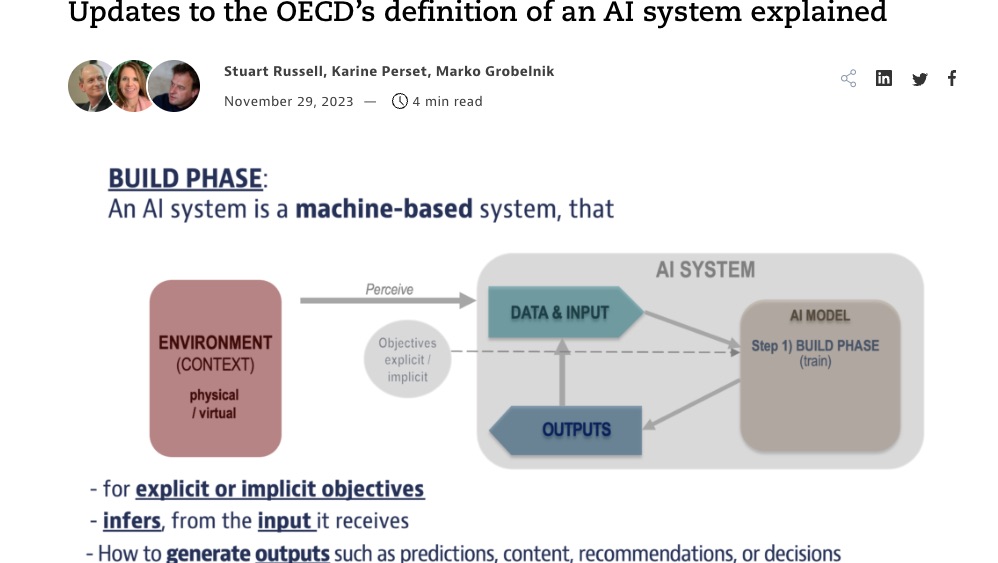
In 2023, OECD member countries approved a revised version of the Organisation’s definition of an AI system. This post explains the reasoning behind the updated definition.
Organisation for Economic Co-operation and Development (OECD)
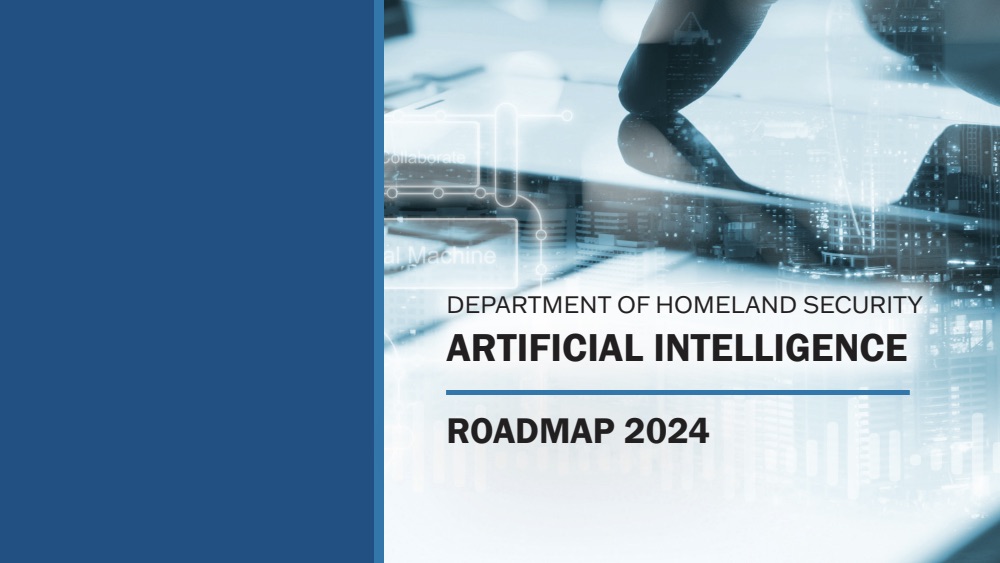
The U.S. Department of Homeland Security (DHS) Artificial Intelligence (AI) Roadmap outlines the agency's AI initiatives and AI's potential across the homeland security enterprise.