This study emphasizes the need for better tracking of gig economy data and qualitative insights, as interviews from the American Voices Project reveal how broader economic trends impacted individual lives and filled gaps during the pandemic.
A collaborative resource document detailing the civic tech support offerings, state and local government resources, and civic tech organizational support.
This impact report showcases the office's initiatives and achievements in enhancing state government services through innovative, user-centered approaches.
This executive order establishes Operation Hire Hawaiʻi, a statewide initiative directing agencies to prioritize local hiring, expand apprenticeship and workforce development programs, and strengthen partnerships to build a more resilient, resident-based public workforce.
Prepared by the Washington State Office of Financial Management’s State Human Resources Division under Executive Order No. 24-01, this report examines the potential effects of GenAI on state employees across sectors including education, IT, and law enforcement.
Washington State Office of Financial Management (OFM)
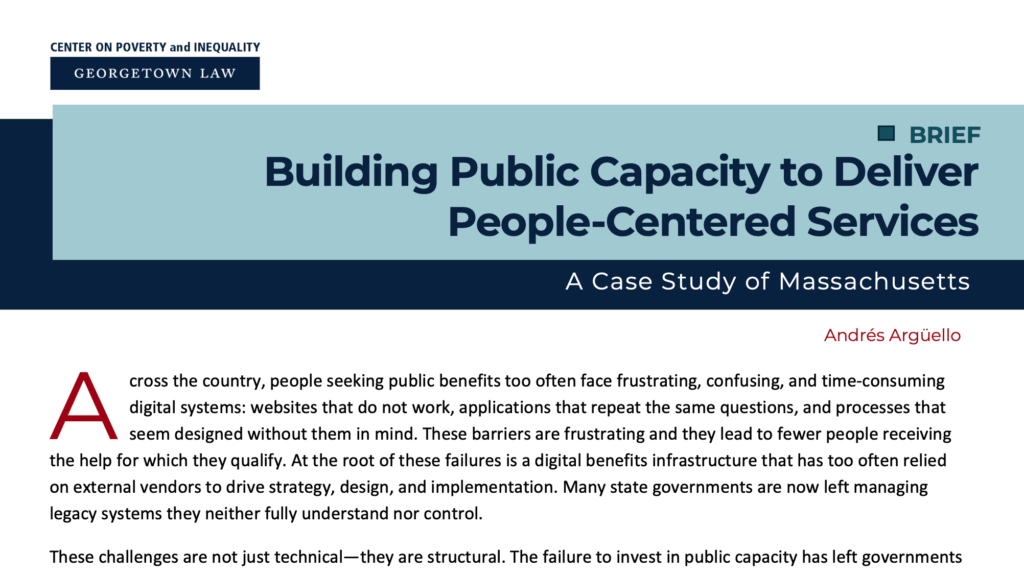
A case study describing how Massachusetts is building long-term public-sector capacity to deliver people-centered digital services by strengthening in-house expertise, shared tools, and agency-embedded support.
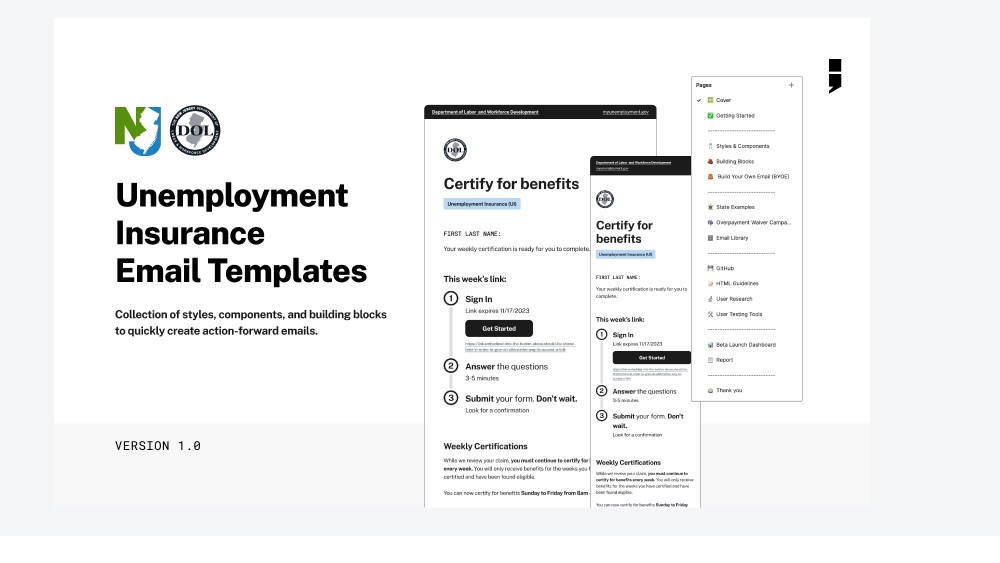
This kit contains a collection of styles, components, and building blocks to quickly create action-forward emails for Unemployment Insurance programs within the U.S.
U.S. Digital Response partnered with the Department of Labor to design a human-centered, low-code solution for efficient retroactive unemployment benefit determination.