Professor Don Moynihan discusses how administrative burden is an effective tool to make it difficult for people to access certain types of benefits, noting that this is particularly harmful to communities of color.
This playbook provides federal agencies with guidance on implementing AI in a way that is ethical, transparent, and aligned with public trust principles.
U.S. Department of Health and Human Services (HHS)
Inclusive design means making design choices that take into account personal identifiers like ability, race, economic status, language, age, and gender. This resource walks folks through an introduction to inclusive design, focusing on accessibility and equity.
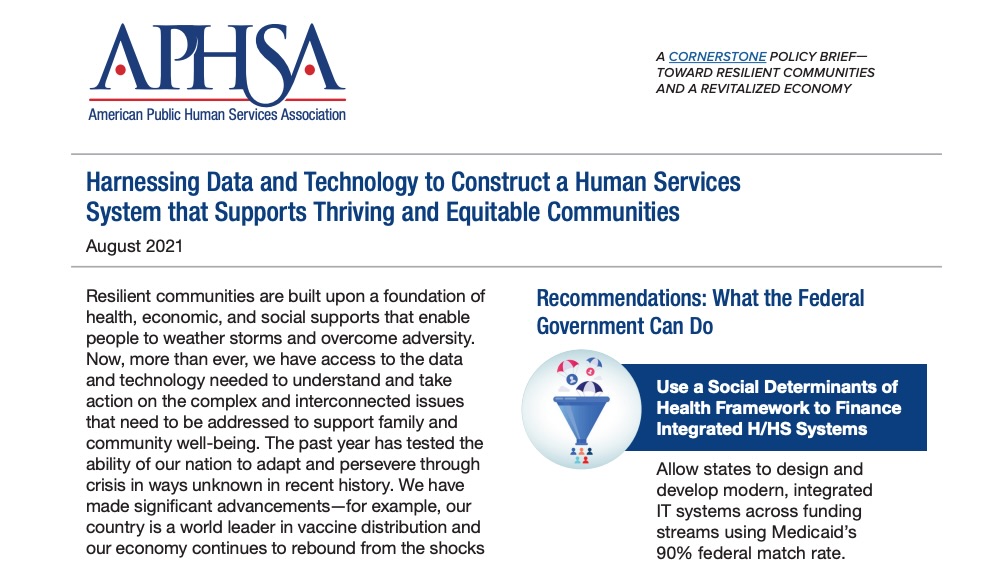
APHSA explains how certain tools and recommendations about when people apply for help, engage in services, and maintain benefits can have a powerful effect to either counter or exacerbate structural barriers to accessing assistance.
American Public Human Services Association (APHSA)
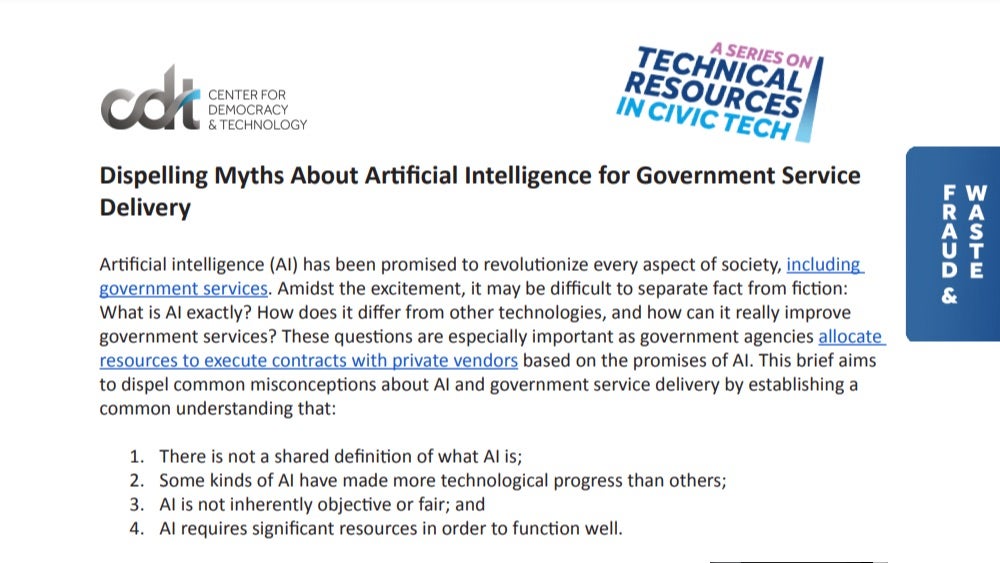
The Center for Democracy and Technology's brief clarifies misconceptions about artificial intelligence (AI) in government services, emphasizing the need for precise definitions, awareness of AI's limitations, recognition of inherent biases, and acknowledgment of the significant resources required for effective implementation.
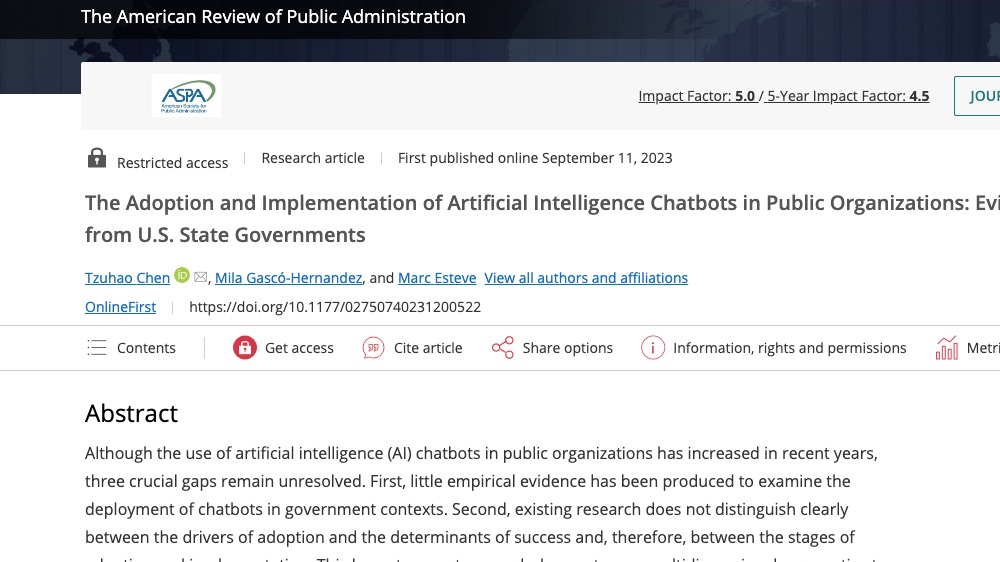
This study examines the adoption and implementation of AI chatbots in U.S. state governments, identifying key drivers, challenges, and best practices for public sector chatbot deployment.
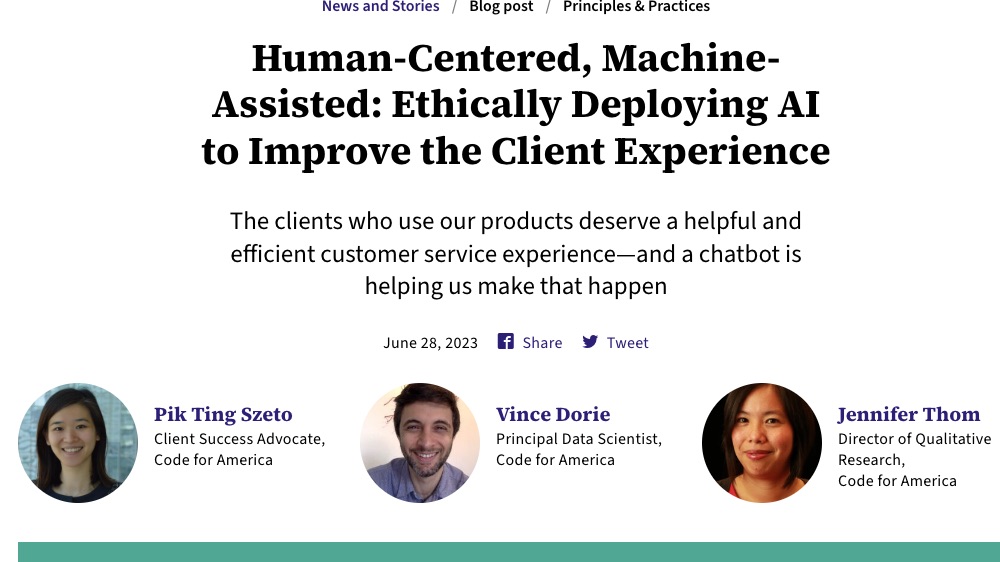
In this interview, Code for America staff members share how client success, data science, and qualitative research teams work together to consider the responsible deployment of artificial intelligence (AI) in responding to clients who seek assistance with three products.
Hennepin County, Minnesota, implemented an online application system for child care assistance, resulting in increased applications, faster benefit distribution, and reduced administrative burdens.
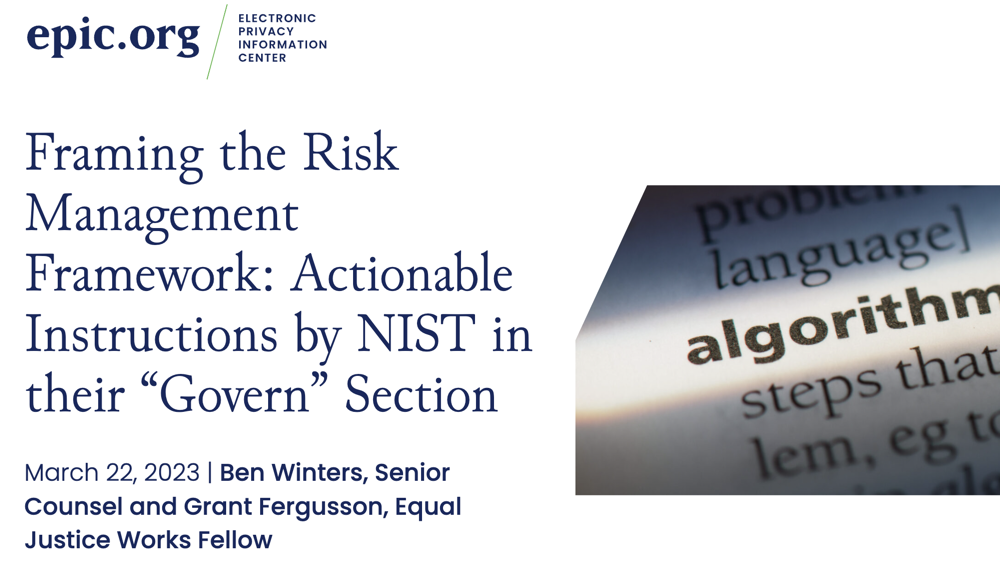
This post introduces EPIC's exploration of actionable recommendations and points of agreement from leading A.I. frameworks, beginning with the National Institute of Standards and Technology's AI Risk Management Framework.
This guidebook aims to equip state and local agencies with the practical insights they need to develop a text messaging outreach program for SNAP recertification.
The New Jersey Department of Human Services and New Jersey Department of Health collaborated in their Coordinating SNAP & Nutrition Supports project to enhance the enrollment and coordination of SNAP and WIC programs.
American Public Human Services Association (APHSA)