This budget request details ADES's FY2027 funding priorities—including developmental disability services, child care, IT modernization, and compliance with H.R. 1—and outlines projected fiscal impacts, caseload growth, and programmatic needs across the state
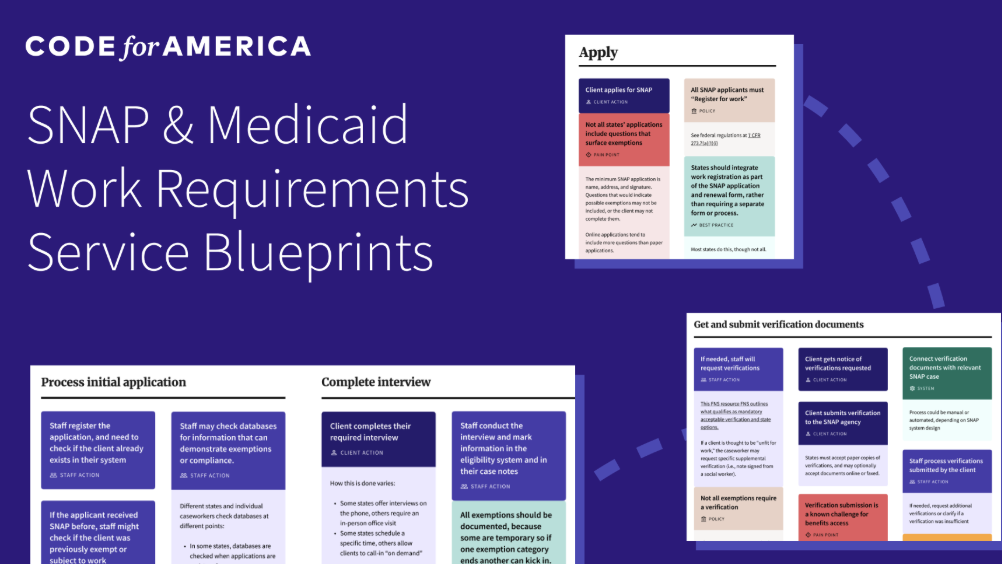
This file contains two, state-agnostic service blueprints that visualize how the new work requirements policy passed as part of H.R. 1 impacts the process of applying for, determining, and maintaining eligibility for SNAP and Medicaid benefits.
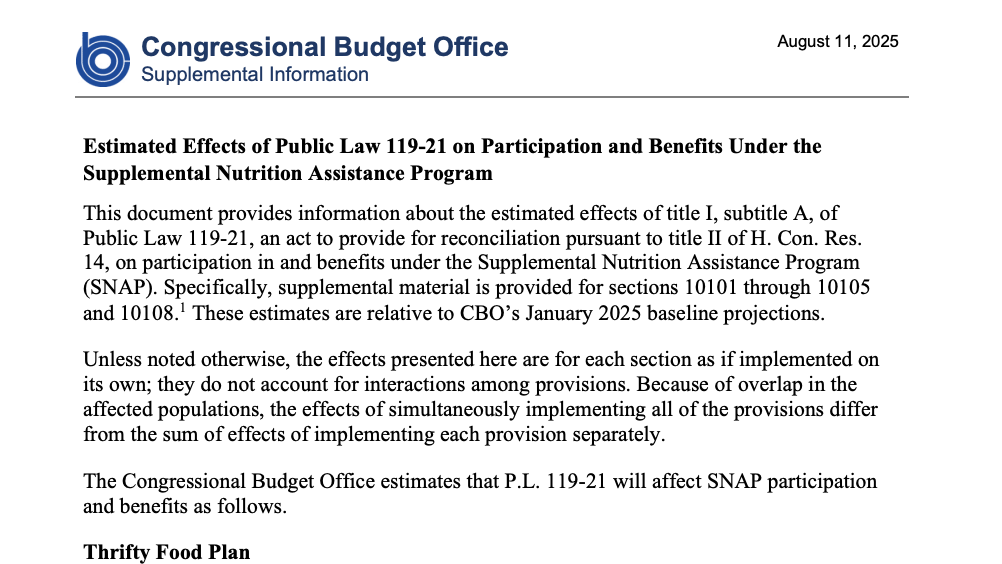
This report provides supplemental estimates on how Public Law 119-21—tied to H.R. 1—will affect SNAP participation, benefits, and state administrative costs over 2025–2034.
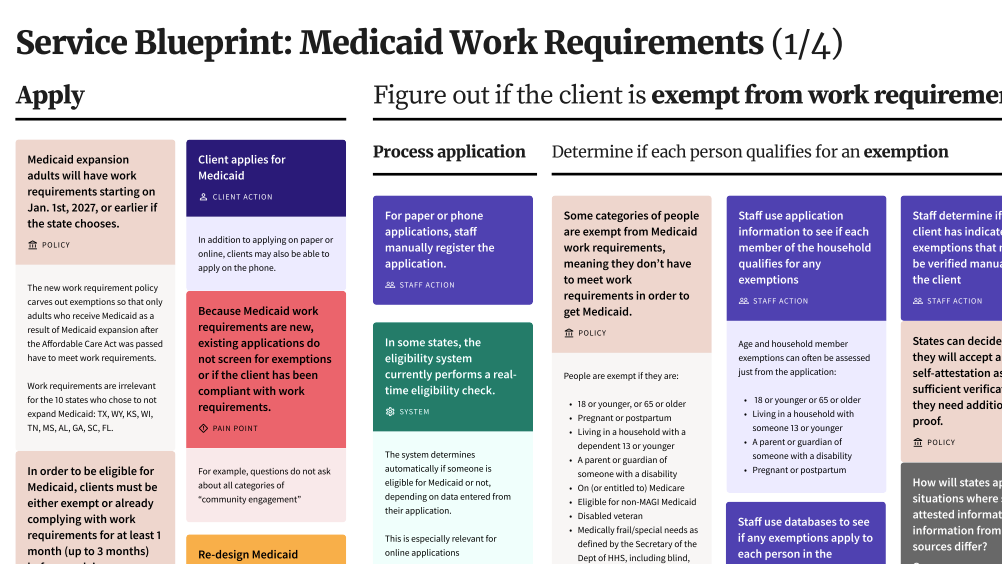
This 8.5x11 service blueprint visually maps how Medicaid work requirements will function once implemented in 2027, detailing each policy step, system interaction, and client experience to help states identify administrative challenges and opportunities for human-centered redesign.
This report summarizes 21 policy options and waivers across all 53 SNAP State agencies, showing how each implements administrative and eligibility flexibilities permitted under federal law.
This report provides an initial fiscal analysis of how H.R. 1 (the “One Big Beautiful Bill”) will affect the state’s federally funded programs across agencies, estimating multi-billion-dollar reductions in SNAP, Medicaid, education, and infrastructure revenues.
This report summarizes insights from interviews with seven states on how they are adapting integrated eligibility and enrollment (IEE) systems in response to sweeping federal changes to SNAP and Medicaid under H.R. 1.
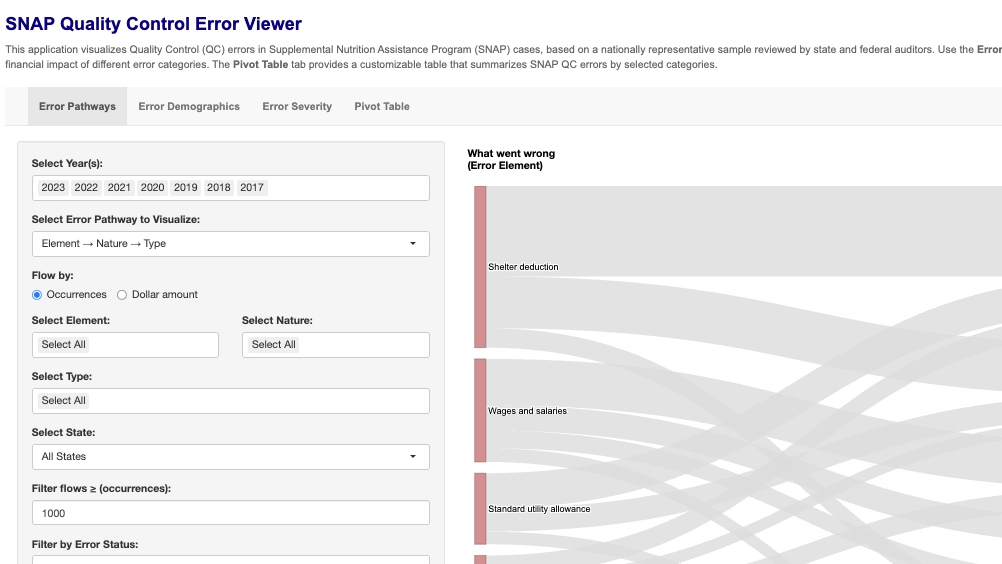
An interactive dashboard that enables users to explore and monitor key metrics of the Supplemental Nutrition Assistance Program (SNAP) Quality Control (QC) system.
This report analyzes how administrative burdens in SNAP caused one in eight working-age adults to lose benefits in 2024, with future federal policy changes expected to worsen disruptions
An in-depth report that examines how states use automated eligibility algorithms for home and community-based services (HCBS) under Medicaid and assesses their implications for access and fairness.
A directive issued by the Commonwealth of Virginia to materially reduce the error rate in Supplemental Nutrition Assistance Program (SNAP) benefit processing among local social services offices.