This policy brief explores how federal privacy laws like the Privacy Act of 1974 limit demographic data collection, undermining government efforts to conduct equity assessments and address algorithmic bias.
This report offers a critical framework for designing algorithmic impact assessments (AIAs) by drawing lessons from existing impact assessments in areas like environment, privacy, and human rights to ensure accountability and reduce algorithmic harms.
This report highlights key findings from the Rules as Code Community of Practice, including practitioners' challenges with complex policies, their desire to share knowledge and resources, the need for increased training and support, and a collective interest in developing open standards and a shared code library.
This report outlines how the New Jersey Department of Human Services’ Division of Family Development (DFD) and the Department of Health (NJDOH) are increasing SNAP & WIC co-enrollment through data sharing, outreach, and systems integration.
American Public Human Services Association (APHSA)
For the past year, modernization teams at the Department of Labor (DOL) have been helping states identify opportunities to automate rote, non-discretionary, manual tasks, with the goal of helping them speed up the time that it takes to process claims. This post provides more context on Robotic Process Automation (RPA) and potential use cases in unemployment insurance.
This resource highlights strategies for integrating benefits renewals and correspondence, potentially reducing administrative burdens for both clients and caseworkers.
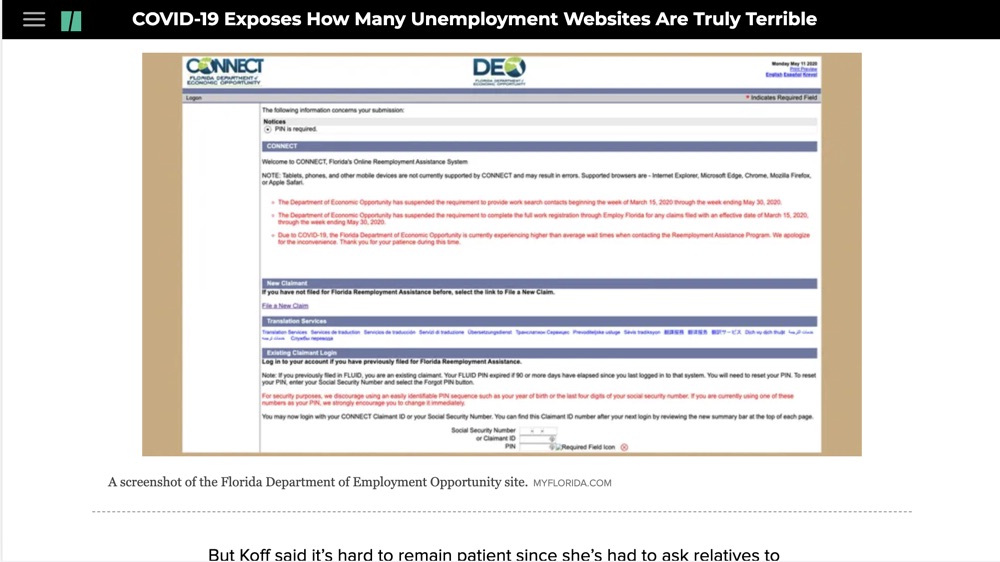
This HuffPost article investigates the widespread failures of state unemployment websites during the COVID-19 pandemic, highlighting outdated technology, accessibility issues, and the human impact of these systemic breakdowns.
The vast fraud committed through the use of stolen and synthetic identities in UI programs has spotlighted the need for updated identity fraud detection mechanisms. As states are implementing new technologies and systems, they need to consider the ways in which they are impacting racial inequities in UI benefits.
This issue brief illustrates the challenges that many older adults with low income face in gaining access to benefits online. It addresses digital literacy, access to broadband internet, and the increasing prevalence of connecting online to SNAP.