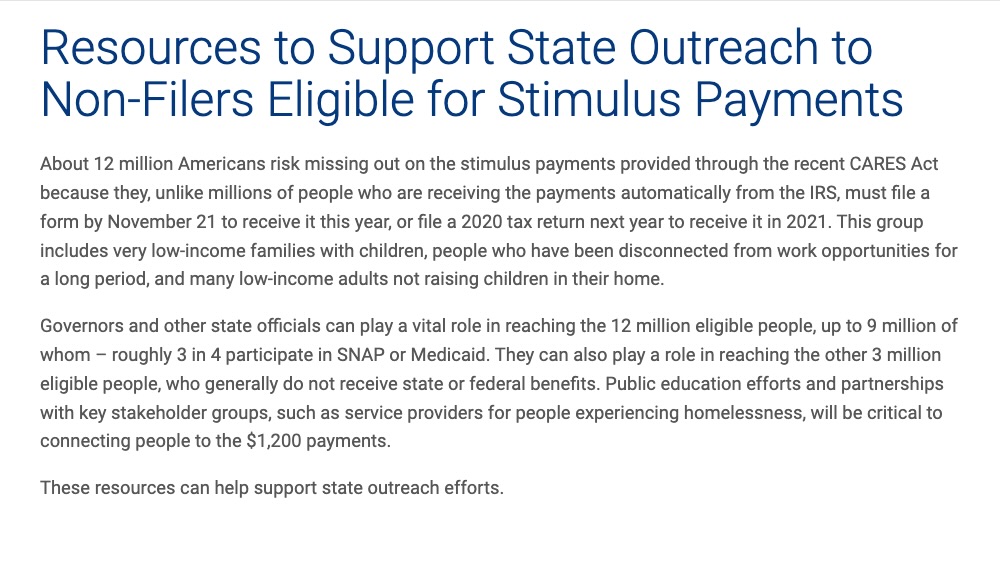
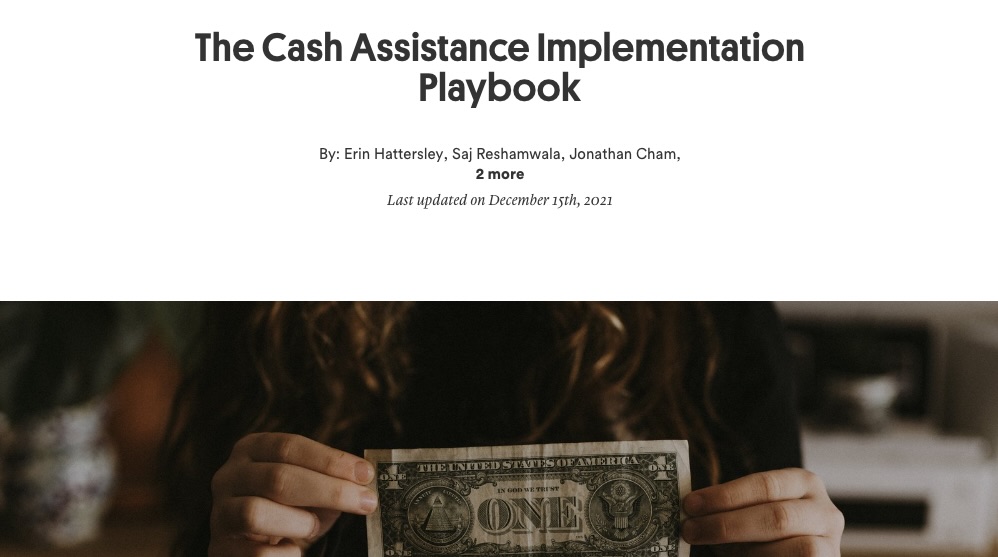
Approximately 12 million low-income individuals risk missing out on federal stimulus payments due to non-filing status, prompting the Center on Budget and Policy Priorities (CBPP) to recommend targeted state outreach to connect eligible non-filers with their Economic Impact Payments (EIPs).
An April 2024 Chief Digital Service Officers (CDSO) gathering included discussions about the realities of digital service leadership in government. These discussions are summarized in infographics offering valuable perspective to emerging digital service teams.
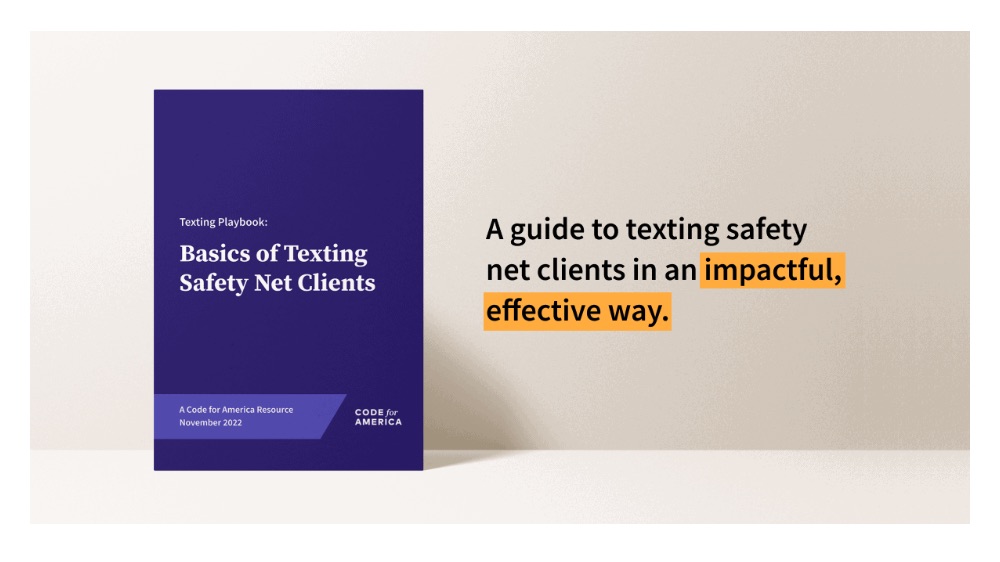
The Texting Playbook provides guidance and well-researched strategies to help state agencies implement texting in support of Medicaid, SNAP, WIC, and other benefits programs. It provides an overview of how to start texting clients; the types of messages to send, including real examples; Federal Communications Commision (FCC) policy guidance; how to encourage opt-ins and collect consent; how to avoid coming across as spam; and a cost analysis of texting.
The Summer EBT Playbook offers states practical strategies, tools, and examples to effectively implement the new Summer EBT program, ensuring low-income children receive food benefits when school is out.
Governments and leaders are required to regulate change while mitigating risk, so IFTF's Governance Futures Lab developed this decision-making guide for them. In a world where technologies are transforming faster than we can keep up, anticipatory governance is crucial in order to safeguard against both the intended and unintended effects of technological advances.
This guide is intended to provide a general overview of the national statutory and regulatory landscape governing the legality of sending large volumes of text messages and sharing client information.
Teams crafting policy inside and outside government can use the assessment to center their policy-making activities around those most impacted by their proposed programs and policy ideas.