This toolkit provides practical guidance for agencies, researchers, and community partners to embed racial equity throughout every stage of data integration and use.
A framework that helps policy and digital service teams interpret legislation by identifying user needs, intent, and implementation challenges to support more effective, human-centered government service delivery.
This tool kit brings together emergent best practices, workflows, and tools that communities, educators, mutual aid groups, designers, artists and activists are using for community building, and how design needs to change to best suit people, right now.
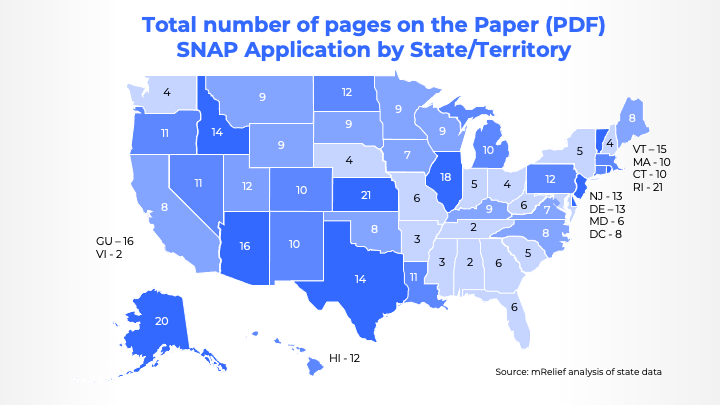
The Average Food Stamp Application is 17 Pages Long article by mRelief highlights the extensive length and complexity of Supplemental Nutrition Assistance Program (SNAP) applications, which can deter eligible individuals from applying for benefits.
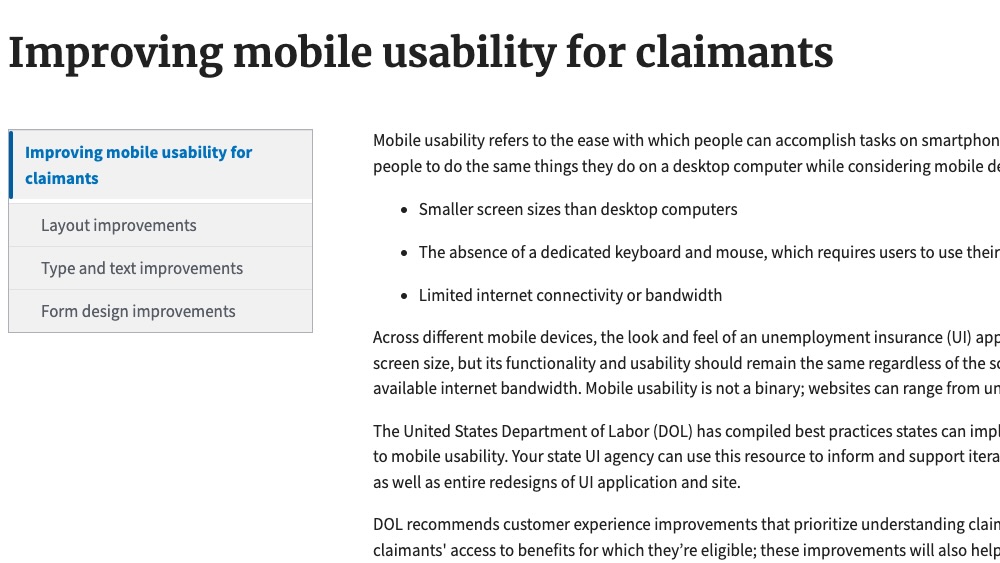
This webpage from the U.S. Department of Labor (DOL) provides guidance on improving mobile usability for Unemployment Insurance (UI) systems to enhance customer experience and accessibility.
Government solicitations to procure custom software are often long, complicated, and take months. By using 18F’s agile contract format, agencies can hire an agile software contractor with a quickly-written dozen-page solicitation, allowing for immense savings in time and money.
This brief highlights key takeaways from APHSA’s work on young families, starting with an overview of the young families work and its early years, followed by key takeaways and highlights from its final year, ending with opportunities for future work in the young families space.
American Public Human Services Association (APHSA)
Teams crafting policy inside and outside government can use the assessment to center their policy-making activities around those most impacted by their proposed programs and policy ideas.
This guide consolidates learning and spotlights principles, insights, and emerging practices to guide municipal leaders and public-private partnerships interested in designing basic income programs that are ethical, equitable, rigorous, informative, and consequential for local, state and national policymaking.
Originally created for use by federal staff at the U.S. Department of Health and Human Services, this tool describes the six steps for conducting equity assessments and provides tips for completing each step.
Office of the Assistant Secretary for Planning and Evaluation (ASPE)