The OECD's Recommendation on the Governance of Digital Identity, adopted on 8 June 2023, provides guidelines for member countries to establish secure and user-centric digital identity systems that enhance trust and facilitate access to online services.
Organisation for Economic Co-operation and Development (OECD)
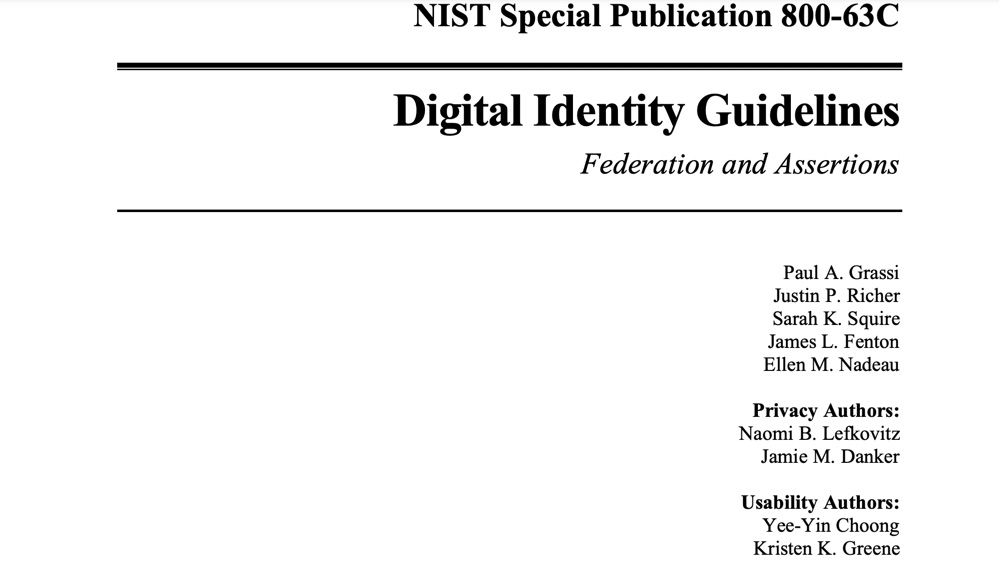
Revision 4 of the National Institute of Standards and Technology (NIST) Special Publication 800-63, Digital Identity Guidelines, responds to the changing digital landscape that has emerged since the last major revision of this suite was published in 2017.
These guidelines provide technical requirements for federal agencies implementing digital identity services and are not intended to constrain the development or use of standards outside of this purpose. This guideline focuses on the use of federated identity and the use of assertions to implement identity federations. Federation allows a given credential service provider to provide authentication and (optionally) subscriber attributes to a number of separately-administered relying parties.
National Institute of Standards and Technology (NIST)
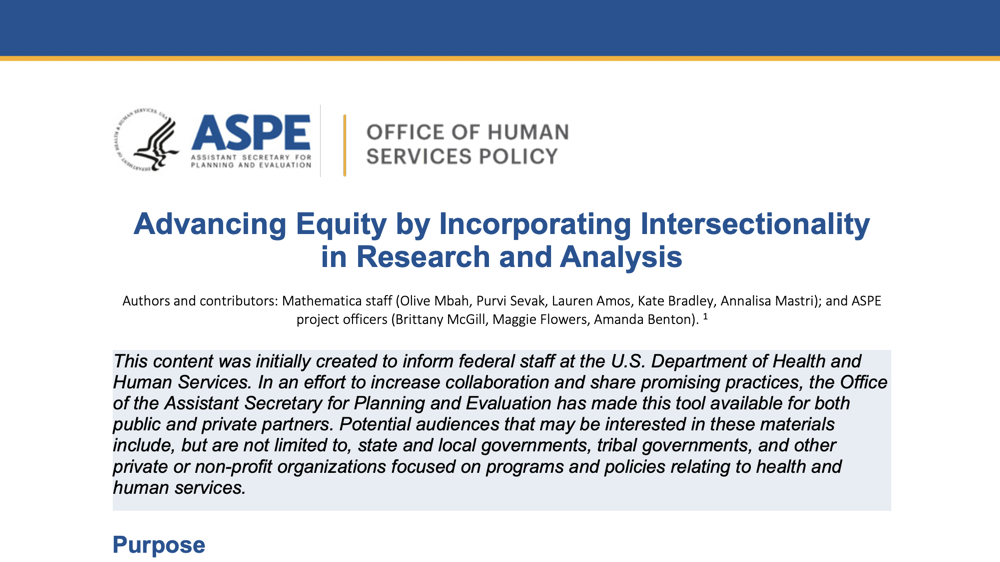
This guide explores intersectionality and why it is essential for advancing equity. It explores strategies for planning and conducting research with an intersectional lens, describes quantitative measures and methods to examine differences across groups of people with intersecting identities, and provides key considerations for using qualitative data to better understand intersectionality.
Office of the Assistant Secretary for Planning and Evaluation (ASPE)
This resource provides updated draft digital identity guidelines for identity proofing, authentication, and federation, aiming to improve security, privacy, usability, and equity in digital identity systems.
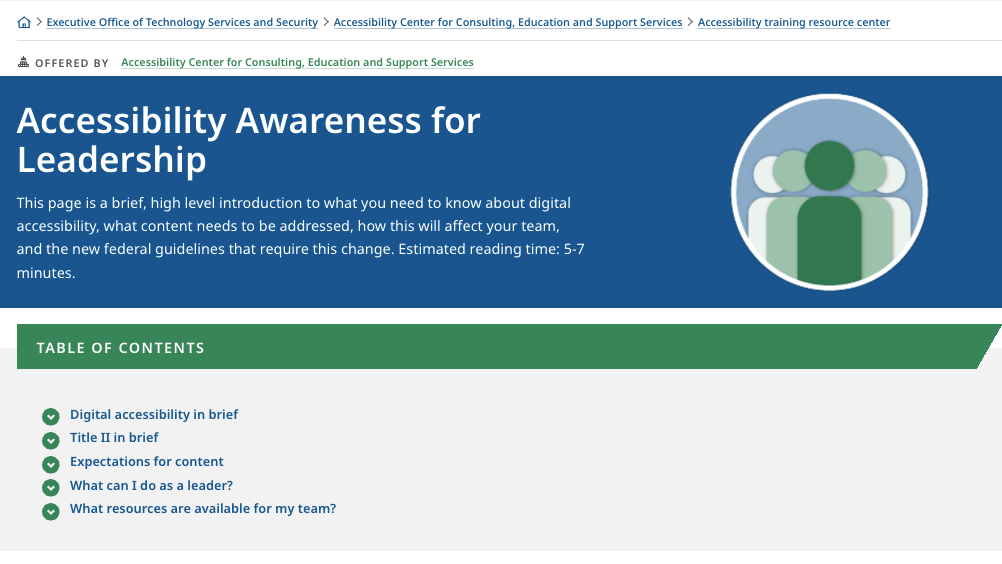
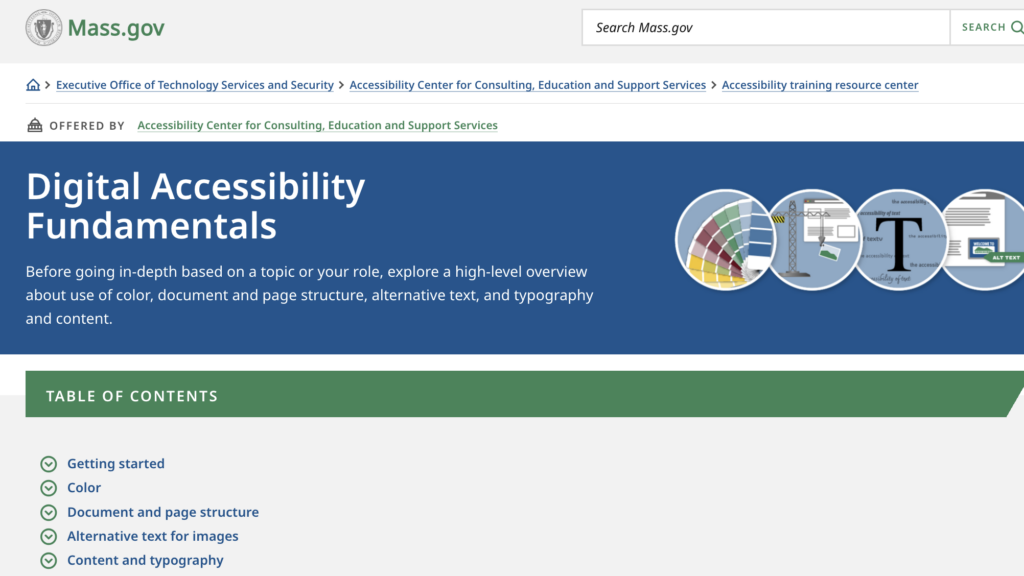
This resource provides practical guidance on the core principles of digital accessibility, helping teams create digital content and services that are more usable and inclusive for people with disabilities.
The Commonwealth of Massachusetts Executive Office of Technology Services and Security (EOTSS)
The OECD AI Principles promote use of AI that is innovative and trustworthy and that respects human rights and democratic values. The principles were adopted in 2019; this webpage provides an overview of the principles and key terms.
Organisation for Economic Co-operation and Development (OECD)
This webpage from the U.S. Department of Labor (DOL) provides guidance on improving mobile usability for Unemployment Insurance (UI) systems to enhance customer experience and accessibility.
The Medicaid Renewals Playbook offers strategies for technologists assisting states in streamlining Medicaid renewal processes during the COVID-19 Public Health Emergency unwinding.