This page includes data and observations about authentication and identity proofing steps specifically for online applications that include child care applications.
The Center on Budget and Policy Priorities (CBPP) report discusses how reducing administrative burdens in Medicaid can enhance health outcomes and promote racial equity.
This report examines how implementing Asset Verification Systems (AVS) can streamline Medicaid eligibility determinations for seniors and individuals with disabilities by automating the verification of applicants' financial assets.
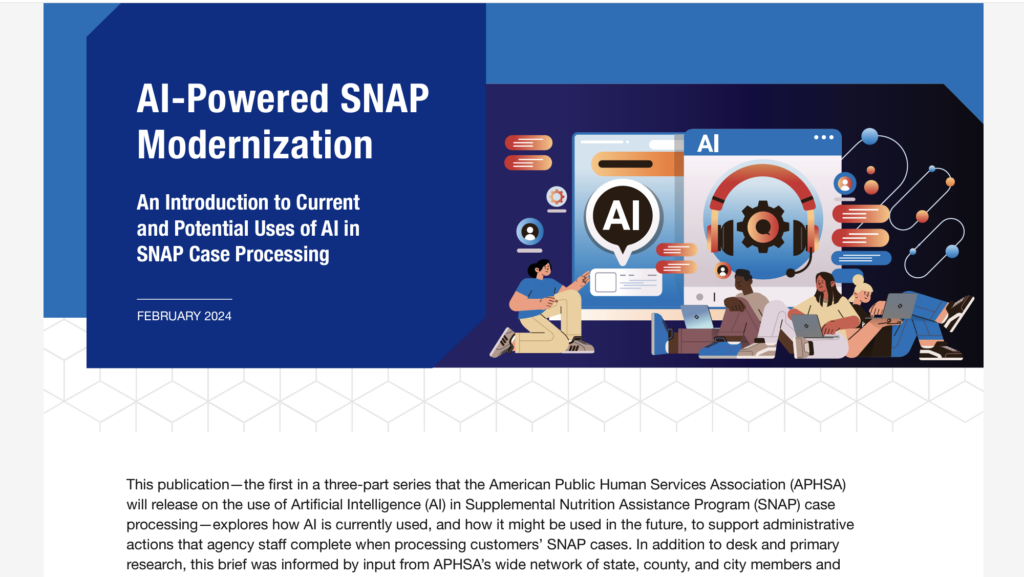
This report explores how AI is currently used, and how it might be used in the future, to support administrative actions that agency staff complete when processing customers’ SNAP cases. In addition to desk and primary research, this brief was informed by input from APHSA’s wide network of state, county, and city members and national partners in the human services and related sectors.
American Public Human Services Association (APHSA)
This report summarizes progress made with agencies and members of the public to identify and reduce burdens that individuals, families, and small businesses face every day when interacting with government programs.
This Urban Institute article argues that poverty is driven by structural barriers rather than individual choices and advocates for safety net programs that address systemic inequities.
This resource describes how different agencies have updated their systems to increase online and mobile access to benefits information and applications, including using text messages to share benefits information with residents.
Research identified five key obstacles that researchers, activists, and advocates face in efforts to open critical public conversations about AI’s relationship with inequity and advance needed policies.