Concerns over risks from generative artificial intelligence systems have increased significantly over the past year, driven in large part by the advent of increasingly capable large language models. But, how do AI developers attempt to control the outputs of these models? This primer outlines four commonly used techniques and explains why this objective is so challenging.
Center for Security and Emerging Technology (CSET)
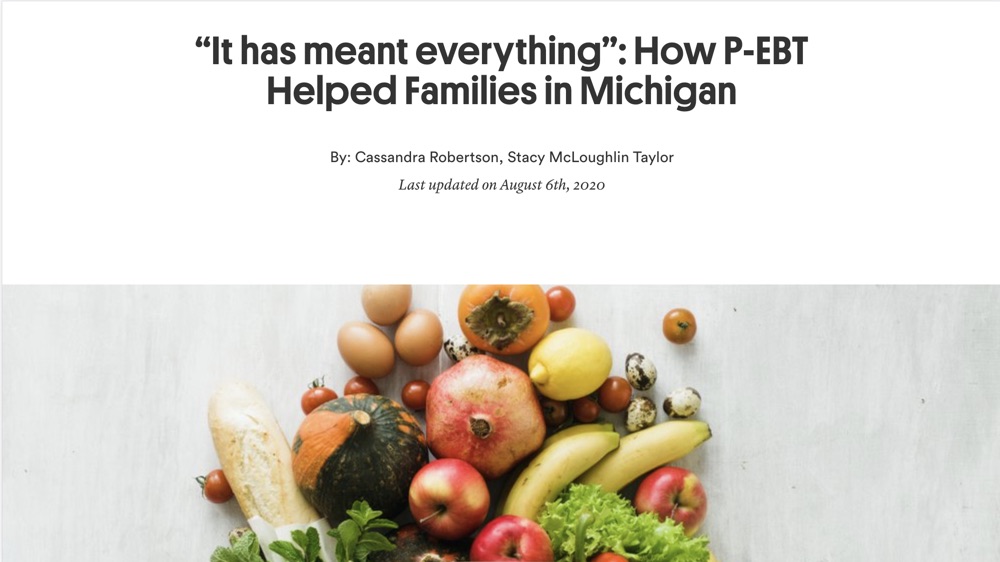
This report explores Michigan’s implementation of the Pandemic Electronic Benefit Transfer (P-EBT) program. Drawing on interviews from individuals within the Michigan Department of Health and Human Services and input from SNAP participants via surveys distributed using the Fresh EBT app, this report provides insights into the strategies that enabled Michigan to roll out an entirely new program quickly and effectively.
This report documents best practices and lessons learned from project streamlined data sharing between SNAP and WIC, enhancing cross-enrollment processes
American Public Human Services Association (APHSA)
What exactly are the differences between generative AI, large language models, and foundation models? This post aims to clarify what each of these three terms mean, how they overlap, and how they differ.
Center for Security and Emerging Technology (CSET)
The New Jersey Department of Human Services and New Jersey Department of Health collaborated in their Coordinating SNAP & Nutrition Supports project to enhance the enrollment and coordination of SNAP and WIC programs.
American Public Human Services Association (APHSA)
Little is known about how agencies are currently using AI systems, and little attention has been devoted to how agencies acquire such tools or oversee their use.
This report shares the results of our comprehensive content audit and heuristic evaluation of eligibility pre-screeners, including ratings on security, mobile-friendly design, accessibility, and more.
This resource describes how different agencies have updated their systems to increase online and mobile access to benefits information and applications, including using text messages to share benefits information with residents.
The report highlights that many eligible low-income children are not receiving WIC benefits during the COVID-19 pandemic, with participation rates varying significantly by state and lagging behind programs like Medicaid and SNAP.
The Pandemic Electronic Benefits Transfer (P-EBT) program was launched as an effort to address the loss of access to free and reduced-price school meals due to widespread school closures at the onset of the COVID-19 pandemic. As schools reopened in a shifting mix of fully virtual, hybrid, and inperson formats and families lacked consistent access to school meals, these benefits were extended through the 2020–21 school year and were highly valuable to families in buffering the full extent of food insecurity they may have faced during this uncertain time. However, the complexity of administering this program was a fundamental barrier in providing timely support to families, who ultimately went without benefits for at least half of the school year. In this report, we dive into the challenges state administrators faced in launching this new program during the 2020–21 school year and reflect on considerations for the future.
The Sprint 2 Report: Michigan UI Claimant Experience by Civilla and New America examines challenges in Michigan’s unemployment insurance (UI) system and provides human-centered design recommendations to improve accessibility, clarity, and user experience.
Digitizing public benefits policy will make the biggest impact for administrators and Americans, but only if it happens at the highest level of government.