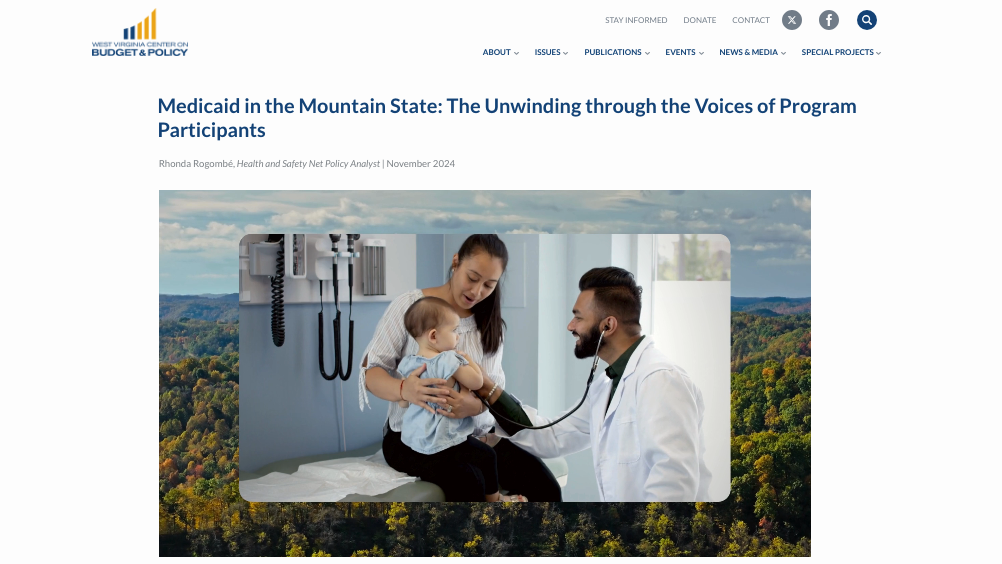
This resource examines the role of Medicaid in West Virginia and documents how the post-pandemic Medicaid “unwinding” process affected residents, highlighting participant experiences and the program’s importance for health and economic stability.
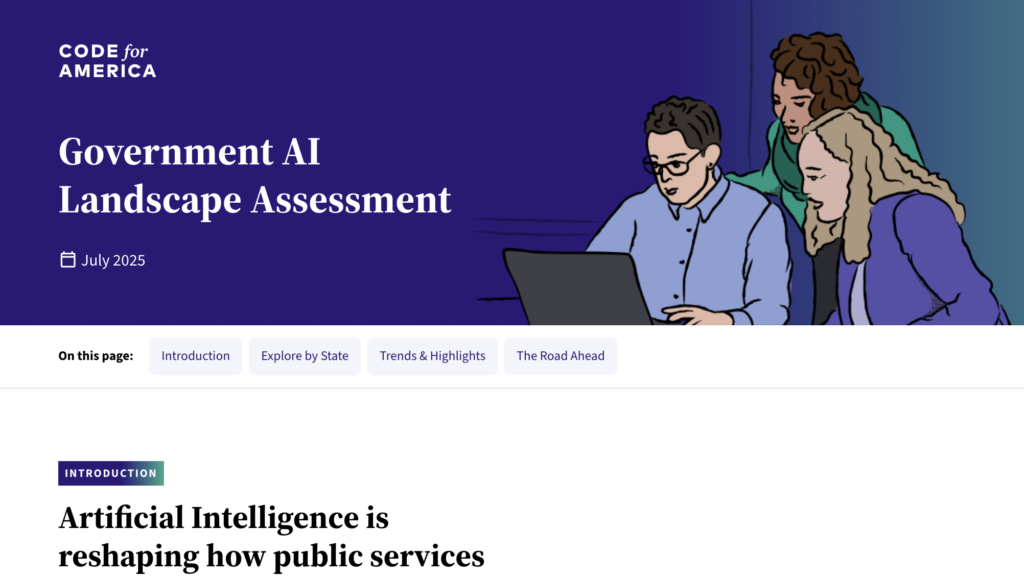
A comprehensive assessment that maps how artificial intelligence is currently being used, governed, and managed across local, state, and federal governments in the United States.
This issue brief provides a comprehensive framework for state officials to monitor and evaluate the far-reaching impacts of the H.R.1 budget reconciliation bill on the Medicaid program.
Delve into our exploration of the executive orders, legislation, and administrative rules and guidance that shape government digital transformation across states and territories with our database and visualization tools.
This guide outlines how states can use TANF funds to provide direct cash assistance to families, particularly through flexible mechanisms like nonrecurrent short-term benefits (NRSTs).
This report calculates the cumulative impact of major benefit programs on two types of families and how their benefits change as they move into the labor market and climb the ladder of upward mobility.
The 2022 Dobbs v. Jackson decision overturned Roe v. Wade, leading 21 states to ban or heavily restrict abortion, exacerbating economic and health challenges for women denied care while these states also often lack supportive policies like paid leave, fair wages, and accessible public benefits for growing families.
This paper outlines the need for comprehensive reforms to improve the U.S. government's capacity to effectively implement policies, focusing on reducing bureaucratic inefficiencies, enhancing workforce structures, and leveraging digital infrastructure.
This article examines how Chile’s SUSESO is balancing cost-focused procurement criteria with ethical AI concerns in its medical claims automation process.
This report explores policy options Utah and other states can adopt to mitigate benefit cliffs, which occur when small income increases lead to sudden loss of public assistance.