The Increasing Stimulus Payment Take-up in California report by the California Policy Lab examines barriers to accessing federal stimulus payments and provides strategies to increase take-up among eligible Californians, particularly low-income and non-filers.
This report outlines a dozen fintech and civic tech organizations working across fourteen safety net programs to show what’s possible when modern technology is married to a consumer insights perspective.
The National Health Law Program released an updated Guide to Modified Adjusted Gross Income, including sections on ACA tax filing and reporting, clarification on commonly asked questions about Social Security Income, and updated IRS tax filing thresholds.
Policymakers, program administrators, federal leaders, researchers, and advocates are increasingly focused on using administrative data to build evidence for improving government programs. Achieving this goal requires accessible data sources and the capacity to use them, yet stakeholders have little information about the baseline level of state capacity in these areas. How does one measure concepts such as “effective data use” and “analytic capacity?” This brief reports findings from a pioneering and comprehensive needs assessment that examined the capacity of Temporary Assistance for Needy Families (TANF) programs in 54 U.S. states and territories to analyze data used for program improvement, monitoring, and evidence-building. The needs assessment provides a foundation for technical assistance and continued improvement for the TANF program and may also provide valuable insights and frameworks for other state-administered human services programs.
This policy brief outlines how extending postpartum Medicaid and CHIP coverage can improve maternal health outcomes, reduce disparities, and strengthen continuity of care during the critical first year after childbirth.
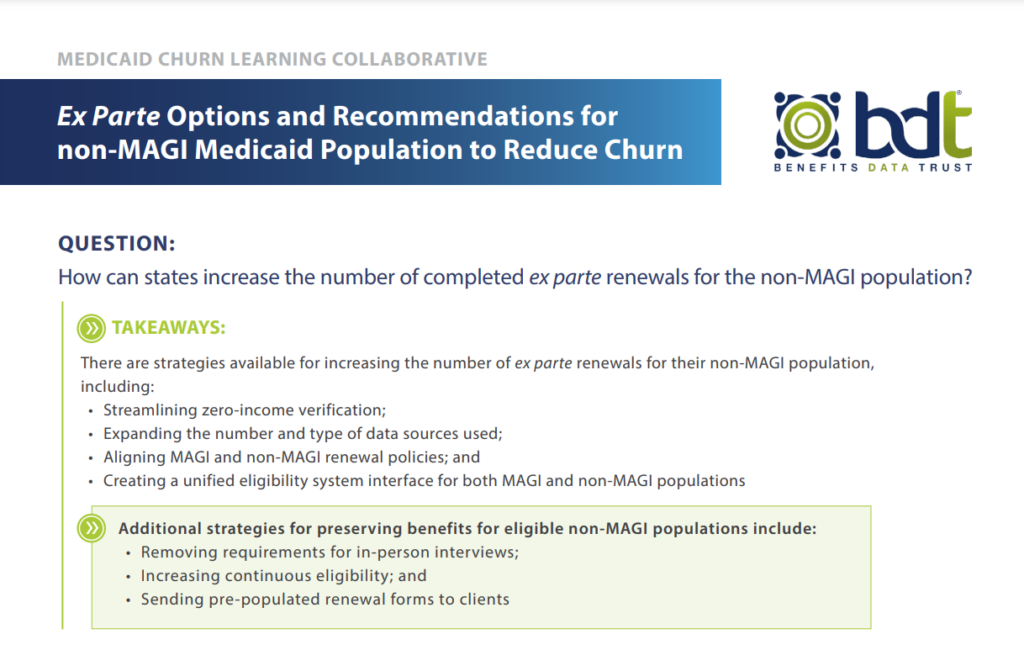
As a part of Benefit Data Trust (BDT)’s Medicaid Churn Learning Collaborative, BDT has created a memo describing policy options and state examples for Medicaid administrators to reduce churn for non-MAGI Medicaid enrollees when the federal public health emergency ends.
This report highlights 5 key takeaways from the Aspen Institute Financial Security Program's 2022 Benefits Forum, where 55 experts from various sectors discussed solutions for improving public and private benefits to better support workers and their families.
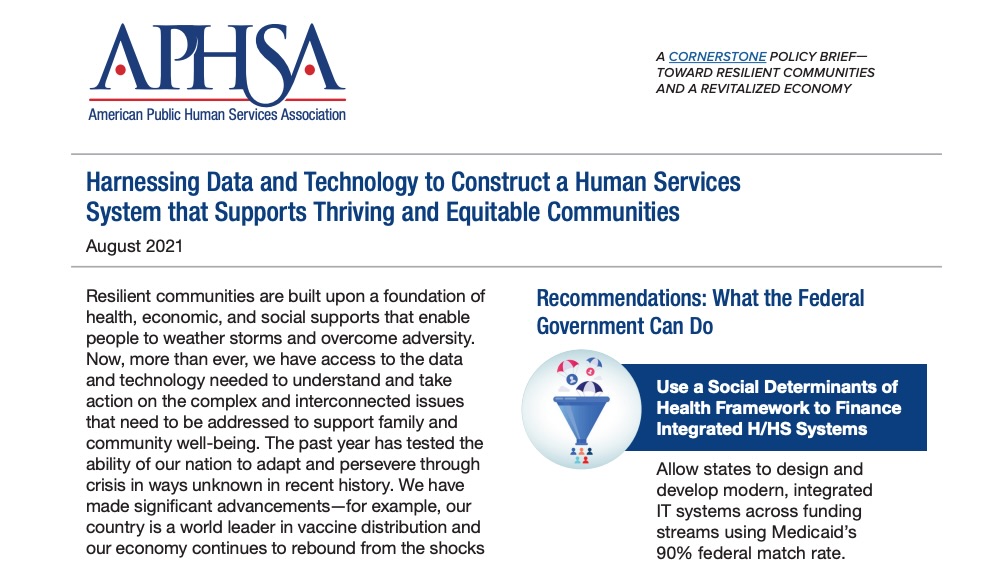
APHSA explains how certain tools and recommendations about when people apply for help, engage in services, and maintain benefits can have a powerful effect to either counter or exacerbate structural barriers to accessing assistance.
American Public Human Services Association (APHSA)
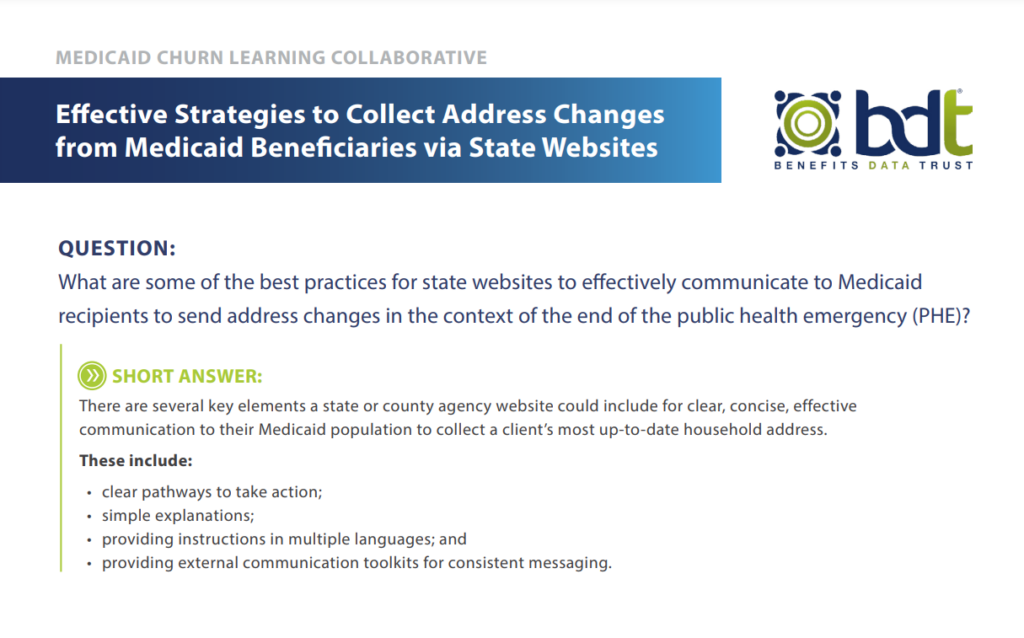
As a part of Benefit Data Trust (BDT)’s Medicaid Churn Learning Collaborative, BDT has created a memo describing strategies for states to collect current mailing addresses of Medicaid beneficiaries in advance of the Medicaid continuous coverage requirement — in effect under the federal public health emergency — unwinding.
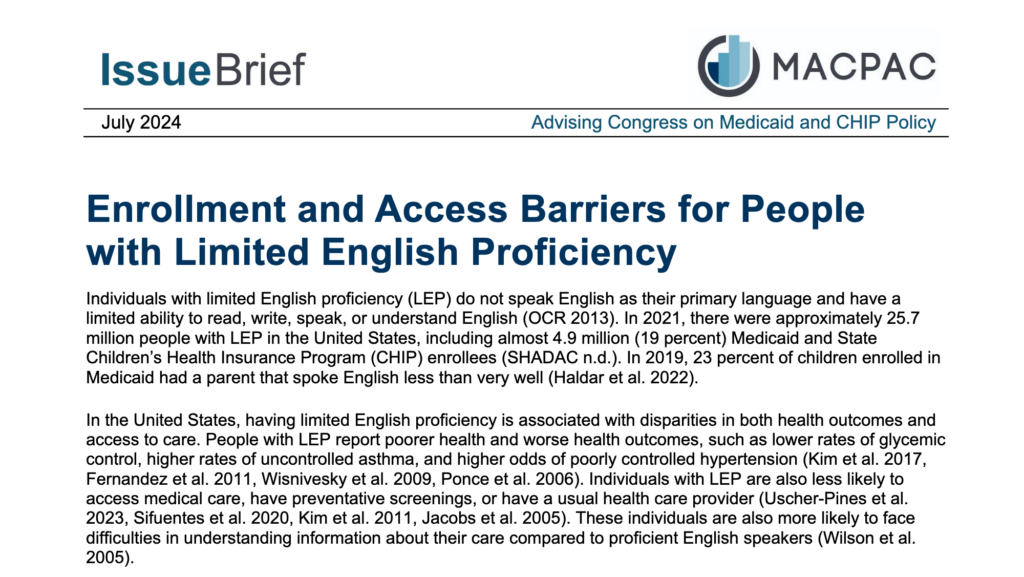
This issue brief examines how limited English proficiency creates barriers to enrolling in and accessing Medicaid and CHIP, and how states provide language access services to address these challenges.
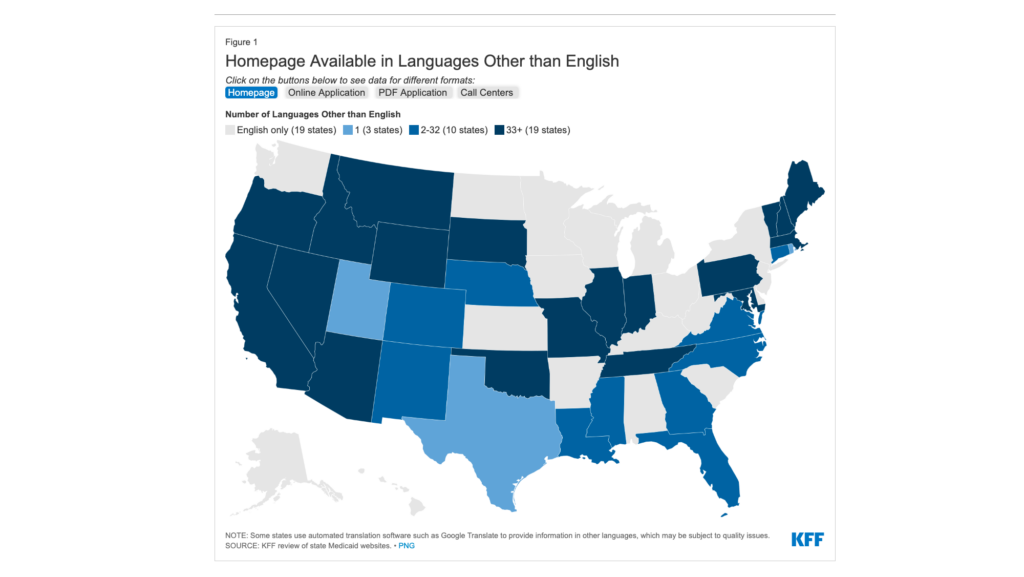
While most states provide basic digital accessibility, this review warns that persistent gaps in language services and disability accommodations create significant barriers for enrollees as pandemic-era Medicaid protections expire.