This policy brief explores how public procurement can serve as a primary demand-side driver to establish digital sovereignty across the European Union.
In recent years, there has been a deliberate shift to move our public systems that support child and family well-being upstream. These efforts reflect the growing consensus that true and lasting progress toward a nation where everyone can thrive requires we get to the root of the barriers that keep people and communities from achieving their potential. A foundational building block of this effort is the work happening to advance prevention strategies within child welfare agencies. In this brief, we focus on the challenges and opportunities that the Family First Prevention Services Act (Family First) offers to accelerate the shift toward a prevention-oriented child well-being system.
American Public Human Services Association (APHSA)
Due to technology’s disruptive force in society and on the labor force, it is necessary to revisit the relationship between employees, governments, and citizens. This report asserts that the next president should immediately sign two Executive Orders (EOs) to address the current work crisis and the urgent economic emergency that has left Americans evicted, unable to pay bills, make rent, or put food on the table.
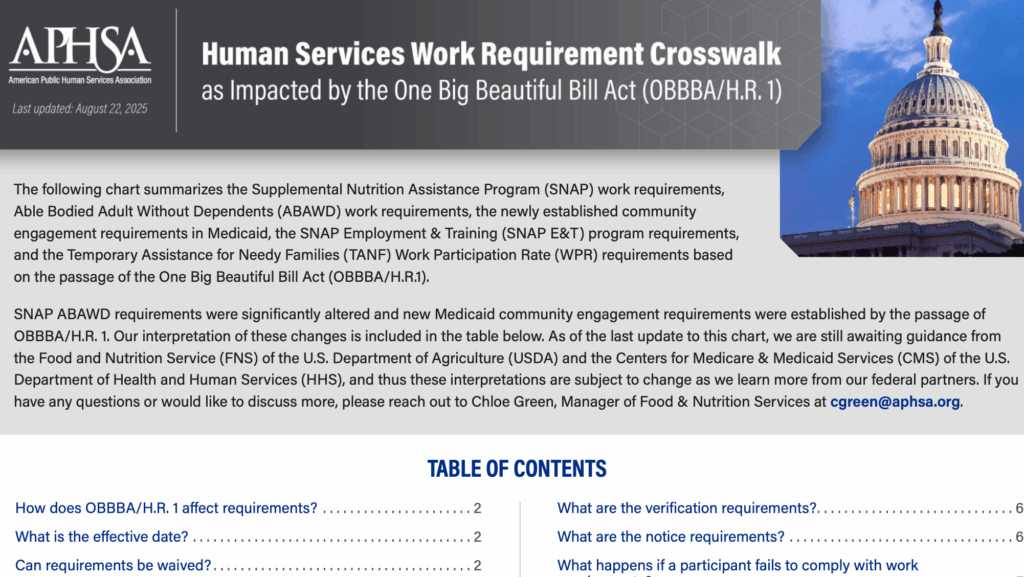
This crosswalk compares provisions in H.R. 1 with existing human services policies, focusing on how proposed federal work requirements could affect programs like TANF, SNAP, and Medicaid.
American Public Human Services Association (APHSA)
This brief explores the relationship between economic hardship and child welfare involvement, examining how direct cash transfers (DCTs) can reduce child maltreatment and strengthen family stability.
This overview introduces direct cash transfers (DCTs) in the United States, outlining their history, major programs, and findings from contemporary guaranteed income demonstrations that show how cash supports improve family stability, health, and economic mobility
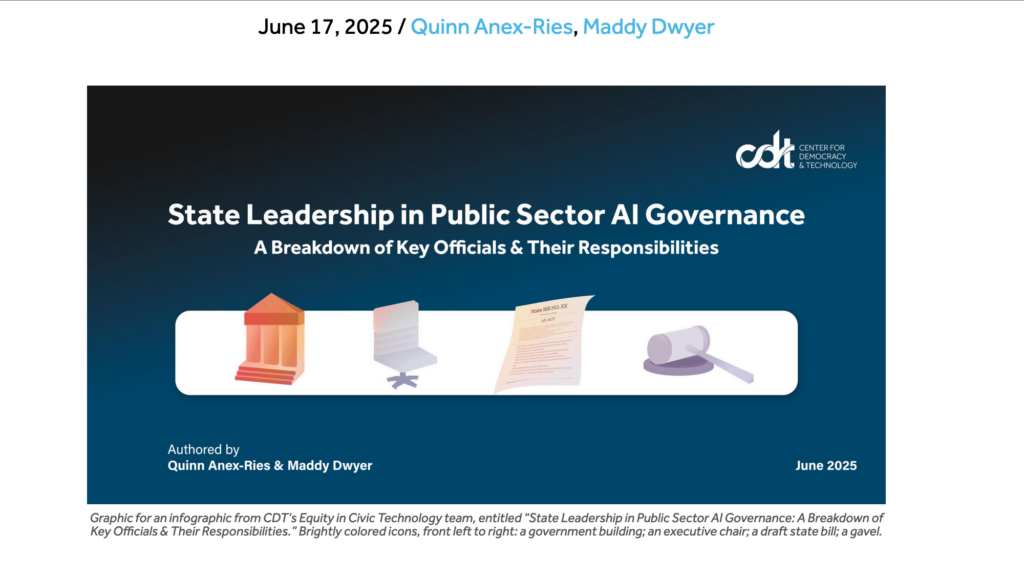
An infographic-style brief that maps the roles and responsibilities of key state leaders involved in governing the development, acquisition, use, and oversight of artificial intelligence in public-sector programs.
A policy paper from the OECD examining how emerging technologies such as artificial intelligence, blockchain, and virtual reality can help governments address challenges in civic participation and strengthen democratic engagement.
Organisation for Economic Co-operation and Development (OECD)
An outline of the opportunities for modernizing SNAP to better meet participant needs by streamlining enrollment, improving digital access, and enhancing coordination with other safety net services.
This policy brief explores how federal privacy laws like the Privacy Act of 1974 limit demographic data collection, undermining government efforts to conduct equity assessments and address algorithmic bias.