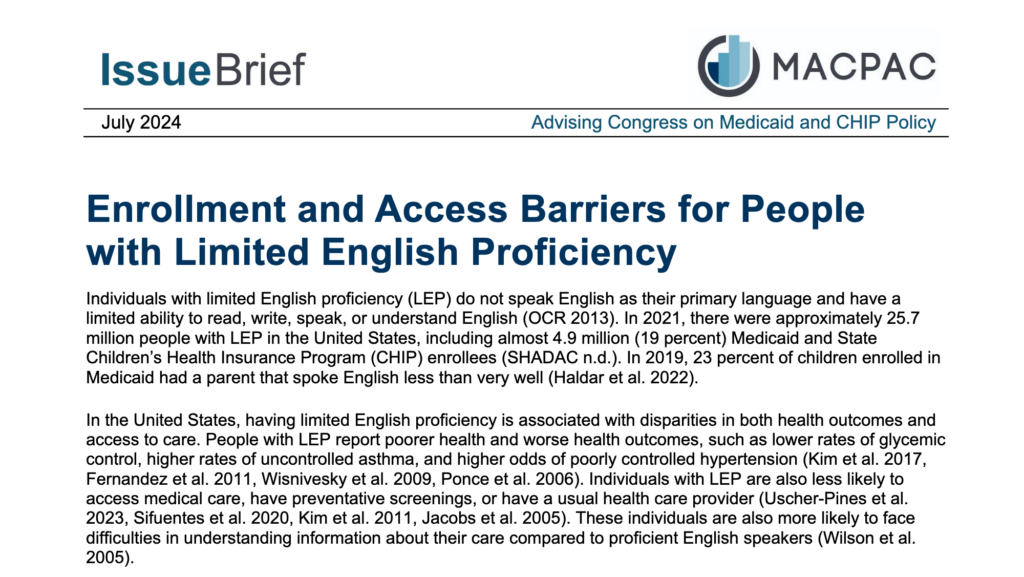
This issue brief examines how limited English proficiency creates barriers to enrolling in and accessing Medicaid and CHIP, and how states provide language access services to address these challenges.
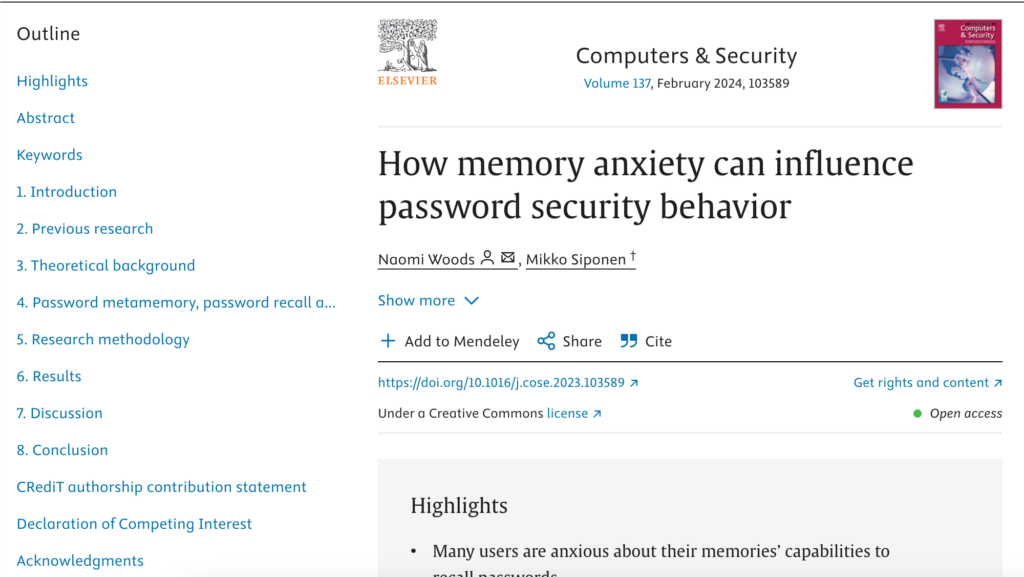
This article investigates how users' "metamemory"—specifically their anxiety regarding their own memory capabilities—drives insecure password behaviors.
This report focuses on the impact of adopting a national PFML program modeled on existing state programs, known as the Family and Medical Insurance Leave (FAMILY) Act.
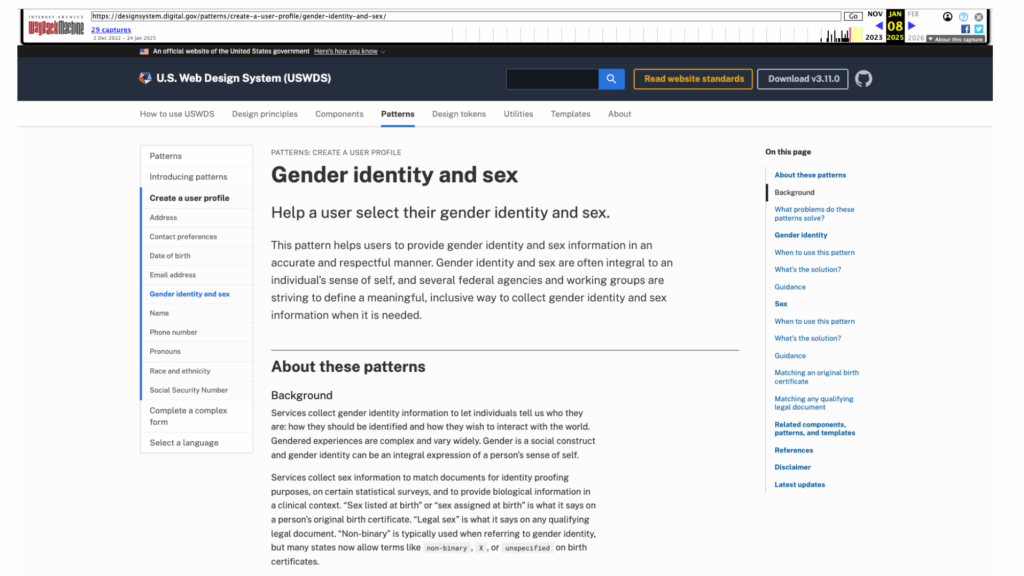
When creating a user profile, this U.S. Web Design System pattern helps users to provide gender identity and sex information in an accurate and respectful manner.
This section of the Building Resilience plan outlines strategies to improve the long-term solvency and sustainability of state unemployment insurance (UI) trust funds through better funding practices and legislative reform.
This blog discusses the importance of phased rollouts for government software products, emphasizing the benefits of starting small, gathering real-world user feedback, and resolving issues before a full public release.
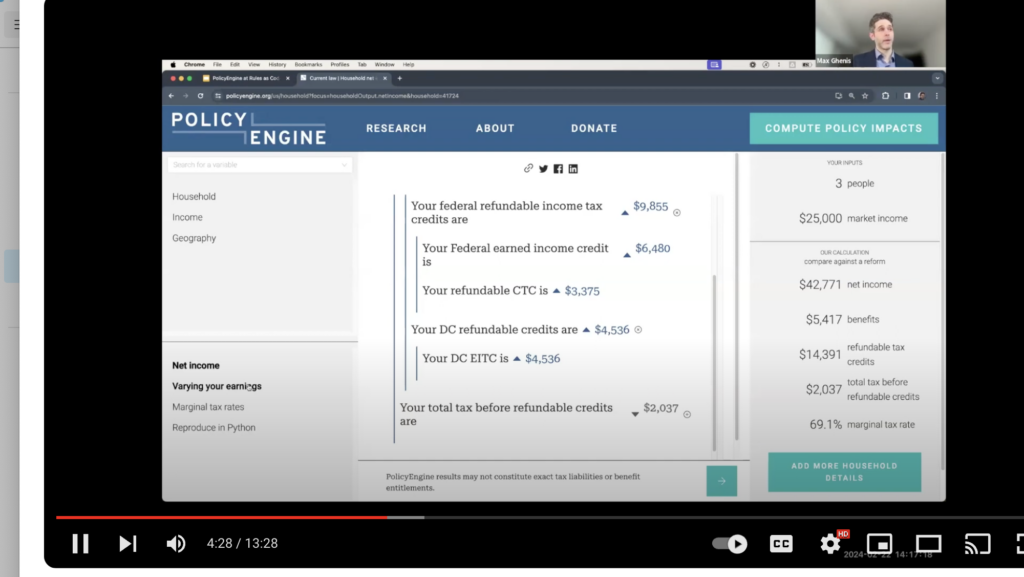
The team developed an AI-powered explanation feature that effectively translates complex, multi-program policy calculations into clear and accessible explanations, enabling users to explore "what-if" scenarios and understand key factors influencing benefit amounts and eligibility thresholds.
Our existing maze of family tax benefits — including the CTC, Earned Income Tax Credit (EITC), Child and Dependent Care Tax Credit (CDCTC), and head of household (HoH) filing status — has several structural deficiencies that make overhauling the system a prerequisite for any effort to boost support for families with children. The report offers several options for expanding and streamlining family tax benefits to address these issues.