The blog post emphasizes advancements in digital services, user engagement, and inter-agency collaborations that enhanced public access to government services.
This report examines how governments use AI systems to allocate public resources and provides recommendations to ensure these tools promote equity, transparency, and fairness.
This overview introduces direct cash transfers (DCTs) in the United States, outlining their history, major programs, and findings from contemporary guaranteed income demonstrations that show how cash supports improve family stability, health, and economic mobility
A practical framework from the UK Infrastructure and Projects Authority that helps government leaders plan, lead, and deliver complex transformation programs.
The report summarizes qualitative research and feedback from Tribal leaders and grant administrators to inform improvements in federal grant systems and processes.
U.S. Department of Health and Human Services (HHS)
A U.S. Digital Service blog report exploring the lived experiences of mothers seeking mental health care during pregnancy and postpartum, highlighting barriers in screening, diagnosis, and access to treatment.
A strategic roadmap outlining the vision, goals, and measurable success criteria for building a unified, resident-centered digital portal for Washington State services.
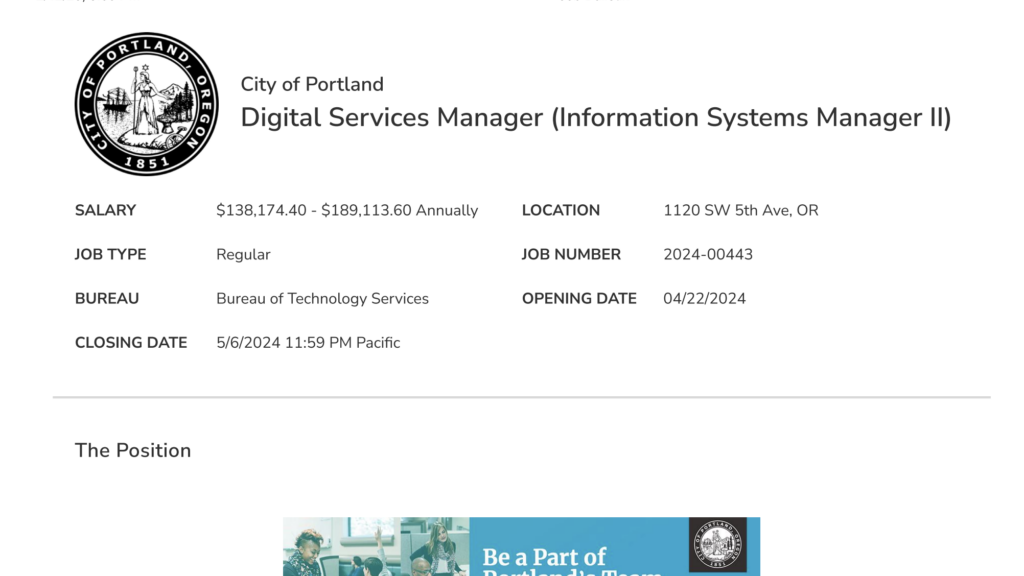
A public sector job posting for the City of Portland’s Digital Services Manager role, focused on leading digital transformation and improving resident-facing services through user-centered product management.
This page describes how the GSA’s 10x team supported digital trust and security across federal services by building shared tools, automating compliance, and exploring privacy-preserving techniques.
This report outlines the U.S. Department of Labor’s comprehensive action plan to strengthen the unemployment insurance (UI) system by addressing chronic underfunding and proposing legislative reforms to support long-term modernization and resilience.