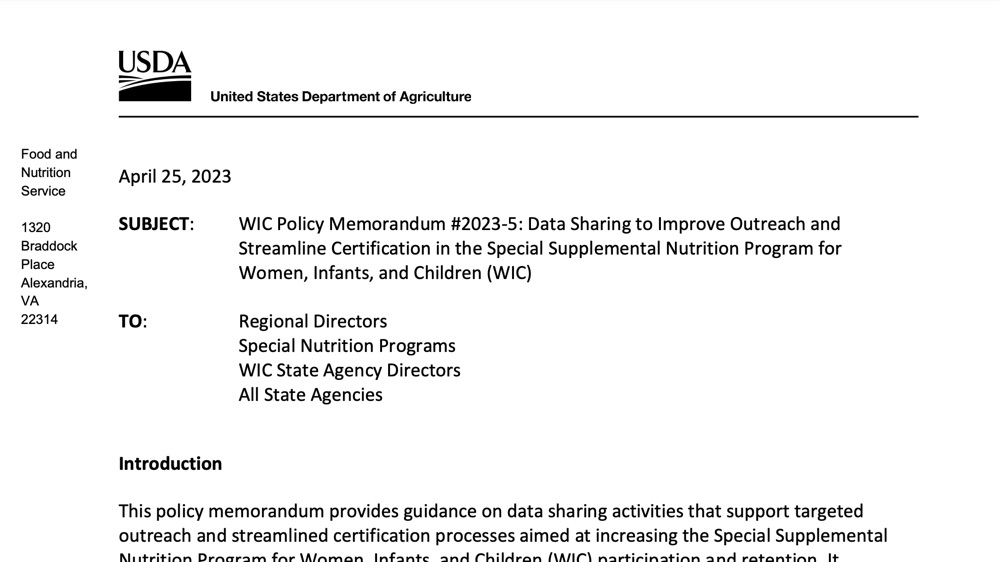
This policy memorandum from the Food and Nutrition Service (FNS) provides guidance on data sharing activities that support targeted outreach and streamlined certification processes aimed at increasing the Special Supplemental Nutrition Program for Women, Infants, and Children (WIC) participation and retention.
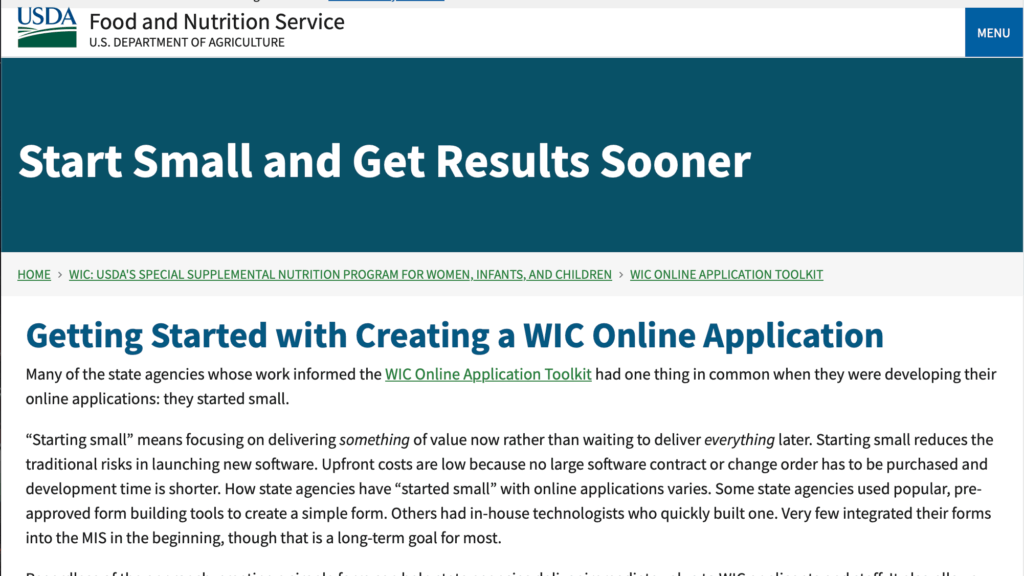
The “Start Small” approach encourages agencies to begin with targeted, manageable improvements in their WIC application process before expanding changes more broadly, fostering easier implementation and measurable early successes.
This report catalogs the policy choices, demonstration projects, and waivers each state uses to administer SNAP, highlighting how states adapt federal rules to local needs.
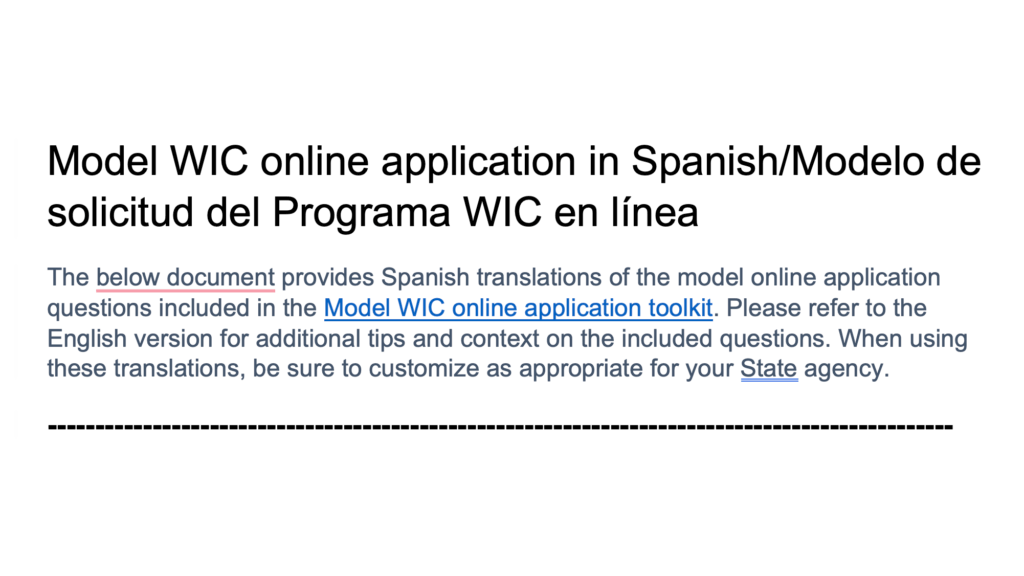
This document is the Spanish-language version of the Model WIC Online Application. It provides a full set of translated application questions and instructions for applying to the Special Supplemental Nutrition Program for Women, Infants, and Children (WIC).
A report summarizing effective state practices, promising initiatives, and federal resources to improve payment accuracy in the Supplemental Nutrition Assistance Program (SNAP).
Comprehensive and sustained improvement in benefits access and customer experience requires changes across policy, operations, technology, staffing, procurement, and more. This guide offers a collection of actions and best practices for states to apply.
This study evaluates the use of RPA technology by three states to automate SNAP administration, focusing on repetitive tasks previously performed manually.
This framework outlines USDA’s principles and approach to support States, localities, Tribes, and territories in responsibly using AI in the implementation and administration of USDA’s nutrition benefits and services. This framework is in response to Section 7.2(b)(ii) of Executive Order 14110 on Safe, Secure, and Trustworthy Development and Use of Artificial Intelligence.
Monthly SNAP participation data for the United States and every state, from October 1988 through the latest month published by USDA Food and Nutrition Service (generally a 3-month lag).
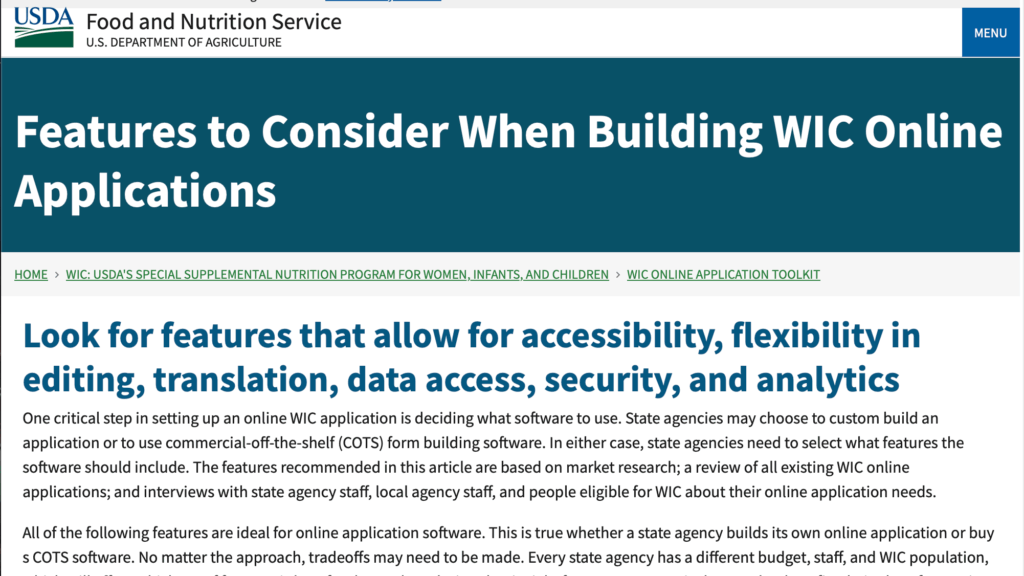
Key functionalities and design elements recommended for creating effective online WIC applications, focusing on usability, accessibility, and compliance to improve participant experience and streamline agency operations.
This report analyzes the impact of waivers that allowed WIC participants to be certified without in-person visits during the COVID-19 public health emergency, assessing effects on access, participation, and service delivery.
Provides state and local Special Supplemental Nutrition Program for Women, Infants, and Children (WIC) agencies with a practical guide for developing or improving online WIC application systems.