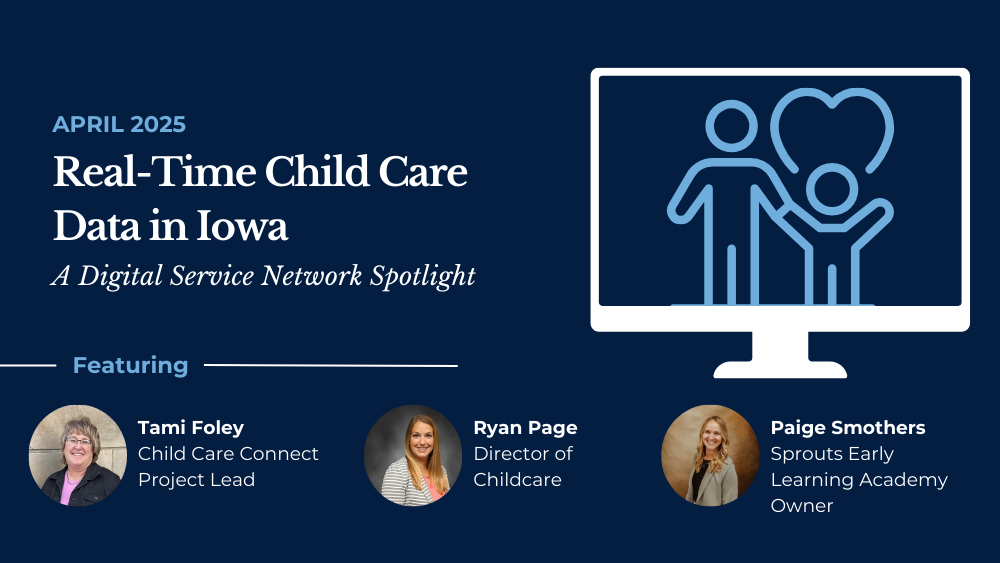
DSN Spotlights are short-form project profiles that feature exciting work happening across our network of digital government practitioners. Spotlights celebrate our members’ stories, lift up actionable takeaways for other practitioners, and put the resources + examples we host in the Digital Government Hub in context.
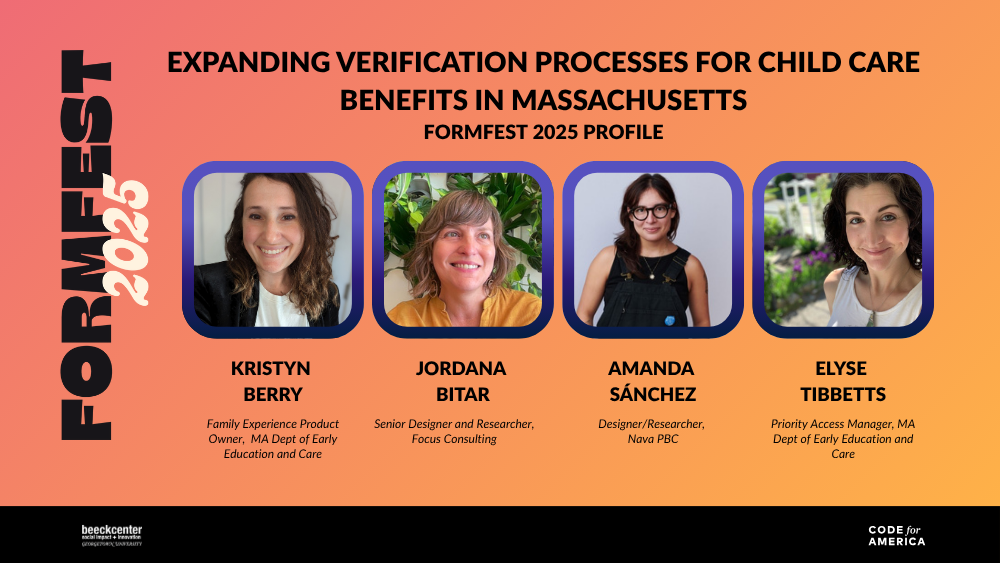
This FormFest profile examines how Massachusetts’ Department of Early Education and Care is modernizing its child care benefits system through human-centered design, making verification and application processes simpler, more compassionate, and more efficient for families and staff.
This publication shares ten ways states can improve start-to-finish customer experience for unemployment insurance claimants. These approaches can increase overall equitable access and system integrity for UI administration.
Digital service (DS) teams across the public sector are working to improve how services are delivered to residents. These teams exist at all levels of government and are iteratively using data, technology, and human-centered design to reframe how residents interact with government.
As they transition to providing more services online, there are ways governments can get creative working around talent shortages and entrenched bureaucracies.
This FormFest profile describes how California rapidly simplified disaster-aid processes for wildfire survivors by auditing 22 forms across eight agencies and developing a concept for a universal eligibility form and relief portal.
The Digital Service Network (DSN) spoke with Daniel Soto, principal management analyst at the City of Santa Ana, to learn more about how digital service innovation can occur in government organizations without formally codified or centralized digital service teams.
The Digital Service Network (DSN) recently sat down with the Maryland Family and Medical Leave Insurance (FAMLI) team to learn more about an exciting role they’re hiring for.