The existing system for evaluating state safety net programs does not adequately capture the human experience of accessing services. This new National Safety Net Scorecard is a more meaningful set of metrics that can effectively asses the true state of the current program delivery landscape and measure progress over time, creating a more human-centered safety net.
The FileYourStateTaxes pilot successfully integrated state tax filing with the IRS Direct File program, improving taxpayer experience and ease of filing.
Code for America discusses the importance of a people-centered, digital-first safety net. Tools of technology, policy, and good implementation can advance a bold vision that will allow the nation to push through the end of the COVID-19 crisis.
Implementing client-centered communication strategies, such as clear language and digital reminders, can significantly reduce churn in public benefit programs, ensuring eligible individuals maintain continuous access to essential services.
The Building Human-Centered Benefits Renewal Processes with Client Equity in Mind article by Code for America discusses the implementation of ex parte renewals in Minnesota's Medicaid program to streamline benefit renewals for aged, blind, and disabled populations, reducing administrative burdens and enhancing equity.
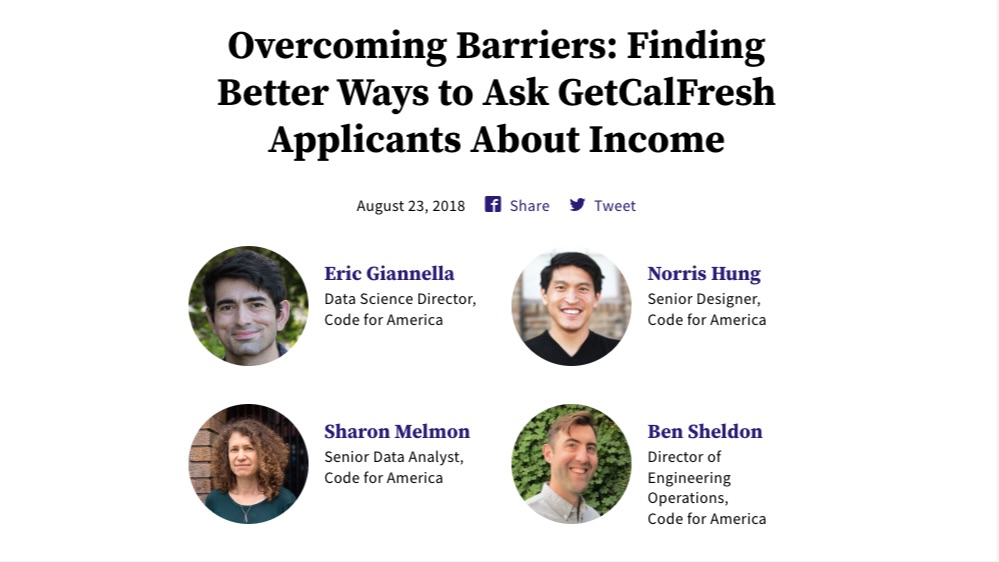
Californians who receive food assistance come from all backgrounds, but many share a similar story: they were barely getting by financially when they were tipped into crisis by an unexpected expense or loss of income. This site shares their stories.
Technology enables governments to engage in “pilot” projects to see where they are headed and course-correct along the way, as opposed to evaluating the results over the course of multiple years. Delivery-driven government utilizes technology and “pilot” projects to see institutions and processes through the eyes of users, allowing for more effective service delivery.
Code for America offers government agencies a general overview of getting started with implementing text messaging services for clear, responsive communication during the COVID-19 pandemic.
The Summer EBT Playbook offers states practical strategies, tools, and examples to effectively implement the new Summer EBT program, ensuring low-income children receive food benefits when school is out.
Applying UX research methods, the City of San Jose worked to improve how low-income and non-English speaking residents engaged with My San Jose, a website and mobile app for residents to report neighborhood issues to cities. They used a Spanish and Vietnamese translator to conduct interviews with target users, then detailed major findings and corresponding recommendations in this report.
In response to the COVID-19 crisis, the federal government authorized a new emergency program, Pandemic EBT (P-EBT), to replace school meals with money for groceries while schools are closed. Code for America describes its efforts to launch an accessible, online P-EBT application under an accelerated timeline due to to immense demand caused by the pandemic.
Describes the Principles of a Human-Centered Safety Net: Many Welcoming Doors, Easy to Understand, Clients Can Make Informed Decisions, Responsive to Changing Needs, Simple Actions