This session from FormFest 2024 focuses on accessibility, featuring British Columbia’s work to improve legal form usability and tips from the Wisconsin Department of Public Instruction on making forms more accessible overall.
This study describes the potential of human-centered design principles to identify burdens, reducing the effects of what we label as administrative checkpoints.
This mainstage session from FormFest 2024 featured behind-the-scenes stories about the IRS’ work to turn tax forms from static PDFs into a user friendly digital experience.
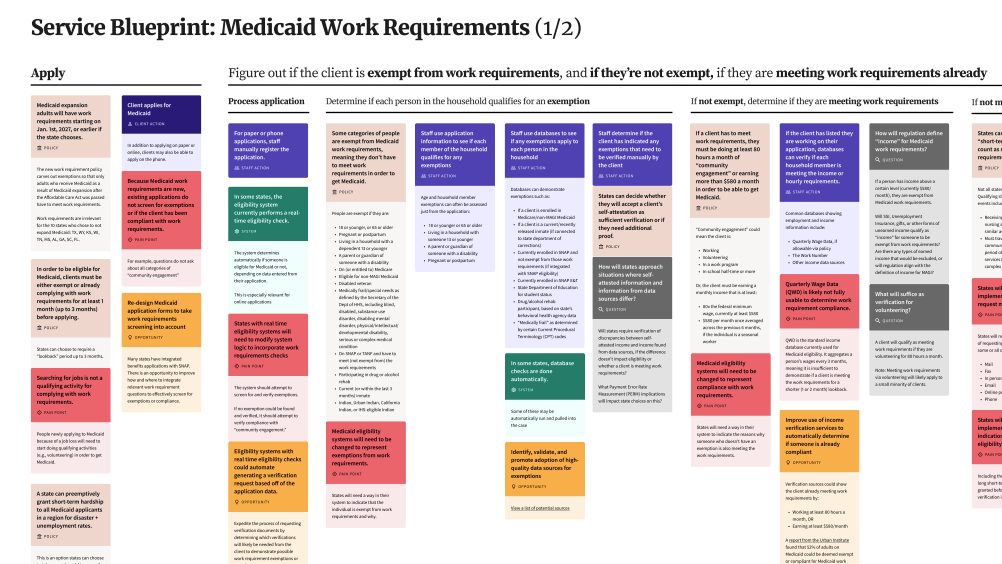
This 11x17 service blueprint visualizes every step, system, and policy decision involved in implementing Medicaid work requirements under H.R. 1—from application to renewal—identifying pain points, questions, and opportunities for states to streamline and humanize the process
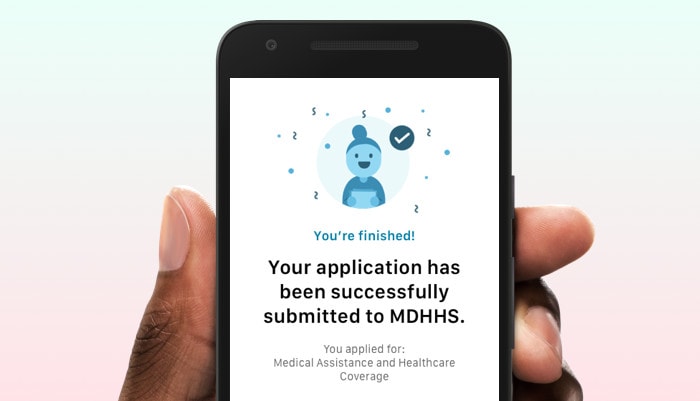
The ubiquity of mobile devices makes it imperative to build “mobile first” services, i.e. services built with the expectation that they will primarily be accessed on mobile devices. This article also outlines important considerations and suggestions for implementing mobile-first user interfaces.
This article discusses how Code for America enhanced the CalFresh application process to better assist self-employed individuals in accessing their full benefits by clarifying self-employment definitions and simplifying income verification.
Code for America offers government agencies a general overview of getting started with implementing text messaging services for clear, responsive communication during the COVID-19 pandemic.
This visualized report is a first first-of-its-kind view of the state of benefits applications across the nation from a client perspective, including information on application availability online, combined benefit applications, application completion times, as well as login and identity proofing requirements.
The Summer EBT Playbook offers states practical strategies, tools, and examples to effectively implement the new Summer EBT program, ensuring low-income children receive food benefits when school is out.