This webinar addressed the near completion of the Medicaid continuous coverage unwinding, highlighting a net decrease of almost 10.6 million enrollees, including over 4 million children, and discussed next steps for state compliance, best practices, and outreach strategies to reconnect eligible individuals who lost coverage.
This report analyzes the critical role of SNAP’s "broad-based categorical eligibility" (BBCE) policy and the widespread consequences of its potential elimination by the Trump Administration.
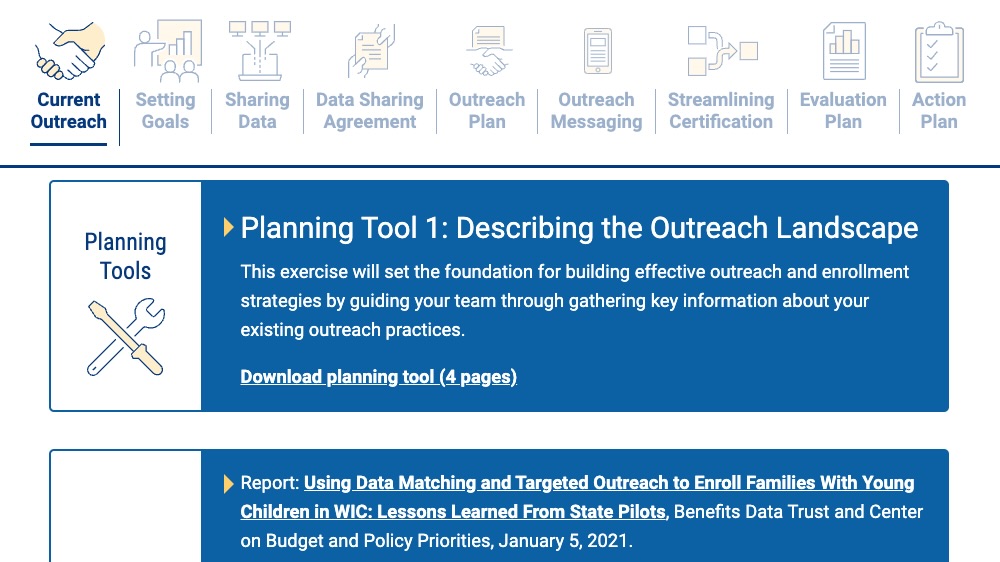
The report examines pilot projects in multiple states that utilized data matching and targeted outreach to enroll eligible families with young children in the WIC program, demonstrating the effectiveness of this approach in increasing participation rates.
This resource provides guidance on streamlining enrollment across public benefit programs to improve efficiency, reduce administrative burdens, and enhance access for eligible individuals and families.
The Center on Budget and Policy Priorities (CBPP) report highlights the disproportionate hardships faced by Black and Latina mothers during the COVID-19 pandemic, exacerbated by systemic inequities.
The toolkit provides strategies for state and local WIC agencies to enhance enrollment by utilizing data from Medicaid and SNAP for cross-program data matching and targeted outreach.
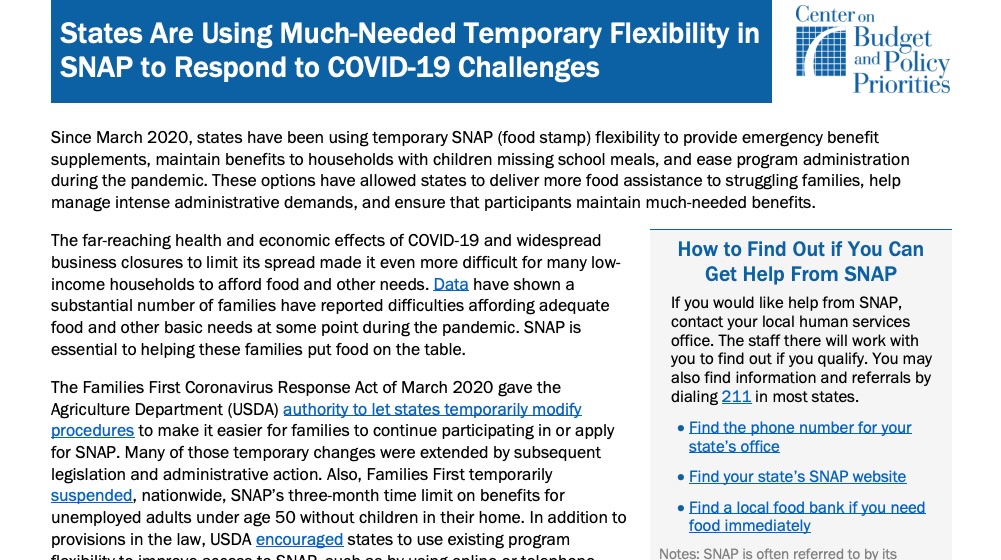
During the COVID-19 pandemic, states utilized temporary Supplemental Nutrition Assistance Program (SNAP) flexibilities to provide emergency benefits and maintain support for households with children missing school meals.
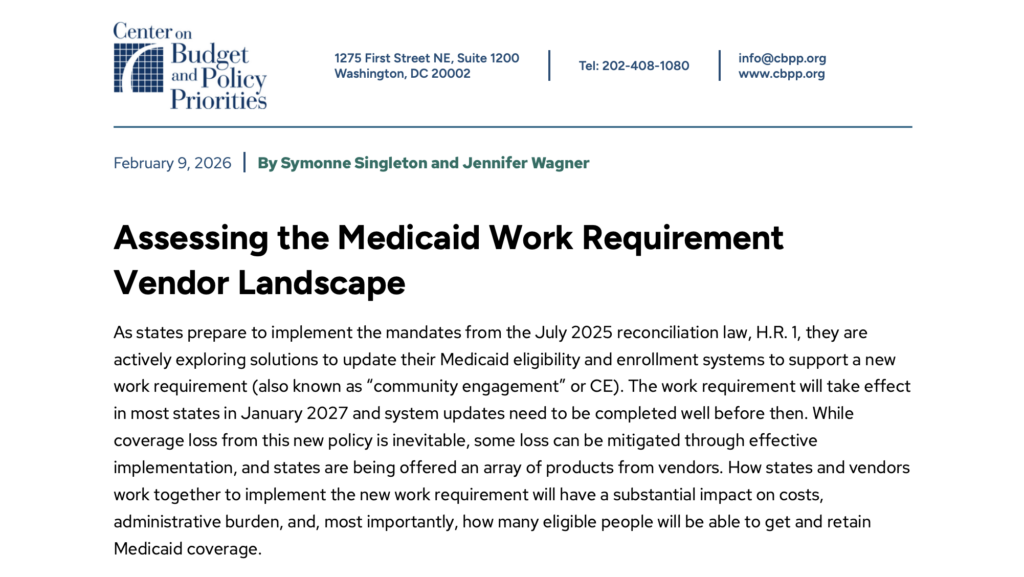
This paper evaluates the technical vendor landscape as states prepare to implement Medicaid work requirements mandated by the H.R. 1 reconciliation law.
This report explores how state and local agencies can enhance customer service in health and human services by implementing technologies such as web-based tools, mobile applications, and call center innovations, aiming to streamline processes and improve client interactions.
This report explains how states can continue to voluntarily implement key Medicaid and CHIP eligibility and enrollment improvements—originally required by two federal rules—despite a ten-year moratorium enacted in July 2025 that blocks their mandatory enforcement
The article discusses how state agencies can effectively use text messaging to communicate with Medicaid and SNAP enrollees, especially following a 2021 FCC ruling that permits automated texts for informational purposes.
The report discusses how state Medicaid agencies can enhance efficiency and maintain coverage for eligible individuals by implementing ex parte renewals, which automatically renew beneficiaries' coverage using existing data without requiring action from enrollees.