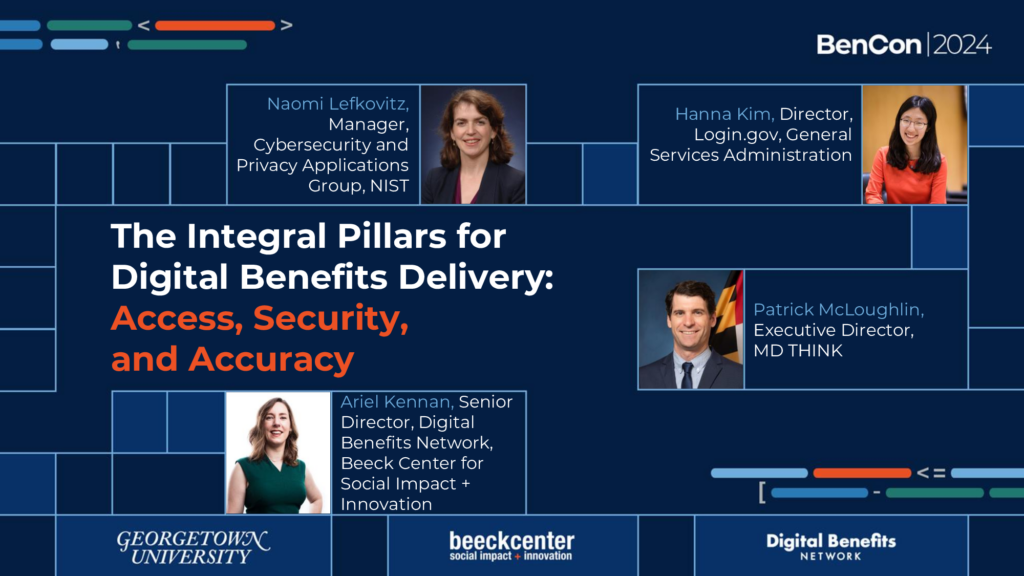
Government leaders discuss how to ensure seamless access to public benefits through breaking down silos, user-friendly digital identities, and privacy-focused security measures.
Presentation covering the findings of a research study analyzing the structural and budgetary layout of of eleven US-based Digital Service Teams (DSTs) at the municipal, county, and state levels.
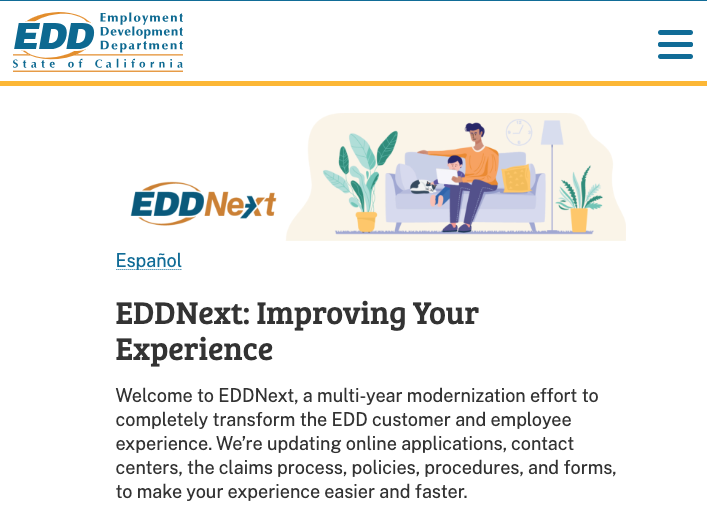
The California Employment Development Department (CA EDD) launched the EDDNext initiative to modernize benefit delivery, focusing on user-centric procurement for a new identity verification system.
Oklahoma Human Services (OKDHS) modernized their service delivery by reducing their real estate footprint, designing trauma-informed and user-friendly spaces, and expanding an embedded worker program to improve accessibility and client experience. Through their "Service First" strategy, OKDHS aims to create more equitable and compassionate interactions, reaching vulnerable populations while addressing high occupancy costs.
This guide highlights approachable ideas for state and local public benefits agencies to improve applications, renewals, and correspondence. As outlined in this resource, even small improvements can be transformative for residents and caseworkers alike.
Building on our February 2022 report Benefit Eligibility Rules as Code: Reducing the Gap Between Policy and Service Delivery for the Safety Net, the Beeck Center’s Digital Benefits Network (DBN) recently held a convening to share progress and potential in digitizing benefits eligibility and to begin addressing how a national approach could be started.
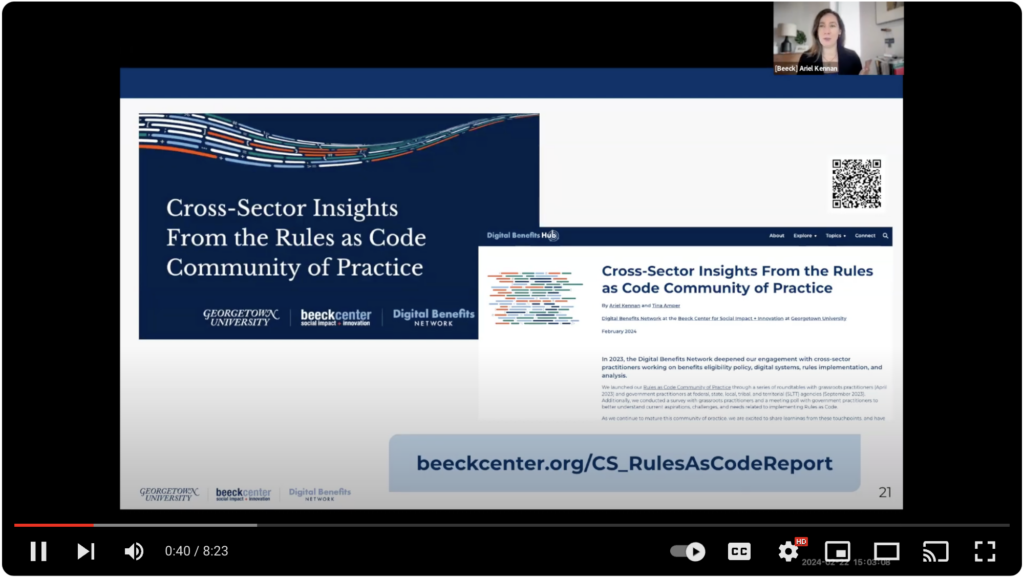
This report highlights key findings from the Rules as Code Community of Practice, including practitioners' challenges with complex policies, their desire to share knowledge and resources, the need for increased training and support, and a collective interest in developing open standards and a shared code library.
A comprehensive analysis of how government digital service teams document and communicate their impact across federal, state, and local levels. This report aims to identify key reporting trends and practices to help teams develop impact narratives that demonstrate their value to stakeholders.